
One-pan cook after class
You mainly make your tagine in one pan and want a hob that’s quick to adjust and easy to put away after use. First, check that your pan works on the hob you’re considering.


For a tagine after an evening class, a portable single-zone induction hob is a practical option if you can confirm that your pan’s base is induction-compatible; Milieu Centraal describes induction as quick to adjust. If your dish isn’t suitable for induction, choose a ceramic radiant hob or electric hotplate only if the manufacturer approves that heat source for your dish. Opt for two zones if you genuinely use a second pan while your tagine simmers, and stay by the hob while it’s on.
You mainly make your tagine in one pan and want a hob that’s quick to adjust and easy to put away after use. First, check that your pan works on the hob you’re considering.
You want to keep using a particular tagine dish. Its material and the instructions for that specific dish will determine whether induction is suitable.
You want your chickpeas to simmer while you prepare a side dish on a second zone, for example. In that case, consider the hob’s dimensions and the total power available.
| What to consider | What should you check? | Who is this important to? |
|---|---|---|
| Pan compatibility | Check your dish’s instructions and compare its flat base with the stated cooking zone size. Induction only works with a suitable, magnetisable pan base, according to the Dutch Consumers’ Association. | If I want to keep using my own tagine dish, its base must be compatible with the cooking technology I choose. Around 33% of consumers say pan compatibility is their main concern. |
| Controlled simmering | Check the controls, lowest heat setting and timer on the exact model. A stated power rating doesn’t prove how evenly a hob simmers on a low setting. | If you want to turn the heat down after switching on and let your dish cook gently, pay particular attention to the controls. Around 27% of consumers prioritise simmer control. |
| One or two zones | Decide whether you’ll use two pans at once. If you choose two zones, also compare the hob’s size and total power. | If I want to heat a side dish at the same time, I’ll need space for a second pan. Around 20% of consumers say cooking two dishes at once is their main concern. |
| Connection and placement | Check the plug, rated power, the load on your circuit and the required clearance around the hob. | For consumers who first want to make sure the hob will fit safely on their worktop and work with their electrical connection, the setup is crucial. Around 20% prioritise connection and placement. |
The surface doesn’t tell you which heating technology the hob uses. An induction hob can also have a glass-ceramic surface, so check whether it uses induction or radiant heat and whether your pan is compatible.
Check the product specifications and make sure your pan is compatible before choosing a hob.
Tagines and product ranges can have different bases and permitted heat sources. Le Creuset and Emile Henry, for example, provide guidance on induction compatibility for specific models or ranges.
Find your exact model and follow the manufacturer’s instructions before choosing a hob.
If the manufacturer doesn’t approve your chosen heat source, you may need a different dish.
The required electrical connection varies by model. The Dutch Consumers’ Association explains that induction hobs with a rated power above 3,65 kW require a higher-capacity connection and a five-pin Perilex socket. Also check the clearance requirements in the manual.
Before buying, check the rated power, plug, circuit and required clearance for the exact model.
Setting a timer doesn’t replace keeping an eye on things while you cook. The Fire Service advises staying close to the hob.
Use the timer as a helpful feature, but stay by the hob while it’s on.
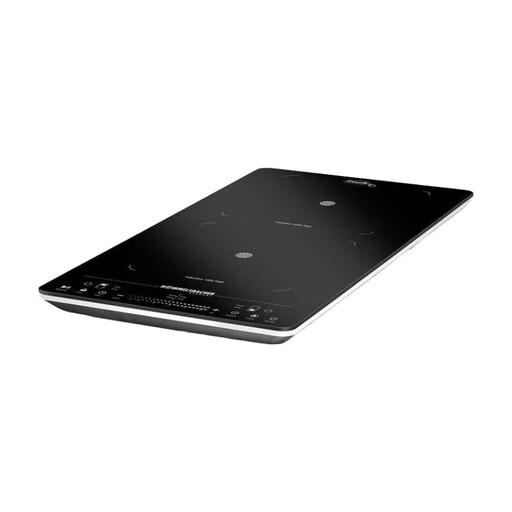
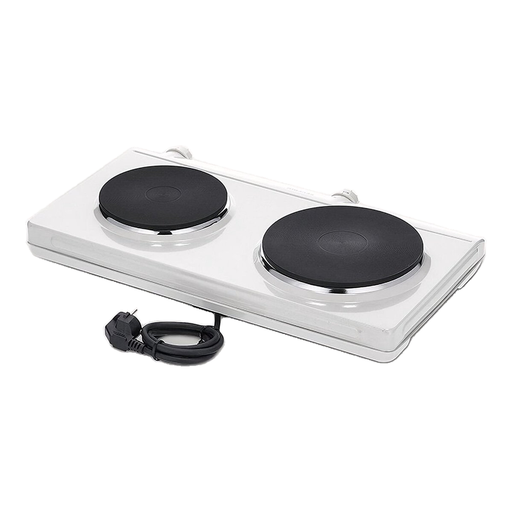
The KI120T is a portable single-zone induction hob, while the KP602B has conventional electric hotplates. They’re examples of different heating options.
The CT 2200/E is a portable ceramic hob with HiLight radiant heat. It’s an option to consider if your pan isn’t suitable for induction.
The IK-6161 is a portable single-zone induction hob for a pan that’s compatible with induction.
The DK 1031 is a portable two-zone induction hob for anyone who regularly uses two induction-compatible pans at once.
Here you’ll find portable electric hobs with one or two zones, including both induction models and conventional electric hobs, for cooking in one pan or preparing a side dish at the same time.
 No image available
For one induction-compatible pan; check the base diameter before choosing the hob.
Stated pan size range: 12–26 cm. Power: 2000 W. Ten power levels and temperature control from 60–240 °C. Timer of up to 3 hours.
 No image available
For two induction-compatible pans at once; consider the space and electrical connection required by the model.
Stated zone size range: 120–260 mm. Ten power levels and ten temperature settings. Timer of up to 180 minutes. Follow the manufacturer’s guidance on clearances for pacemakers and other items mentioned.
 No image available
For anyone who wants to heat two pans at once and adjust the heat for each zone separately.
Two independently controlled cooking zones. Stated total power: 2500 W. Stepless temperature control with a separate rotary knob for each zone. The hotplates get hot; use on a stable, heat-resistant surface.
 No image available
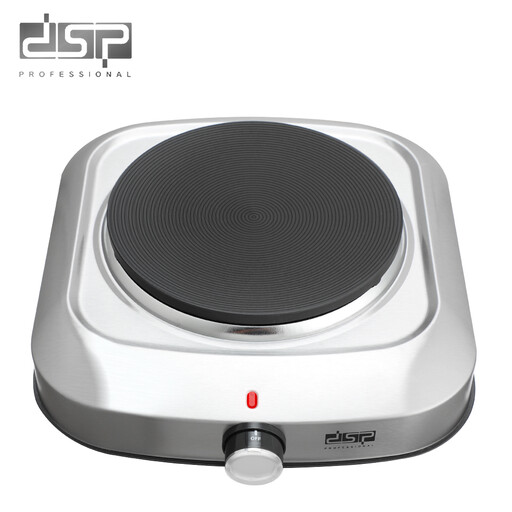
For heating food in one pan on a conventional electric cooking zone; check that the dish’s manufacturer permits this heat source.
Stated power: 1500 W. Fixed 185 mm hotplate. The product description lists adjustable heat settings, including a simmer setting. A temporary smell and light smoke may occur the first time you use it; ventilate the room well if this happens.
 No image available
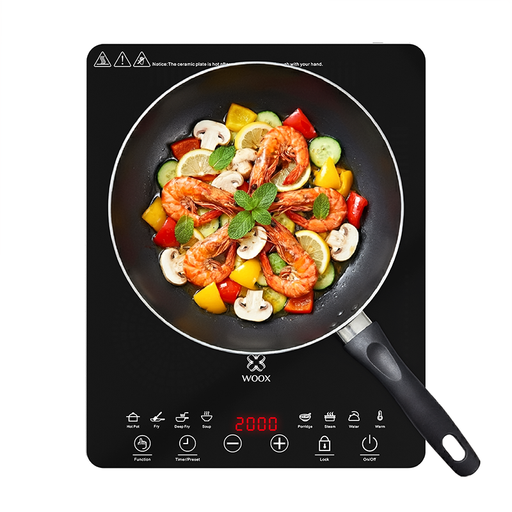
For one induction-compatible pan on your worktop; check that its flat, magnetic base is suitable.
Eight temperature and power levels. The description lists a timer, automatic shut-off, pan detection and a child lock. The surface may be hot during and immediately after use; stay nearby while cooking.
You can’t tell from the material or shape alone. Induction requires a suitable pan base; Le Creuset and Emile Henry list specific tagines or product ranges as compatible. Check the exact model and compare the base diameter with the cooking zone.
Two zones are useful if you use a second pan at the same time as your tagine simmers. The Dutch Consumers’ Association notes that the available power on portable induction hobs can limit how high you can set multiple zones at once, so check the total power and electrical connection too.
First, check the specifications for the exact model and the load on your circuit. The Dutch Consumers’ Association says some more powerful induction hobs require a higher-capacity connection and a five-pin Perilex socket; the plug and rated power of your chosen model are what matter.
No. The Fire Service advises staying close to the hob while cooking. A timer can switch it off after the set time, but it doesn’t replace keeping an eye on it.
With normal use, the product must meet what you could reasonably expect from it. ACM ConsuWijzer says that if a product is faulty, the seller is responsible for providing an appropriate solution free of charge; a manufacturer’s warranty doesn’t replace your statutory rights.