
Cook with a small spice pan
You roast small batches and want to check first that your pan’s base will fit and be recognised by the hob. Manufacturers specify different suitable pan sizes; for induction, you also need a flat, magnetic base.


Start with the flat base of your pan: an induction hob will only work if the base is magnetic and within the size range specified for the model. A separate hotplate with a heating element can let you keep using existing non-magnetic pans, but the hotplate itself gets hot. Then compare the controls and check that you have enough space to use it safely.
You roast small batches and want to check first that your pan’s base will fit and be recognised by the hob. Manufacturers specify different suitable pan sizes; for induction, you also need a flat, magnetic base.
You want to be able to adjust the heat as you stir during a short roasting session. The number of settings alone doesn’t tell you how evenly a hob heats small batches.
You’re looking for a separate hob that you can put away after use, but want to leave enough room for the pan, ventilation and a suitable socket while cooking.
Choose this option if: your pan has a flat, magnetic base that falls within the range specified by the manufacturer.
Bear in mind: a pan that is too small or non-magnetic may not be suitable; the settings don’t tell you how evenly a model roasts spices.
Choose this option if: you want to use an existing pan without needing it to be suitable for induction.
Bear in mind: the hotplate itself gets warm and may stay hot after you switch it off.
Choose this option if: using a non-magnetic pan is important to you; check the cooking zone size and your pan’s instructions too.
Bear in mind: the heating element heats the hob first, then the pan. A glass surface doesn’t automatically mean an appliance works in the same way as an induction hob.
Measure the flat base of your pan and check the heating method first. Then compare the controls and the clearance required by the specific model.
| What to consider | What to check before buying | Who should pay particular attention? |
|---|---|---|
| Pan size and detection | Measure the flat base, not the rim, and compare it with the specified range. For induction, also check that the base is magnetic. | If I use a small spice pan, I want to know whether its base will fit the cooking zone and be detected. Around 31% of consumers would put pan size and detection first when choosing. |
| Adjusting the heat | Check how you adjust the heat while cooking and whether the controls are within reach as you stir. Stay by the pan; low heat and constant stirring are also recommended in a BBC Good Food recipe for whole spices. | I want to keep an eye on a short roasting session and adjust the heat without taking my attention away from the pan. Around 25% of consumers would prioritise the controls when roasting. |
| Worktop space and ventilation | Compare the hob’s dimensions with the space where you plan to use it, and follow the model’s instructions on clearance. The Inventum KI120T manual requires at least 10 cm of clearance at the sides and back. | With limited worktop space, I want to know in advance whether I can set the hob up while using it and put it away afterwards. Around 19% of consumers would consider available work and storage space the most important factor. |
| Using an existing pan | Check the heating method and, for induction, whether the base of the pan is flat and magnetic. Factor in the cost of another pan if you might need one. | I want to keep using my current pan rather than needing a different one just because of the hob. Around 13% of consumers would prioritise reusing their pans. |
| Connection and safe use | Follow the instructions for connecting and positioning your chosen model, and stay by the hob while roasting. The Fire Service advises plugging high-power appliances directly into a socket rather than using an extension block or cable reel. | I want to be able to connect and keep an eye on the hob in the place where I plan to use it. Around 12% of consumers would want to check the connection and positioning first. |
With induction, the flat, magnetic base and the specified suitable pan size matter. They may differ from the measurement across the top rim.
Measure the flat base of your existing pan and compare it with the model’s specifications before choosing.
If your pan turns out not to be suitable, you may need another one.
A glass-ceramic surface can be used with different heating methods. The way the hob and pan heat up partly determines which pans you can use.
Check the specified heating technology and pan requirements, not just the product photo or the term ‘glass-ceramic’.
A portable hob may be easy to store, but you still need a suitable place to use it. Some positioning instructions are specific to the model, and a hotplate may stay hot after it has been switched off.
Before buying, read the instructions for the place where you plan to use it. After use, follow the guidance on cooling, cleaning and storage.
For the CTA 1800/IN, Rommelsbacher specifies induction pans with a diameter of 12–20 cm.
According to Tristar, the KP-6185 is a single hotplate with a 15 cm cast-iron heating plate and a rotary dial.
According to Inventum, the KI120T is a portable induction hob for pans measuring 15–20 cm.
According to Severin, the KP 1091 is a portable hob with an 18.5 cm heating plate.
The products below are portable induction hobs. Before use, check that the flat, magnetic base of your pan meets the model’s specified requirements.
 No image available
An option if you’re looking for a portable induction zone and use a magnetic pan.
The product name lists 2000 W, 10 power settings and touch controls. Use magnetic cookware and keep the ventilation openings clear; the surface may get hot.
 No image available
A portable induction hob for anyone using a magnetic pan and wanting to check the pan size in advance.
The product name lists 2000 W, 10 power settings and a timer. The specified suitable pan size is 12–26 cm; the pan base must be flat and suitable for induction.
 No image available
A portable induction hob for anyone who wants to check their existing pan is compatible first.
Only use a pan that is suitable for induction.
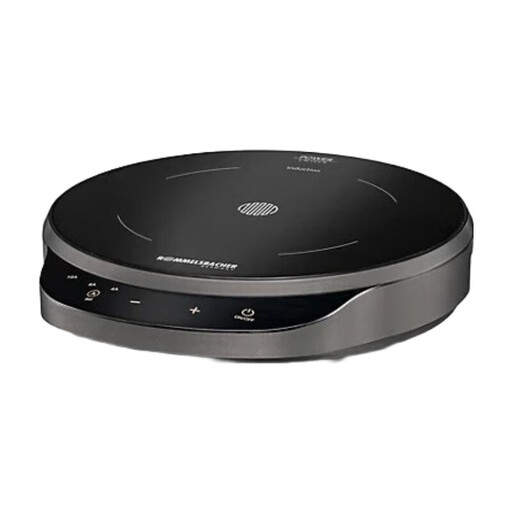 No image available
An option if you want to use a small pan and its base falls within the specified range.
Use a flat, induction-compatible pan with a diameter of 12–20 cm. The glass cooking surface may get hot during and after use.
 No image available
A portable induction hob for anyone using a pan with a flat, ferromagnetic base.
Check that the base falls within the specified range of 12–23 cm.
Yes. A BBC Good Food recipe describes roasting whole spices in a heavy-based, dry pan over low heat, stirring constantly. The right setting may vary depending on the pan and hob, so stay by the pan.
No. The pan needs a flat, magnetic base that falls within the range specified for the model. Measure the base and check the product specifications before choosing.
Not always: according to the Consumers’ Association, most portable induction hobs only need an earthed socket. Check the connection instructions for the specific model, as some versions may require a Perilex connection and a two-phase connection.
Let a hot hob cool down first, then follow the model’s manual for cleaning. For whole dried spices, the Netherlands Nutrition Centre recommends storing them in a sealed jar in a dark place.
CE marking is compulsory for electrical products covered by the applicable CE rules. For the Low Voltage Directive, the Netherlands Food and Consumer Product Safety Authority lists electrical equipment with a rated AC voltage of 50 V to 1000 V; whether the rules apply depends on the specific product. The mark alone is not proof of an independent assessment or of the conformity of a particular item being offered for sale.