Which hob is right for you?

Cooking with a large soup pan

Your first question is whether the flat base of your pan will fit a suitable cooking zone; the diameter of the rim isn’t enough to tell you. BK and ETNA point out that the pan base and the requirements of the specific zone are what matter.

Cooking soup and side dishes

You’ll need space for several pans at the same time. So compare not only the number of cooking zones, but also their layout and the model’s total power output. For example, Inventum lists two 19 cm zones and a maximum total output of 2000 W for the VKI3020ZWA.

Keeping your existing kitchen

Your choice will depend mainly on the available connection and installation space, and on whether your current pan works with induction. Milieu Centraal recommends checking whether the pan base has a magnetisable steel layer.

Which buying considerations matter?

Freestanding single-zone induction hob

Suitable if: you use one suitable pan and want an extra cooking spot without installing a hob.

Bear in mind: there’s no second cooking zone for a side dish; check the pan size range for the exact model.

Freestanding two-zone induction hob

Suitable if: you want to cook soup and a side dish at the same time without installing a hob.

Bear in mind: two zones don’t necessarily mean twice the peak power; Inventum lists a maximum total output of 2000 W for the VKI3020ZWA.

Built-in multi-zone induction hob

Suitable if: you regularly use several pans and your worktop, connection and pan bases are suitable.

Bear in mind: the installation and available connection must be suitable for the model; ETNA states that the KI170ZT needs a 2-phase connection to deliver the full stated zone power.

Ceramic hob

Suitable if: you’re looking for a built-in hob with several zones and don’t want to rely on a magnetisable pan base.

Bear in mind: check the connection and plug requirements for the exact model; the ETNA KC260ZT requires 2 phases and is supplied without a plug.

Freestanding hob with electric hotplates

Suitable if: you want two independently controlled hotplates and would rather not have to use induction-compatible pans.

Bear in mind: check that the flat base of your pan fits the largest ring, and watch out for residual heat after switching off.

What to consider What should you check? Who should pay particular attention?
Pan base and cooking zone Measure the flat base of your pan and compare it with the supported range in the manual for the exact model. With induction, the base must be suitable for pan detection. I want to know whether my large soup pan will fit the chosen zone. Around 31% of consumers put this fit first.
Cooking at the same time Check the number and layout of the zones, as well as the maximum combined power output. When several zones are in use, they may share the available power. If I’m making soup and a side dish at the same time, I need more than one usable cooking spot. Around 25% of consumers prioritise cooking simultaneously.
Connection and installation Compare the connection type, plug and installation dimensions for the exact model with your kitchen; if necessary, ask someone to assess whether any changes are needed. I want to keep using my kitchen and existing power supply, so the connection and available space need to be right. This is the main concern for around 25% of consumers.
Existing pans and controls Check whether your pan is suitable for the chosen heat source. For gentle simmering, look at the controls and relevant cooking tests; don’t judge performance by the number of settings alone. If I want to keep using my current pans and simmer soup gently, the combination of pan and controls matters. Around 19% of consumers put this first.

Buying mistakes to avoid

  • Comparing the rim of your soup pan with the cooking zone

    With induction, the flat base of the pan determines whether it’s detected. So even a wide pan may not fit the stated range for the zone.

    Measure the flat base and check the manual for the exact model before you choose.

    If your pan turns out not to be suitable, you may need a different one.

  • Assuming two cooking zones mean twice the maximum power

    According to Inventum, the VKI3020ZWA has two zones but a maximum total output of 2000 W. So the number of zones doesn’t tell you how much power each pan gets when they’re used at the same time.

    Compare the combined power output and any restrictions on cooking simultaneously, not just the number of hotplates.

  • Choosing a built-in hob without checking the connection

    According to ETNA, the KC260ZT requires 2 phases and is supplied without a plug. Other models may have different connection requirements.

    Compare the recess, connection and installation requirements for the exact model with your kitchen, and ask someone to assess whether any changes are needed.

    A different connection or installation may involve extra work.

  • Assuming every electric hob is an induction hob

    Electric hobs can use different heat sources. The Severin DK 1014, for example, has cast-iron heating rings; induction requires a suitable pan with a magnetisable base.

    Check the stated heat source and remember that heated zones can retain heat after you switch them off.

Brands to consider

ETNA

The ETNA models mentioned include freestanding induction, built-in induction and ceramic hobs.

  • ETNA lists four zones for the KI170ZT, including one measuring 21 cm; according to ETNA, a 2-phase connection is required to deliver the full stated zone power.
  • According to ETNA, the ceramic KC260ZT requires 2 phases and is supplied without a plug.

Inventum

The models mentioned include freestanding induction hobs with one or two cooking zones.

  • Inventum lists a suitable pan size range of 15–20 cm for the KI120T.
  • According to Inventum, the VKI3020ZWA has two 19 cm zones and a maximum total output of 2000 W, so don’t expect twice that amount of power.

Severin

The DK 1014 is a freestanding double hob with traditional electric hotplates, not an induction model.

  • Severin lists two independently controlled cast-iron rings measuring approximately 15 and 18 cm.
  • Check that the flat base of a large soup pan fits the ring sizes, and bear residual heat in mind.

Bosch

The Bosch product range mentioned includes built-in induction hobs with several zones.

  • Bosch lists four zones and a connected load of 7400 W for the PIE631HC1M.
  • A plug isn’t included as standard; Bosch states that the hob should be connected by an electrician.

CASO Design

According to the manufacturer, the PRO Menu 2100 is a portable, single-zone induction hob.

  • CASO Design lists a power output of 2100 W, a suitable pan size range of 12–24 cm and a maximum load of 6 kg.
  • If you’re considering a particular version, check that the plug and product specifications are suitable for how you plan to use it.

Hobs on Joybuy for soup and side dishes

This selection includes built-in ceramic hobs, induction hobs and a freestanding two-zone induction hob, for cooking soup on its own or alongside a side dish.
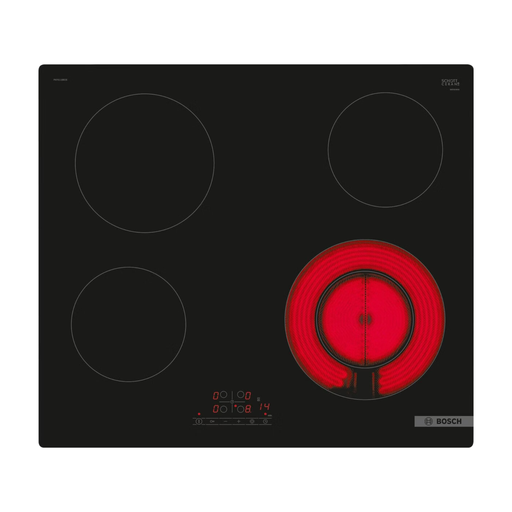
Bosch PKF611BB2E Series 4 built-in ceramic hob

Bosch PKF611BB2E Series 4 built-in ceramic hob

The four zones give you room to cook with several pans, including a larger one.

Four cooking zones; stated zone size range Ø 120–210 mm; 17 power settings and a timer for each zone.

According to the product information, connection requires a 2-phase Perilex connection; the cable and plug aren’t included, and installation must be carried out by a qualified professional.

View on Joybuy

Freestanding induction hob with two cooking zones

Freestanding induction hob with two cooking zones

The two cooking zones give you an extra cooking spot alongside your soup pan.

The product description lists five temperature settings and a portable design.

Induction requires a suitable pan with a magnetisable base.

View on Joybuy
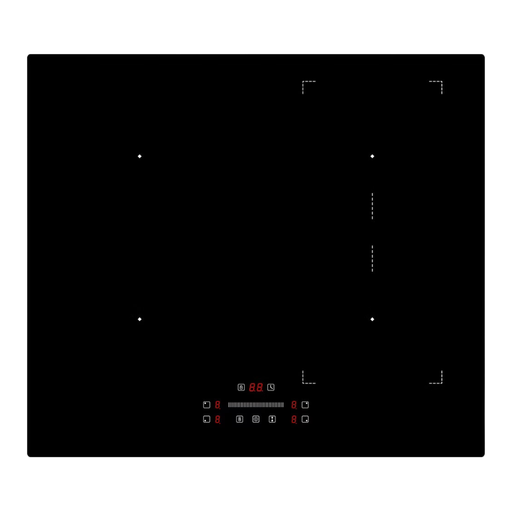
Exquisit EKI624-30 induction hob with four cooking zones

Exquisit EKI624-30 induction hob

The four zones are designed for several pans; the bridge function lets you combine two zones.

The product information states that it can be connected to either one or two phases.

The cable is supplied without a plug. Check that your available connection is suitable, and use an induction-compatible pan with a magnetisable base.

View on Joybuy
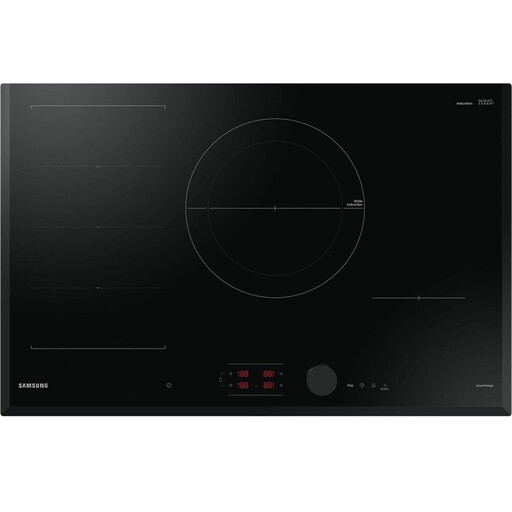
Samsung NZ84C6058KK induction hob, 80 cm wide

Samsung NZ84C6058KK induction hob, 80 cm

The four zones and Flex Zone Plus are designed for several pans or a wider pan.

The product information lists a connected load of 7,4 kW and a Flex Zone Plus measuring 210 × 380 mm.

Installation must be carried out by a qualified electrician. Check the installation dimensions and use a pan with a flat, magnetisable base.

View on Joybuy
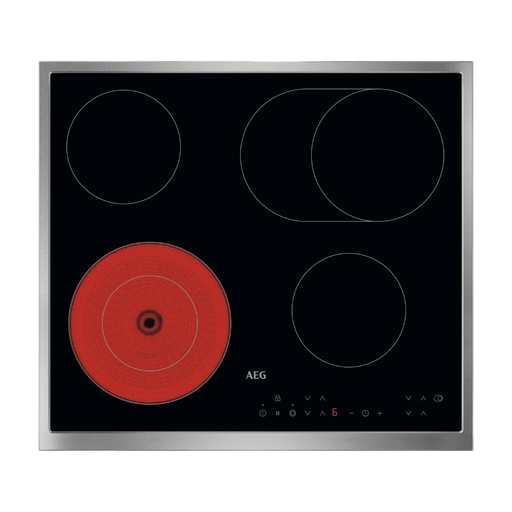
AEG TN64RA06XB built-in ceramic hob, 60 cm

AEG TN64RA06XB built-in ceramic hob, 60 cm

The four zones and expandable zone provide cooking space for different pan sizes.

The expandable zone is listed as 17 × 26,5 cm.

The stated connection is 220–240 V / 400 V 2N; installation by an electrician is recommended. Check the installation dimensions and connection requirements.

View on Joybuy

Frequently asked questions

How can you tell whether your soup pan works with induction?

Check whether a magnet sticks to the pan base, then compare the diameter of its flat base with the range in the hob manual. Pan detection and supported diameters vary by model.

Can you plug in a freestanding two-zone hob and use both hotplates at full power?

It depends on the model. According to Inventum, the VKI3020ZWA is a single-phase model with a standard plug, but its maximum combined output for both zones is 2000 W. Check the socket and manual before using the hob.

What should you bear in mind while simmering and after cooking?

Stay nearby while cooking and keep flammable materials away from the hob; the Fire Service recommends using a kitchen timer as a reminder. After use, watch out for residual heat, especially on ceramic and traditional electric zones, and follow the manual’s cleaning instructions.

Is CE marking compulsory for an electric hob?

CE marking is compulsory for electrical products covered by the Dutch Commodities Act Decree on Electrical Equipment. The Netherlands Food and Consumer Product Safety Authority describes the marking as a declaration by the manufacturer; on its own, it isn’t proof of independent testing. Check the marking on the version being offered.

What can you do if your hob is faulty?

In the Netherlands, the retailer must offer a solution if a product you’ve bought is faulty. According to the Dutch government, there is no fixed statutory two-year guarantee period for all products; a manufacturer’s guarantee is in addition to your statutory rights.
