
If you cook with a large soup pan
You’ll want to know whether the base of your pan fits the cooking zone and whether you can heat the soup gently and evenly. The Consumentenbond recommends matching the pan size to the cooking zone.


Start by checking the base size of your soup pan, how many pans need to cook at once and what type of connection is available. A portable induction hob may be suitable if your pan is compatible. For cooking with several pans at once, a multi-zone hob may be more convenient, while a ceramic or cast-iron electric hob is an alternative if you want to keep using your existing pan. The Consumentenbond recommends matching the pan size to the cooking zone.
You’ll want to know whether the base of your pan fits the cooking zone and whether you can heat the soup gently and evenly. The Consumentenbond recommends matching the pan size to the cooking zone.
You’re looking for an extra place to cook alongside your existing kitchen, so you can prepare soup and other dishes without having a hob fitted into your worktop.
You’ll want to check first whether your soup pan is suitable for induction. If it isn’t, compare electric hobs that don’t use induction. Milieu Centraal stresses that induction requires a compatible pan base.
Start with the pan base and cooking zone. Then decide whether one extra zone will be enough, and check the connection before comparing wattages.
| What to consider | What should you check? | Who is this important for? |
|---|---|---|
| Suitable cooking zone | Measure the base of your soup pan and compare it with the pan-size range or cooking zone. The Consumentenbond recommends matching the pan to the zone. | If I use a large soup pan, I want its base to fit the zone and the induction hob to recognise it. Around 36% of consumers put the match between pan and cooking zone first. |
| Connection and extra cooking zone | Check the plug type, connection rating and the load on the circuit you plan to use for the hob. | I’m looking for an extra place to cook, but want to know whether the connection can handle it. Around 29% of consumers prioritise the practicality of the extra cooking zone and its connection. |
| Cooking with several pans at once | Count how many pans you need to use at once, then check the power per zone and the total connection power. | If the soup and side dishes need to cook at the same time, I need enough zones and usable power. Around 21% of consumers prioritise being able to cook several things at once. |
| Keeping your existing pan | Check whether your pan is suitable for induction. If it isn’t, compare the dimensions and connection requirements of a non-induction hob. | I want to keep using my soup pan, so I’ll first check which type of hob it works with. Around 14% of consumers prioritise keeping their existing pan. |
Wattage alone won’t tell you whether the base of your soup pan will fit the cooking zone. What’s more, the available power may be shared when several zones are in use.
Compare the pan base with the stated zone size or pan-size range, count how many cooking zones you need and check the connection rating before comparing peak power.
A hob that appears to plug into a standard socket isn’t automatically suitable for every circuit or for use at the same time as other high-power appliances.
Check the model’s installation instructions and have a qualified professional assess any high-power connection that may be required.
A more powerful model may require changes to the connection and installation, which means extra practical arrangements.
A hob with a glass-ceramic surface may still use induction, so it may require a compatible pan base.
Check the stated heating technology, not just the surface or product title.
Its range includes the freestanding IK-6178CH induction hob, with one cooking zone.
The VKI3010ZWA is a freestanding induction hob with two zones, for anyone who wants to use a second pan alongside their soup pan.
The range includes the KP 1071 induction hob and the KP 1092 electric cast-iron hob, which doesn’t use induction.
The portable PRO Menu 2100 induction hob has one cooking zone.
This selection includes portable hobs with one or two zones. Compare each model’s suitable pan size, the number of cooking zones you need and the connection requirements.
 Image unavailable
The two independently controlled zones give you space to cook with more than one pan at a time.
The product lists zone power ratings of 1500 W and 1000 W, plus five temperature settings.
 Image unavailable
This tabletop model has one zone and is designed for use with one pan as an extra cooking spot.
The product title lists 1000 W and five power settings.
 Image unavailable
The stated XL cooking zone has a suitable pan-size range of 12–26 cm. Compare this with the base of your soup pan.
Adjustable power from 200–2000 W, 10 power settings and a timer of up to 3 hours.
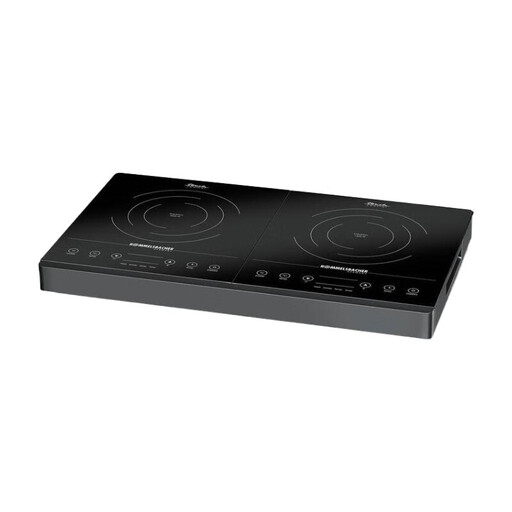 Image unavailable
The product title lists two cooking zones, for anyone who wants to use more than one pan at a time.
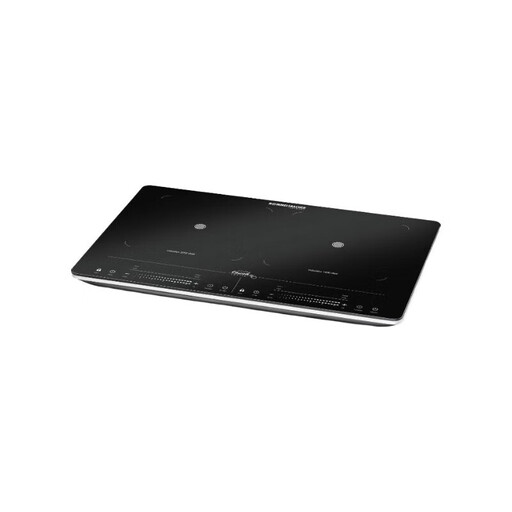 Image unavailable
This portable two-zone induction hob is designed for cooking with more than one pan at a time.
The product description lists power ratings of 1400 W and 2000 W, pan detection and a suitable pan-size range of 120–260 mm.
Look for the induction symbol and check whether the base is magnetic. Also compare the base size with the cooking zone. A suitable material doesn’t guarantee that every zone will recognise a pan that’s an unusual size.
Check the specific model and the load on the circuit before plugging in the hob. The Consumentenbond warns that some hobs with limited total power can’t be used at the same time as another high-power appliance on the same circuit.
Voedingscentrum advises letting leftovers cool within two hours, then storing them covered in the fridge. When you reheat them, make sure they’re piping hot all the way through and stir well as they heat.
In the Netherlands, the seller must provide a solution if a product is faulty. The Dutch government states that there’s no fixed statutory guarantee period; a manufacturer’s warranty is separate.
Milieu Centraal advises discussing this first with your pacemaker technician or cardiologist. The source suggests ceramic cooking as an alternative; don’t assume a hob is suitable based on its name alone.