
Cook with a small asparagus pan
Uses a smaller pan and wants to know whether its base falls within the induction hob’s size range and will be detected by the appliance.


Start by checking the base size and material of your existing pan: induction only works with suitable, magnetic pans that fall within the hob’s stated size range. If you want to keep using your current pan, compare ceramic and cast-iron hobs too; bear in mind that these cooking surfaces can stay hot after they’re switched off. Also check that the pan and water fit on the cooking zone, and that you can leave enough space around the hob.
Uses a smaller pan and wants to know whether its base falls within the induction hob’s size range and will be detected by the appliance.
Wants to cook a small portion electrically using a pan they already own, so is comparing induction with ceramic or cast-iron hobs.
Needs an extra cooking spot and must consider not only the dimensions but also the clearance specified in the instruction manual.
Choose this if: your pan base is magnetic and falls within the range of the model you’ve chosen.
Bear in mind: a small or non-magnetic pan may fall outside that range.
Choose this if: you want to use an electric hob without needing a magnetic pan base.
Bear in mind: the hob itself gets hot and can stay hot after it’s switched off.
Choose this if: you want to use an existing pan that isn’t suitable for induction.
Bear in mind: let the hob cool down before cleaning it.
| What to consider | What should you look for? | Who is this important for? |
|---|---|---|
| Pan size and detection | Measure the base and compare it with the stated range for the exact model. For induction, the base must also be magnetic. | I want to use my small pan without the hob failing to detect it. Around 36% of consumers say finding a pan that fits and is detected is their top buying concern. |
| Heat control | Check the controls and whether there’s a timer. A timer doesn’t mean the hob will maintain a precise water temperature. | I want to adjust the heat while cooking and decide for myself when to stop heating. Around 29% of consumers give adjustable heat and clear control over when cooking stops top priority. |
| Keeping your existing pan | Check that the pan is stable and compare its base with the cooking zone. Ceramic and cast-iron hobs don’t require a magnetic pan base. | I want to keep using my current pan rather than buy a different one specifically for induction. Around 21% of consumers put keeping their existing pan first. |
| Space for installation | Measure the appliance and follow the installation and ventilation requirements for the exact model. For example, the Inventum KI120T manual requires at least 10 cm of clearance at the sides and back. | I have limited worktop space and want to know whether the hob will fit safely with the required clearance. Around 14% of consumers say available space is their main buying concern. |
The stated pan size range varies by induction model. A small pan may therefore fall outside the suitable range, even if the cooking zone looks large enough.
Measure the base of your smallest pan and check both its size and whether it’s suitable for induction.
An induction hob mainly heats the suitable pan, while a traditional cast-iron hob gets hot itself and needs to cool down before cleaning.
Choose the technology that suits your pan, and keep clear of a hot cooking surface after use.
The hob may also need clearance for ventilation. Requirements vary by model.
Measure the space available and follow the installation instructions for the model you’re considering.
The S-Line 2100 is a single-ring induction hob worth comparing if you use a small pan.
The KI120T is a single-ring induction hob worth comparing if your pan base measures between 15 and 20 cm.
The KP 1091 is a single-ring cast-iron hob worth comparing if you don’t need induction.
DOMO offers both a single-ring ceramic hob and a cast-iron model, giving you two non-induction options to compare.
This selection features portable single-ring induction hobs for an extra cooking spot. Before buying, check that your pan base is suitable and falls within the range of the model you’ve chosen.
 No image available
A portable single-ring hob to compare if you need an extra cooking spot.
1000 W, five heat settings and dial controls.
 No image available
A portable induction hob to compare if you’re looking for an extra cooking spot and have a suitable pan.
The product title lists 2100 W and 220V/240V. The product information says the hob works with cookware that has a magnetic base; check the details for the model on offer.
 No image available
A portable single-ring induction hob to compare if you want to adjust the heat while cooking.
The product title lists 10 power settings and six functions; the product information lists a safety lock and automatic boil-dry protection.
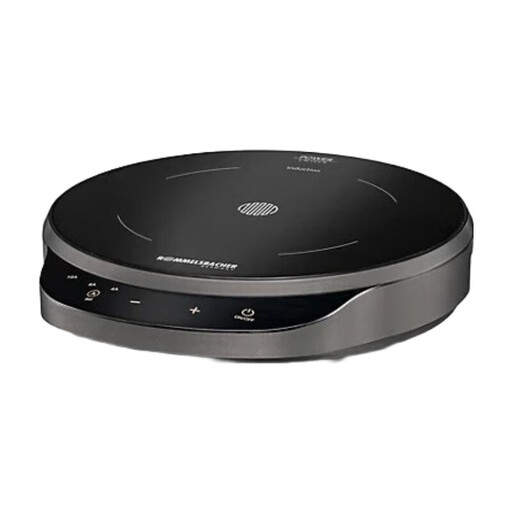 No image available
A single-ring induction hob to compare if you want to use a small, suitable pan.
The product information lists cookware with a diameter of 12–20 cm and nine adjustable settings. The cooking zone can get very hot during and after use.
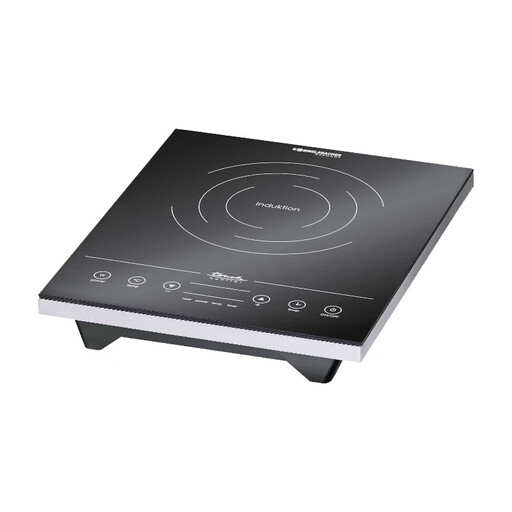 No image available
A single-ring induction hob to compare if you want to use a small pan suitable for induction.
The product information lists a 100–200 mm cooking zone, 10 temperature settings, a timer, a residual heat indicator and automatic shut-off. Not suitable for pans that aren’t induction-compatible.
Yes, if its base is magnetic and falls within the hob’s stated size range. Measure the pan base: CASO Design lists a range of 12–24 cm for the S-Line 2100, while Inventum lists 15–20 cm for the KI120T.
Not just because of the hob; you can cook the portion in an ordinary pan. Choose a pan that suits the portion, then check the base size and, for induction, whether the base is magnetic.
Follow the manual for the exact model. The Inventum KI120T manual specifies a flat, heat-resistant surface and at least 10 cm of ventilation clearance at the sides and back. The Severin KP 1091 manual says to unplug the hob before cleaning and let it cool down.
Contact the seller: according to ACM ConsuWijzer, they must offer an appropriate free solution if the product doesn’t meet what you could reasonably expect from it. In the Netherlands, there isn’t one fixed statutory guarantee period that applies to every appliance.
If the specific electrical appliance is covered by the applicable EU rules, it must comply with those rules and carry the required CE marking before it’s offered for sale in the EU. The manufacturer applies the marking; it isn’t an independent performance test. Check the product information for the specific model on offer.