
Cooking in one pan with limited space
You make soup in one pan and want to put the portable hob away after use. Check your pan size, the space available for the hob and the clearance specified in the manual.


If you’re making soup in one pan and have limited worktop space, a portable single-ring hob is a sensible place to start. If you want to cook a side dish at the same time, you’ll need two usable zones. Choose induction only if your soup pan’s base and size are suitable for the hob. If you want to keep using your current pan, check whether a conventional electric hob is a better match, and make sure the model suits your available space and electrical connection.
You make soup in one pan and want to put the portable hob away after use. Check your pan size, the space available for the hob and the clearance specified in the manual.
You often prepare a second dish alongside your soup, so you need two usable zones that can be controlled separately.
You want to choose a heating technology to suit your pan’s base and size, rather than automatically buying new pans.
Start by thinking about how many pans you want to use at once. Then check whether your soup pan is suitable for induction and whether the hob will fit your worktop and electrical connection.
| What to consider | What should you check? | Who is this important for? |
|---|---|---|
| One pan and limited worktop space | Compare the hob’s external dimensions and required clearance with your worktop. Also check that your pan is suitable for the cooking zone. | If I’m only cooking soup in one pan, I don’t want to give up space for an unused second zone. Around 33% of consumers make compact, one-pan cooking their top priority. |
| Two pans at once | Check the zone sizes, separate controls and total power rating of the exact model. | If I want to prepare a side dish as well as soup, I need two zones that can be used separately. Around 25% of consumers prioritise cooking with two pans at once. |
| Keeping your current pan | Check whether the base is suitable for induction and compare its size with the specified range for the cooking zone. | If I want to keep my soup pan, I want to know whether its base is compatible with my chosen technology before I choose a hob. Around 25% of consumers make compatibility with their existing pan their top priority. |
| Electrical connection and positioning | Read the model-specific information about the plug, power rating and positioning. Keep the specified ventilation clearance free. | If the available space or electrical connection determines my choice, I want to check this in advance for the exact model. Around 17% of consumers start by considering the connection and positioning. |
A glass-ceramic surface doesn’t tell you which heating technology is underneath. For example, the Severin DK 1031 has glass-ceramic zones but is an induction model.
Check the stated heating technology and make sure your pan is suitable before you buy.
If your pan isn’t suitable for induction, you may need a different one.
Consumentenbond describes this limitation for tested freestanding induction hobs with a power rating of around 3500 W. This isn’t a test result for every model.
For the hob you’re considering, compare its total power rating and the information about using both zones at once.
The fire service warns that a coiled cable reel can get hot and recommends plugging high-power appliances directly into a socket wherever possible.
Check the cable length and socket position in advance, and follow the model’s connection instructions.
The Government of the Netherlands states that there is no fixed statutory guarantee period in the Netherlands. If a product is faulty, contact the seller.
Keep your proof of purchase and remember that any additional manufacturer’s guarantee is separate from your statutory rights.
The models mentioned include a portable single-zone induction hob and a conventional electric hob with two rings.
The models mentioned include single- and double-zone induction hobs.
The KP-6245 is a conventional electric hob with two rings and separate controls.
The DK 1031 is a double-zone induction hob. A glass-ceramic surface doesn’t automatically mean that a hob uses conventional ceramic heating.
This selection includes portable hobs for one pan, including induction models and an electric single-ring hotplate, as well as a double-zone induction model for anyone who wants to use a second pan at the same time.
 No image available
A portable induction hob with one cooking zone, ideal for using one pan at a time.
The product description lists 10 heat settings, six functions and a child lock.
Use only pans with a magnetic base. According to the description, aluminium and ceramic pans without a magnetic base won’t work.
 No image available
A freestanding induction hob with one zone for cooking with one pan at a time.
The product description lists a cooking zone for pans measuring 12–26 cm and adjustable power of up to 2000 W.
Use an induction-compatible pan with a flat base, and check that its base size falls within the stated range.
 No image available
A single induction hob for making soup in one pan.
The product description lists a zone for pans measuring 12–23 cm, 10 power settings and a timer of up to 180 minutes.
Use a pan with a ferromagnetic base.
 No image available
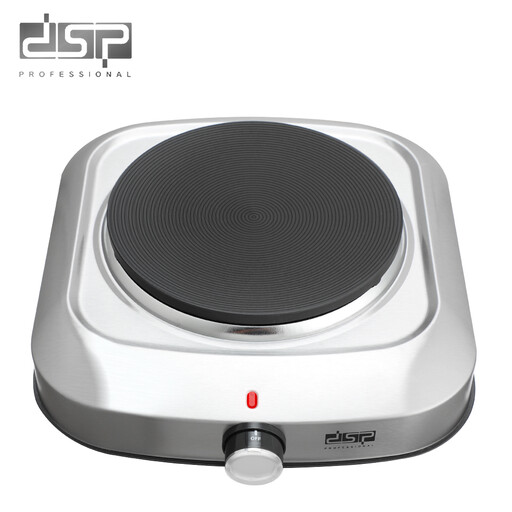
A portable electric single-ring hotplate for heating one pan at a time.
The product name lists 1500 W, while the product description mentions an adjustable temperature control and a 185 mm cooking plate.
 No image available
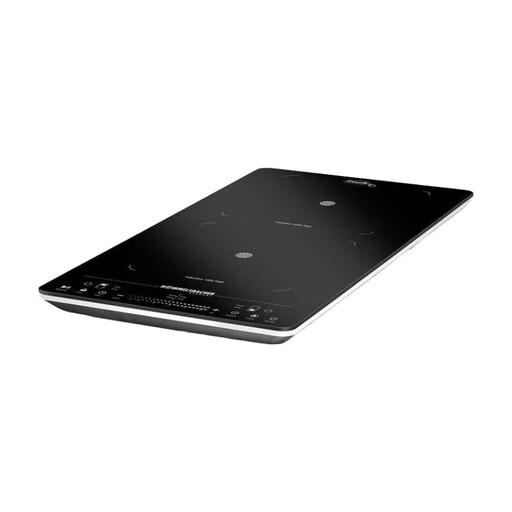
A portable double-zone induction hob for using a second pan alongside your soup pan.
The product description lists two zones for pans measuring 120–260 mm, 10 power settings and a timer of up to 180 minutes.
Allow enough space for the hob and use pans with a flat, magnetic base that falls within the stated range.
If you only use one soup pan, start by comparing single-zone hobs for pan size and the space they need. Choose two zones if you need to heat a second pan at the same time, and check the model’s total power rating too.
Check that the base is magnetic and suitable for induction, then compare its size with the stated range for the cooking zone. The pan’s overall diameter alone isn’t enough.
Follow the manual for the exact model, including its instructions on the surface and required clearance. The manual for the Inventum KI120T specifies a flat, heat-resistant surface and at least 10 cm of clearance at the sides and back. The fire service advises staying nearby while cooking.
No, that doesn’t apply to every model. Inventum describes the KI120T and KP602B as suitable for an earthed Dutch socket. According to Consumentenbond, more powerful freestanding hobs may require a Perilex socket and a two-phase connection. Check the information for your chosen model and, if in doubt, ask someone to assess your available installation.
No. An induction hob can also have a glass-ceramic surface. Check the stated heating technology and make sure it’s suitable for your pan’s base.