What should you look for when choosing?
First decide how many pans you want to use at once, then work out which pan, location and connection will suit the hob.
Freestanding single-zone induction hob
A good fit if: you use one pan at a time, want to save space and have a suitable induction pan.
Consider: you can’t use a separate second pan; also check the pan size and the model’s placement instructions.
Freestanding two-zone induction hob
A good fit if: you want to cook risotto and, for example, mushrooms in separate pans at the same time, without installing a built-in hob.
Consider: the hob takes up more worktop space; having two zones doesn’t, by itself, tell you how much power is available at the same time.
Traditional electric or ceramic hob
A good fit if: you want to keep using an existing pan that isn’t suitable for induction.
Consider: check whether the controls and residual heat suit the way you cook; a traditional hob doesn’t use induction.
Built-in multi-zone induction hob
A good fit if: you want a permanent kitchen setup and regularly use several pans at once.
Consider: measure the cut-out and check the electrical connection before choosing a model.
| What to consider |
What should you check? |
Who is this important for? |
| Low heat control |
Check the lowest setting and the controls; an independent simmering test may tell you more than the number of settings. |
If I want to let the risotto cook gently, I need to be able to turn the heat down properly. Around 36% of consumers prioritise this level of control. |
| Connection and space |
Compare the connection instructions for the exact model with your installation, and measure the available worktop or built-in space. |
When I want to know whether the hob will fit on my worktop or in my kitchen, I consider both the space and the connection. Around 29% of consumers give this top priority. |
| Cooking at the same time |
Count the pans you’ll use at once and check the zone sizes and any power-sharing details in the manual. |
If I want to fry mushrooms or heat stock alongside the risotto, I need space for a second pan. Around 21% of consumers place particular importance on cooking at the same time. |
| Existing pans |
Check whether the pan is suitable for induction and whether its base size suits the cooking zone or stated size range. |
If you want to keep using your current pans, you’ll need to know whether they work with the hob you choose. Around 14% of consumers prioritise compatibility. |
Hobs at Joybuy
These Joybuy models range from freestanding hobs with one or two zones to a built-in induction hob. Decide which type, pan and connection will suit your kitchen and the way you cook.
 Image unavailable
MELISSA induction hob, 2000 W
For making risotto in one pan, if your cookware is suitable for induction.
One cooking zone; 10 power settings; stated temperature range of 60–240 °C; timer.
View at Joybuy
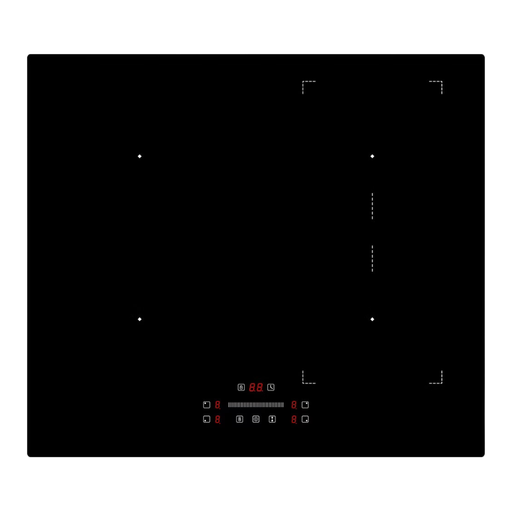 Image unavailable
Exquisit EKI624-30 induction hob
For anyone who wants to use several pans at once and is looking for a built-in model.
Four cooking zones and nine settings. Supplied with a cable but no plug, and intended for professional installation.
View at Joybuy
 Image unavailable
Fritel IP 1266 induction hob
For anyone who uses one pan and wants to match its base size to the cooking zone.
One cooking zone; 2000 W; 10 power settings; stated zone size range of 12–26 cm; timer. Use an induction-compatible pan that falls within the stated range.
View at Joybuy
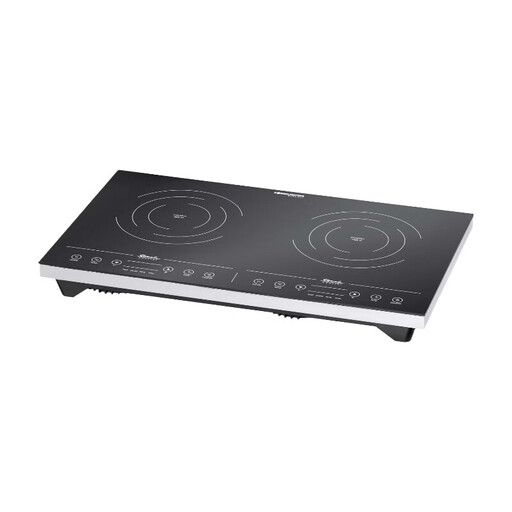 Image unavailable
Rommelsbacher CT 3410/IN double hob
For anyone who wants room for a second pan while cooking risotto.
Two cooking zones; 10 settings; stated zone power ratings of 1400 W and 2000 W. Check how the power is distributed when both zones are in use.
View at Joybuy
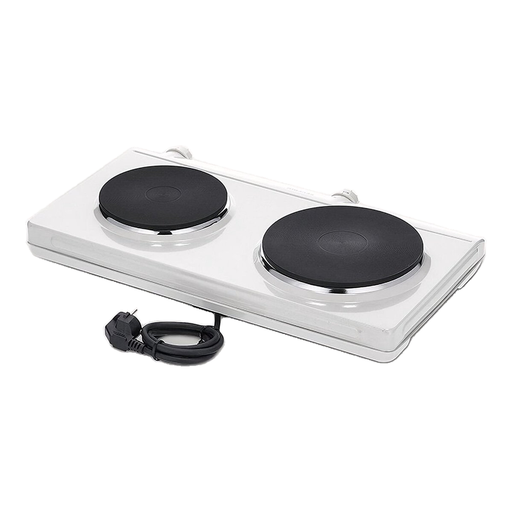 Image unavailable
Severin DK 1042 double electric hob
For anyone looking for a non-induction hob with room for two pans.
Two independently controlled cooking zones; 2500 W; stepless temperature control.
View at Joybuy
Frequently asked questions
Can I make mushroom risotto on a single cooking zone?
Yes, if you prepare the ingredients one after another or use one pan. If you want to cook mushrooms or heat stock in a separate pan at the same time, you’ll need a second zone; also check how power is distributed on the model you choose.
Is a standard socket enough?
It depends on the exact model. ETNA lists a standard plug for the freestanding KIV12ZIL; the Consumentenbond says that suitable 1-phase induction hobs can be connected to an earthed socket. Don’t assume this applies to another or more powerful model without checking, and follow the installation instructions.
How can I check whether my pan works on induction?
Check the pan manufacturer’s guidance and the hob’s requirements, including the base size and flatness. ETNA Service explains that the material and size of the pan base matter; Inventum, for example, lists a pan size range of 15–20 cm for the KI120T.
Where should I place a freestanding induction hob?
Follow the model’s instructions. For the KI120T, Inventum specifies a flat, heat-resistant surface and at least 10 cm of ventilation space at the sides and back. This applies to that model and isn’t a general measurement for every hob.
What happens in the Netherlands if the hob breaks too soon?
For a consumer purchase, the product must meet what you can reasonably expect, and the retailer is your point of contact if there’s a problem. ACM ConsuWijzer states that the legal guarantee doesn’t last exactly two years for every product; a manufacturer’s warranty doesn’t replace this legal right.


