
Cooking with one soup pan
You usually make one pan of leek soup and want to save worktop space. The Consumentenbond describes freestanding induction hobs with a single cooking zone, so pan size and storage space are important considerations.


If you’re making leek soup in a single pan and have limited worktop space, a freestanding single-zone induction hob is an obvious choice. If you want to cook soup alongside a side dish, several cooking zones make more sense. The Consumentenbond describes freestanding induction hobs with one, two or four zones. As Milieu Centraal explains, induction requires a pan with a magnetic base. You should also check the connection, pan size and any installation work required for each model.
You usually make one pan of leek soup and want to save worktop space. The Consumentenbond describes freestanding induction hobs with a single cooking zone, so pan size and storage space are important considerations.
You want to cook soup and something else at the same time. Consider the number of cooking zones, the space available for your pans and the electrical connection. Liander points out that the connection required depends on the hob and the brand.
You want to know whether your soup pan will work on induction and how choosing a different cooking technology might affect your decision. Milieu Centraal recommends checking whether the pan base is magnetic. Ceramic hobs and electric hobs with heating elements are also options.
Start by thinking about how many pans you use at once and what electrical connection you have in your kitchen. Then check whether your existing soup pan is suitable for induction and whether a freestanding model or built-in hob is right for your kitchen.
| What to consider | What to look for | Who should prioritise this? |
|---|---|---|
| Gentle simmering | Compare the low-heat controls, any timer and the size of the cooking zone with your soup pan. A boost function alone doesn’t tell you how well a hob simmers; the Consumentenbond assesses heating time and simmering separately. | If I want to leave the soup to simmer gently after cooking, I need to be able to control the low heat properly. This need for precise control is a priority for around 33% of consumers. |
| Connection and space | Check the plug type, the connection rating and, for a built-in hob, the dimensions of the cut-out. If you’re unsure about your installation, ask someone to assess whether it’s suitable; don’t assume every model uses the same connection. | I want to know in advance whether the hob will work with my connection and fit in my kitchen, so I can plan my cooking area accordingly. Connection requirements and built-in options are the top priority for around 27% of consumers. |
| Keeping your existing pan | For induction, test the pan base with a magnet and compare the pan size with the cooking zone. A ceramic hob or one with heating elements could be an alternative; the Voedingscentrum explains that ceramic hobs take longer to heat up and retain residual heat. | If I want to keep using my current soup pan, I need to know whether it’s suitable for the heating technology I choose. Keeping existing pans and the additional implications of switching are a priority for around 20% of consumers. |
| Everyday use | Check what residual-heat indicator and control lock the model has, and follow the cleaning instructions. Bear in mind that a pan can still make the cooking surface hot. | After cooking, I want to be able to see whether a zone is still hot and clean the surface according to the instructions. Safety and ease of cleaning are the top priority for around 20% of consumers. |
Induction and ceramic hobs heat pans in different ways. Milieu Centraal recommends checking that your pan has a magnetic base before choosing induction.
Check the stated heating technology and test your pan. Also compare the stated pan size with the cooking zone.
The number of zones doesn’t tell you how much power each one gets when they’re all in use. Inventum states that the available power is shared between the active zones on the VKI6010ZWA.
Compare the connection details for your chosen model with your installation, and ask for advice if you’re unsure about the connection.
A timer or sensor doesn’t change Brandweer Twente’s advice: stay near the hob while you’re cooking.
Use features as a helping hand, and keep an eye on your soup while it cooks.
The freestanding models reviewed offer a single-zone and a four-zone option.
The KIV164RVS model reviewed is a freestanding induction hob with four zones.
The models reviewed offer a ceramic and an induction built-in option; the details apply to these specific models.
The KP-6245 is a freestanding electric hob with heating elements, not an induction hob.
The TI64IB1BIZ model reviewed is a four-zone induction hob for built-in installation, with the SenseBoil function described by AEG.
The induction hobs below are designed for cooking with one pan on the worktop or with several zones, including built-in models. Check that your pan base is magnetic and that the connection and cut-out suit the model you choose.
 No image available
Ideal if you want to cook a pan of soup on the worktop; induction requires a pan with a magnetic base.
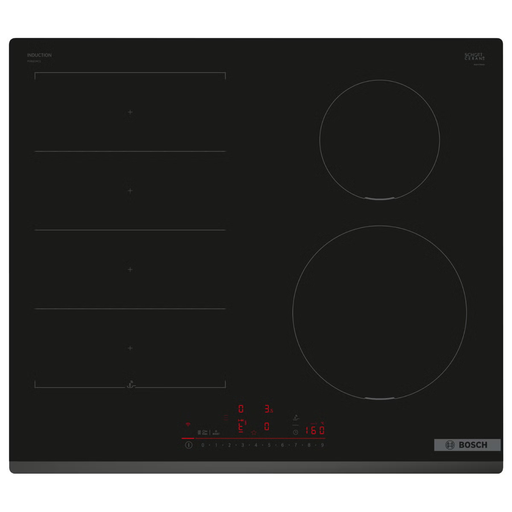 No image available
Ideal if you want to cook soup and other dishes on several zones; induction requires magnetic pans.
According to the product name: 60 cm wide and 4 cooking zones.
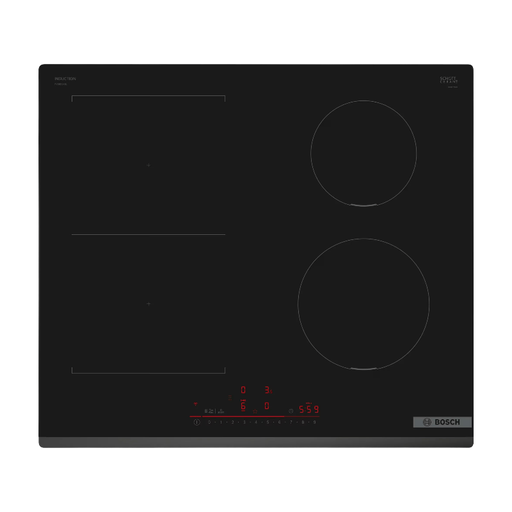 No image available
Ideal if you want to cook soup and other dishes on several zones; check your installation and pan bases.
According to the product name: 4 zones, TouchSlider and ReStart function.
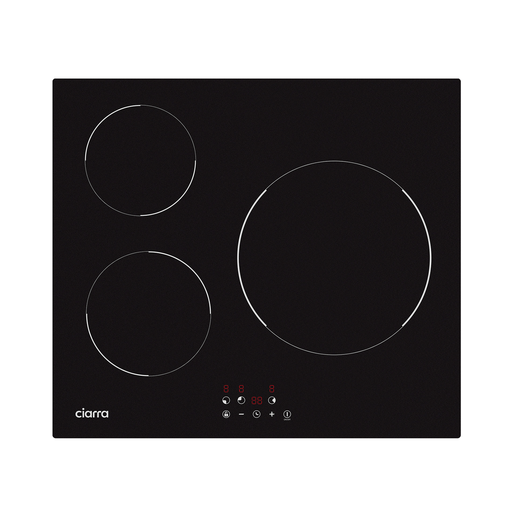 No image available
Ideal if you want to cook soup alongside other pans; check that your pans are magnetic.
According to the product name: 5600 W, 3 cooking zones and 9 power settings.
 No image available
Ideal if you’re looking for a portable hob to make soup on the worktop; induction requires a pan with a magnetic base.
According to the product name: 10 power settings, 6 functions and a safety lock.
Only if the base has a magnetic layer. Test it with a magnet, then check that the pan size falls within the range of your chosen cooking zone. For example, Inventum specifies 15–20 cm for the KI120T.
No, it depends on the model. Inventum and ETNA describe the freestanding models reviewed as suitable for a standard socket, while Bosch states that a plug isn’t supplied as standard with the PKF611BB2E ceramic built-in hob. Check the model details and ask someone to assess the connection if you’re unsure about the built-in installation.
Look at how the low heat settings are controlled, and assess this separately from the heating time. The Consumentenbond tests heating time and simmering separately; a boost function alone doesn’t tell you how well the hob will simmer.
Stay nearby while cooking and keep flammable materials away from the cooking area, as Brandweer Twente advises. After cooking, check for a residual-heat indicator and follow your model’s instructions for cleaning.
Allow for the possible cost of new cookware and, depending on the model and your existing installation, connection or installation work. ACM ConsuWijzer explains that the statutory guarantee in the Netherlands isn’t simply a fixed two-year period: what you can expect depends, among other things, on the product and normal use.