
Cooking a large batch in one pan
You’re making several portions at once and want to know whether the pan base will heat evenly and whether a low setting will let you simmer gently.


For a large pan of creamy leeks, the main thing is to make sure the pan base fits the cooking zone and that you can turn the heat down low enough for a gentle simmer. Induction responds quickly, but requires suitable pans; a ceramic hob may suit you if you want to keep using your current pans, although it heats up more slowly and retains more residual heat. If you’re considering a built-in model, also check that your kitchen’s electrical connection is suitable.
You’re making several portions at once and want to know whether the pan base will heat evenly and whether a low setting will let you simmer gently.
You want to cook electrically without assuming that you can connect a high-powered built-in hob. Placement and the power available when cooking on more than one zone also matter.
You’re comparing induction with ceramic cooking, particularly because your pans may not be suitable for induction.
A good fit if: you have induction-compatible pans and the cooking zones suit your large pan and other pans.
Bear in mind: the connection you’ll need, as well as any costs for suitable pans or installation.
A good fit if: one or two cooking zones are enough and you’re looking for a freestanding model.
Bear in mind: the size of the zones and the available power if you want to use several pans at once.
A good fit if: you want to use pans that aren’t suitable for induction and the model’s connection is right for your kitchen.
Bear in mind: the hob heats up more slowly and retains more residual heat after use.
| What to consider | What to check | Who is this important for? |
|---|---|---|
| Large pan and simmering | Measure the pan base and compare it with the cooking zone or permitted bridge configuration. Also check which low settings are available. | When I’m making several portions, I want to know whether my wide pan will sit properly on the zone and simmer gently. Around 36% of consumers put pan size and simmering top of their list. |
| Connection and cooking at the same time | Check the installation requirements for the exact model, how many zones you can use and the power available when using them at the same time. | I want to know in advance whether the hob can be connected to my kitchen’s electrical supply and whether I can use more than one pan while cooking. Around 29% of consumers prioritise the connection and cooking on multiple zones. |
| Controls and cleaning | Compare the controls for each zone and follow the model’s cleaning instructions. Don’t use a timer as a substitute for keeping an eye on your cooking. | When I cook regularly, I want to adjust the heat quickly and clean up spilled sauce easily. Around 21% of consumers prioritise ease of use and cleaning. |
| Existing pans and switching | Check whether your pans are suitable for induction and review the connection and installation requirements for a replacement hob. | If I want to keep my current pans, I want to know whether their bases work with induction and whether switching will require any extra changes. Around 14% of consumers prioritise keeping their pans and limiting the cost of switching. |
The overall width of the hob doesn’t tell you whether the base of your large pan will sit on a usable zone.
Measure the pan base and compare it with the zone dimensions. If the hob has a bridge function, also check that the shape of your pan suits the specified configuration.
You may find you need a different pan or hob.
Freestanding models and high-powered built-in hobs may have different installation requirements. For example, according to the manufacturer, the ETNA KC160ZT requires a two-phase connection and has a connected load of 6500 W.
Check the instructions for the exact model, and have your existing connection assessed if it doesn’t meet the requirements.
You may need to adapt the connection, worktop or installation; what’s involved will depend on your home.
A pan needs a suitable magnetic base to work on an induction hob.
Check for the induction symbol or test the base with a magnet before you decide.
You may need to buy a suitable pan.
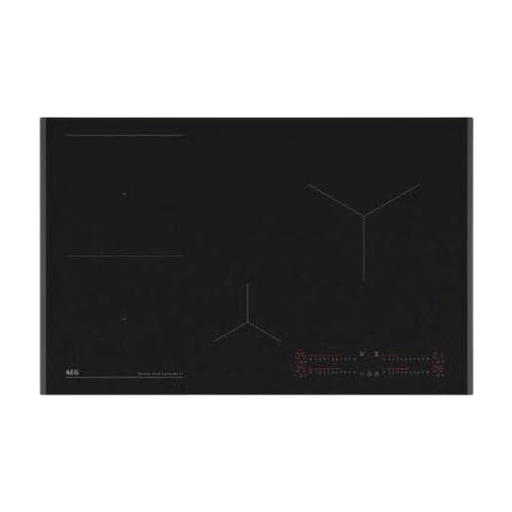
Worth considering if you’re looking at a built-in induction hob with a bridge function. The features listed apply to model V64IOB00FB.
A freestanding induction hob to consider if two cooking zones are enough. The details here apply to model VKI3020ZWA.
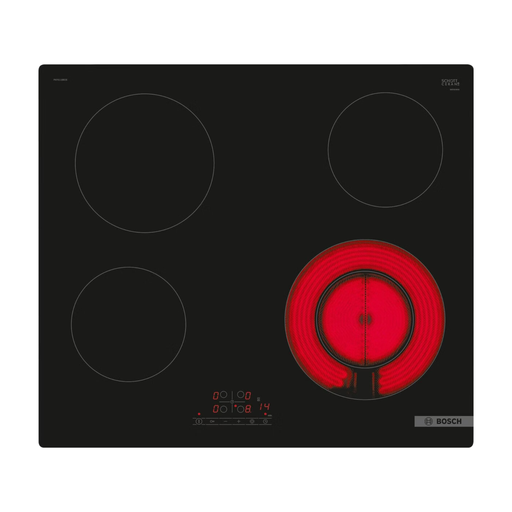
A built-in ceramic hob to compare if you want to keep using pans that aren’t suitable for induction. The specifications below apply to model KC160ZT.
A built-in induction hob with four zones is another option to compare. The width and timer details listed apply to model PIE661BB5E.
This selection includes induction and ceramic hobs, from built-in models to freestanding hobs for one or two pans.
 No image available
An option to consider if you’re looking for an induction hob and can have it installed by a qualified professional.
The product information lists a width of 80 cm and slider controls. Check the model’s installation requirements.
 No image available
A ceramic option to consider if you want to keep using pans that may not be suitable for induction.
The product information lists four zones, 17 power levels and an expandable zone of 120–210 mm. This model requires a two-phase connection; the cable and plug are not included.
 No image available
A freestanding option to consider if you want to use two pans at once and their bases fit the zones.
The product information lists two independently controlled zones of 7 and 6 inches and five temperature settings. Check that your pans are suitable for induction.
 No image available
A compact option if you want to heat one pan at a time and don’t need a hob with several zones.
The title lists one cooking zone, five heat settings and 1000 W. You’ll need a suitable pan for induction.
 No image available
An option for anyone who wants to heat one pan at a time on a portable induction hob.
The product information lists one cooking zone, temperature control and several cooking settings. The title specifies 220V/240V; check that the electrical specifications suit your setup.
No. Check that the pan base is suitable for induction and compare its size with the zone or bridge configuration on the exact model. A wide hob doesn’t automatically mean its cooking zones will suit your pan.
First, check the model’s requirements and your kitchen’s connection. The Consumentenbond says that induction hobs with a connected load above 3.65 kW need a higher-capacity connection; a freestanding model with a plug is a different product category.
No. Some models can use a timer to switch off a zone, but this doesn’t replace supervision. Brandweer Nederland advises staying near the hob while cooking.
Only if your current pans aren’t suitable for induction. Check for the induction symbol or test the base with a magnet, then compare the pan base with the cooking zone you want to use.
According to the Voedingscentrum, you can keep leftovers covered in the fridge for up to two days. Freeze them if you want to keep them for longer.