
Cooking with two pans
You want to cook rice and vegetables at the same time and need cooking zones that can accommodate both pans simultaneously.


If you want to cook rice and vegetables at the same time in separate pans, start by looking at a hob with two suitably positioned cooking zones. For a one-pan meal, a portable single-zone hob may be enough. Induction requires compatible pans, while ceramic and cast-iron zones have other considerations. If you’re choosing a built-in hob, check the cut-out dimensions and electrical connection too. The right choice depends on your pans, cooking habits and kitchen—not on a one-size-fits-all ranking.
You want to cook rice and vegetables at the same time and need cooking zones that can accommodate both pans simultaneously.
You make your meal in one pan and want to be able to put the portable hob away after use.
You’re looking for several fixed cooking zones and need to check that the cut-out and electrical connection are suitable for the model you choose.
Choose this if: you often cook rice and vegetables at the same time in separate pans and aren’t looking for a built-in hob.
Bear in mind: you’ll need enough room for two pans, and should check the model’s total power rating.
Choose this if: you cook in one pan, can cook in stages or need an extra cooking spot you can put away.
Bear in mind: there’s no second pan position. Check the compatible pan diameter and electrical connection too.
Choose this if: you want several fixed cooking zones and don’t want induction.
Bear in mind: the zones themselves get hot, and the cut-out and connection must suit the exact model.
Choose this if: you want two independently controlled cooking spots and don’t want to use induction-compatible pans.
Bear in mind: the heated zones stay hot after you switch them off. Compare the zone diameters with your pans.
Choose this if: you want a permanent cooking setup for several pans.
Bear in mind: a built-in model may require a different connection and installation from a portable hob.
| What to consider | What to look for when buying | Who will find this important? |
|---|---|---|
| Number of cooking zones | Compare the number and layout of the zones, compatible pan diameters and the exact model’s total connection load. | I want to cook rice and vegetables at the same time in separate pans and know in advance whether they’ll fit side by side; around 36% of consumers give simultaneous cooking top priority. |
| Worktop space and storage | Check the external dimensions and follow the positioning and ventilation instructions in the manual. | If I have limited worktop space, I want to be able to make a one-pan meal and put the portable hob away afterwards; around 29% of consumers value compact storage most. |
| Existing pans | Test every pan you plan to use with a magnet and compare the pan base with the stated zone dimensions. | I want to keep using my current pans and check first that they’re suitable for the cooking method I choose; around 21% of consumers prioritise keeping their existing pans. |
| Built-in installation and connection | Measure the cut-out, check the exact model’s connection rating and have someone assess the connection you have and the one you’ll need. | When replacing a built-in hob, I want to keep several zones without choosing a model that isn’t compatible with my kitchen; around 14% of consumers give a built-in hob top priority. |
The fact that a portable hob has a plug doesn’t mean a built-in hob can use the same connection. According to the Consumentenbond, a built-in induction hob with a connection rating above 3,65 kW needs a higher-capacity connection and a five-pin Perilex socket.
Read the connection rating and installation instructions for the exact model, and have your existing setup assessed before ordering.
A built-in installation may require changes to the circuit, connection or cut-out. Have your kitchen assessed in advance to find out what work may be needed.
An induction hob works with a magnetisable layer in the base of the pan. You can’t tell whether a pan is suitable just by looking at it.
Hold a magnet against the base of every pan you want to use, and check the stated pan diameter for the zone too.
According to Milieu Centraal, ceramic zones themselves get hot and respond more slowly than induction zones. The technology and residual-heat warning are therefore important factors when choosing and using your hob.
Follow the model’s instructions and, after use, treat each zone according to its residual-heat indicator.
The models reviewed include portable induction hobs with one or two zones, as well as a portable hob with cast-iron zones.
The KC160ZT is a built-in ceramic hob for anyone looking for several fixed zones without choosing induction.
The KP-6245 is a portable electric hob with two independently controlled zones.
The Bosch models reviewed include both ceramic options and multi-zone built-in induction hobs.
This selection includes portable induction hobs with one or two zones and multi-zone built-in hobs, including a ceramic model. If you’re choosing a built-in hob, always check the connection requirements and your kitchen’s dimensions.
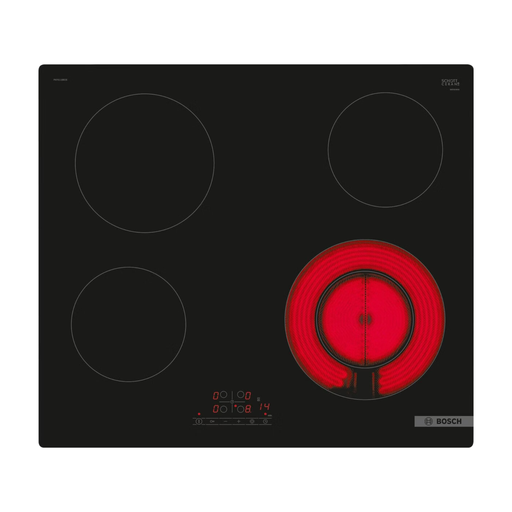 Image unavailable
A built-in ceramic hob to consider if you want several fixed cooking zones and don’t want induction.
The product description lists four ceramic cooking zones, touch controls and a cut-out of 56 × 49 cm.
The product description specifies a two-phase connection and professional installation; check that both are suitable for your kitchen.
 Image unavailable
A portable two-zone hob to consider if you want to cook rice and vegetables at the same time in separate pans.
The product name specifies two cooking zones and five temperature settings.
 Image unavailable
A portable single-zone hob to consider if you’re cooking a meal in one pan or want a cooking spot you can move around.
The product name specifies one zone, five power settings and 1000 W.
 Image unavailable
A portable single-zone hob to consider for cooking in one pan, provided the pan has a suitable magnetisable base.
The product name specifies 220V/240V and 2100 W.
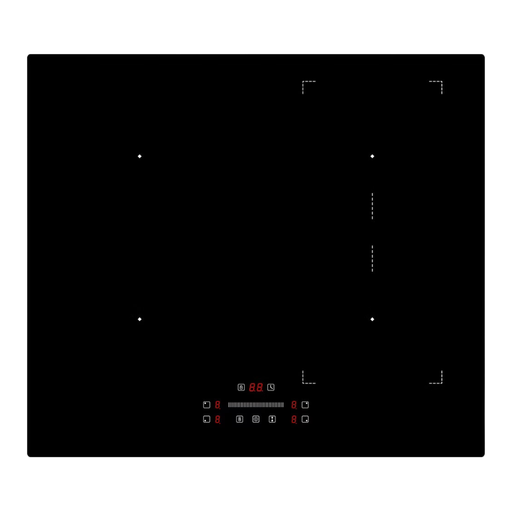 Image unavailable
A built-in option to consider if you want to use several pans at the same time and are looking for a permanent cooking setup.
The product name specifies four cooking zones and touch controls.
According to the product description, the cable is supplied without a plug and must be connected by an installer. Check the installation requirements for your kitchen.
It depends on the exact model. Inventum describes the KI120T and VKI3020ZWA as single-phase models with a standard plug; don’t assume this specification applies to other hobs. Check the manual too, and see which other appliances are connected to the same circuit.
Hold a magnet against the base: induction requires a magnetisable layer. Also check the pan diameter specified by the manufacturer for the zone you’ve chosen.
Follow the instructions for your model and wait until the surface has cooled to a safe temperature. For the TILLREDA model reviewed, the manufacturer recommends removing food residue with a damp cloth and mild detergent, drying the surface afterwards, and avoiding abrasive or sharp cleaning tools.
According to ACM ConsuWijzer, the seller is responsible for providing an appropriate solution if a product doesn’t meet what you could reasonably expect during normal use. A limited manufacturer’s warranty doesn’t replace this statutory right.
No. The RVO scheme for electric cooking equipment doesn’t automatically apply to every buyer and includes conditions for the property, including connection to a heat network. In October 2026, RVO still described the planned end of this grant from 2027 as a proposed change, so don’t base your purchase on the assumption that future funding is guaranteed.