Who is this choice relevant to?

For cooks who like a gentle simmer

You cook your lentil and vegetable stew in one pan for a long time and want to be able to control the heat on a low setting. The Consumentenbond stresses that not every induction hob keeps a pan at the same low temperature for an extended period on its lowest setting.

For cooks serving a full table

You use other pans alongside your stew pan, so you’ll need enough suitable cooking zones and the right electrical connection. Check how many pans you want to use at once and what installation the hob you choose requires.

For cooks with limited kitchen space

You want to cook without cutting a hole in the worktop, or first check whether your pans and electrical connection are suitable for a change of hob. The Consumentenbond notes that a freestanding hob doesn’t need a worktop cut-out; induction does require a suitable, flat pan base.

What should you look for when buying?

Built-in induction

A good fit if: you use several pans at once and your kitchen has a suitable cut-out and electrical connection.

Trade-off: induction requires suitable, flat-based pans. For connection ratings above 3.65 kW, the Consumentenbond describes a heavier-duty connection with a 5-pin Perilex socket.

Freestanding induction

A good fit if: you don’t want a built-in hob and one or two cooking zones are enough.

Trade-off: check that your stew pan fits the zone and how much power is available when you use several zones at once.

Ceramic radiant heat

A good fit if: you don’t want induction and have a suitable space for a built-in hob and the right electrical connection.

Trade-off: the zone continues to give off heat after it’s switched off. Match the zone size to your pan and look for a residual heat indicator.

Freestanding cast-iron hotplate

A good fit if: you want to heat one pan or need an extra cooking zone.

Trade-off: a single-ring hotplate doesn’t have room for several pans at once. A stepless control doesn’t prove that the temperature stays constant while simmering.

What to consider What should you check? Who is this important for?
Controlled simmering Look for a review of the lowest setting on the exact model; don’t rely solely on the number of settings or a boost function. If you want to keep your stew gently cooking for a long time after bringing it to the boil, steady low heat is your main priority. Around 36% of consumers making this choice prioritise controlled simmering above all else.
Room for pans Compare the base size of your stew pan with the cooking zones and decide how many pans you’ll use at once. If you’re cooking side dishes as well as stew for a shared meal, you’ll want to know whether the other pans will fit alongside the stew pan. Around 29% of consumers prioritise cooking several dishes at once.
Electrical connection and installation Check the connection rating and wiring diagram for the exact model, as well as the cut-out dimensions if it’s a built-in hob. If your kitchen doesn’t have a built-in hob cut-out or you’re unsure about the electrical connection, this requirement could determine which model you choose. Around 21% of consumers prioritise a suitable connection and installation above all else.
Existing pans and additional costs For induction, check that the pan base is flat and magnetic. Before choosing a built-in hob, find out what installation or worktop work will be needed. If you want to keep using your current stew pan and limit changes to your kitchen or electrical connection, check these requirements before buying. Around 14% of consumers prioritise keeping their existing pans and avoiding extra costs.

Common pitfalls

  • Assuming lots of settings or a boost function means it will simmer well

    According to the Consumentenbond, not every induction hob keeps a pan at the same low temperature for an extended period on its lowest setting. A boost function, by itself, tells you nothing about how well it simmers.

    Look for a review of how the exact model simmers on its lowest setting, and check how its low settings are controlled.

  • Choosing a built-in hob before checking the connection and cut-out

    A powerful hob may require a different electrical connection, while a freestanding hob doesn’t need a worktop cut-out. Depending on your existing setup, changing the connection or kitchen and installing the hob can involve extra costs.

    Compare the wiring diagram and built-in dimensions of the exact model with your kitchen. If you’re unsure, ask someone to assess the connection before you buy.

  • Confusing glass ceramic with induction

    Glass ceramic can be the surface of an induction hob, while a ceramic radiant hob heats in a different way. Induction requires a suitable pan base.

    Check the heating technology and whether your stew pan is suitable; don’t judge by the look of the cooking surface alone.

Brands to consider

Inventum

Inventum offers both compact freestanding induction hobs and freestanding cast-iron hotplates.

  • For the VKI3020ZWA, Inventum lists two 19 cm zones and a standard plug for an earthed socket. The KP602B has 15 cm and 18 cm zones.
  • These stated features don’t show how consistently a model simmers on a low setting or which large pans will fit.

Bosch

The PVS631HB1E built-in induction hob is an option if you want several cooking zones.

  • Bosch lists four cooking zones and a CombiZone for this model. Its stated dimensions are 592 × 522 mm, with a 56 cm-wide cut-out.
  • Check the controls and wiring diagram for the exact version, and compare the cut-out dimensions with your kitchen.

Pelgrim

The CK1064R is a built-in ceramic radiant hob with four zones, including one expandable zone.

  • Pelgrim lists a residual heat indicator, which helps remind you that a zone stays warm after it’s switched off.
  • Check that the built-in dimensions and electrical connection are suitable for your kitchen.

Severin

The KP 1091 is a freestanding cast-iron hotplate with one cooking zone.

  • Severin lists an 18.5 cm zone, 1,500 W and a stepless control.
  • One zone limits how much you can cook at once, and a stepless control doesn’t measure simmering performance.

Electrolux

The EHF6241XOK is a built-in ceramic hob with four zones.

  • Electrolux lists a connection rating of 6,400 W and a residual heat indicator.
  • This model’s built-in dimensions are 38 × 560 × 490 mm. Check them against the space available, and don’t apply these measurements to other models.

Hobs at Joybuy

This selection includes four-zone built-in induction and ceramic hobs for anyone who wants to use their stew pan alongside other pans.
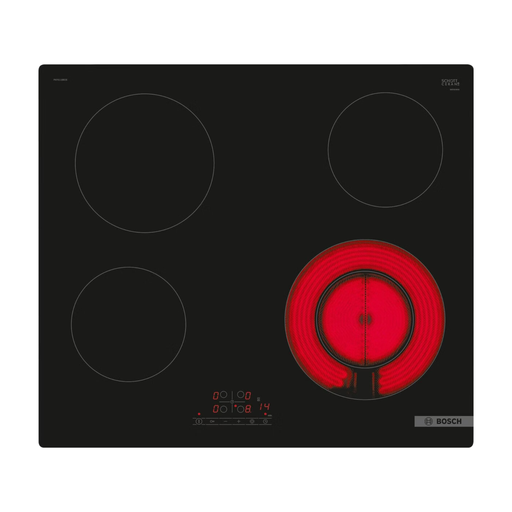
Bosch PKF611BB2E Series 4 built-in ceramic hob, 60 cm

Bosch PKF611BB2E Series 4 built-in ceramic hob, 60 cm

The four cooking zones give you room to use your stew pan and other pans at the same time.

The product description lists 17 power settings and a timer for each zone.

According to the description, it requires a 2-phase connection with a 5-pin Perilex socket; the cable and plug aren’t included. The ceramic zones can stay hot after being switched off.

View at Joybuy
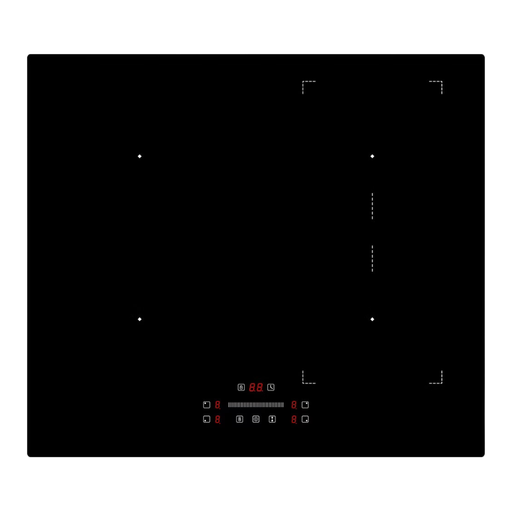
Exquisit EKI624-30 induction hob with four cooking zones

Exquisit EKI624-30 induction hob with four cooking zones

Four zones and a bridge function could suit you if you use other pans alongside your stew pan or want to fit a larger pan.

The product description lists nine settings, a timer and a bridge function.

This hob is designed for built-in installation and comes with a cable but no plug; it must be connected appropriately. Induction requires pans with a flat, magnetic base.

View at Joybuy
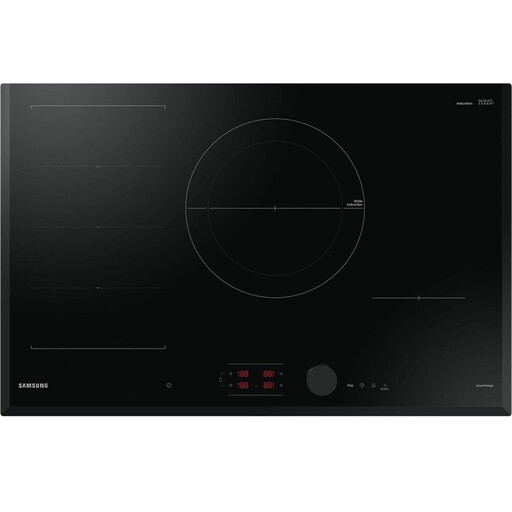
Samsung NZ84C6058KK induction hob, 80 cm, four cooking zones

Samsung NZ84C6058KK induction hob, 80 cm

The product description lists four zones and Flex Zone Plus for large pans or several pans.

It also lists 15 power settings and a connection rating of 7.4 kW.

This is a built-in induction hob; the description specifies that it must be installed by an electrician. Use pans with a flat, magnetic base.

View at Joybuy
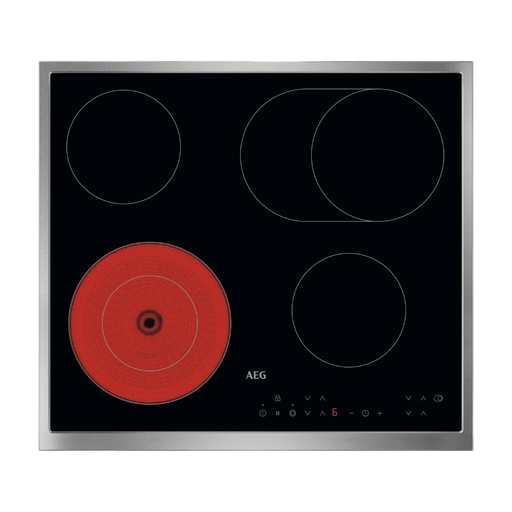
AEG TN64RA06XB built-in ceramic hob, 60 cm, four cooking zones

AEG TN64RA06XB built-in ceramic hob, 60 cm

The four cooking zones are designed for cooking several dishes at once. The expandable zone could be useful for a pan with an unusual base size.

The product description lists a timer and an expandable zone.

Check that the built-in dimensions and electrical connection are suitable for your kitchen. According to the description, the surface can stay warm for a long time after being switched off.

View at Joybuy
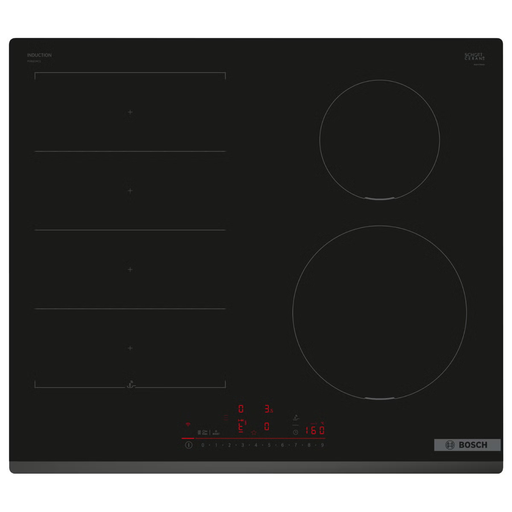
Bosch PIX631HC1E induction hob with four cooking zones

Bosch PIX631HC1E induction hob with four cooking zones

The four zones give you room for several pans; according to the product description, FlexInduction is designed for larger pans.

The product name lists DirectSelect controls and PowerBoost.

Induction requires pans with a flat, magnetic base. Check the connection and built-in dimensions for the kitchen where you plan to install the hob.

View at Joybuy

Frequently asked questions

Can I use my existing stew pan on an induction hob?

Yes, if the base is magnetic and flat, and the pan fits the cooking zone. Check for the induction symbol or test the base before buying a new pan.

Does a built-in electric hob always need a Perilex connection?

No, it depends on the model and installation. For induction hobs with a connection rating above 3.65 kW, the Consumentenbond describes a heavier-duty connection with a 5-pin Perilex socket. According to Inventum, a suitable freestanding 1-phase model may have a standard plug; ask a qualified professional to assess any complex connection.

How can I keep my stew simmering gently?

Turn the heat down once the contents come to the boil, and cook with the lid on as much as possible. Keep an eye on the pan as it cooks, because according to the Consumentenbond, not every induction hob maintains the same low temperature on its lowest setting.

What happens in the Netherlands if the hob turns out to be faulty?

You’re entitled to a product that meets the required standards, but the Netherlands doesn’t have a fixed statutory warranty period for this. The Rijksoverheid advises contacting the seller for a suitable solution if a product is faulty; normal wear and tear or damage caused by you isn’t automatically covered by free repairs.

Which product safety marking is required for these electrical appliances?

CE marking is compulsory for electrical equipment covered by the Dutch Commodities Act Decree on Electrical Equipment. The Nederlandse Voedsel- en Warenautoriteit describes CE as a statement by the manufacturer that the product meets the applicable requirements; the marking is not, in itself, an independent test certificate or proof of good simmering performance.

Is there a grant for a new electric hob?

Not automatically. For 2026, Milieu Centraal describes a € 400 scheme with conditions, including that you own and live in a home connected to a heat network, have the gas meter removed, and have the new hob installed by an installation company. Check the current conditions with the scheme administrator, RVO, before counting on a grant.
