When you’re cooking rice, vegetables and side dishes at the same time, a hob with four usable cooking zones is more practical than a two-zone hob, as long as your pans fit side by side. Induction responds faster and, according to Milieu Centraal, uses less electricity than ceramic hobs on average; however, it requires suitable pans. Also check that the connection and installation are right for your chosen model.
Which hob is right for you?
For cooks using several pans at once
If you’re preparing rice, vegetables and side dishes for guests at the same time, don’t just look at the number of cooking zones. Compare the diameters of your pan bases, the available space and the power when cooking on several zones at once. The Consumentenbond describes freestanding induction hobs with one, two or four zones.
For cooks with an existing kitchen connection
If you want to use your existing kitchen connections, compare the plug type, connection rating, number of phases and built-in dimensions for the exact model. A connection that suits one hob won’t necessarily be suitable for another.
For cooks who want to keep their existing pans
If you want to continue using your current pans, check that their bases are suitable for induction. Ceramic is another option, but the hob heats up differently and retains more residual heat. Milieu Centraal and the Voedingscentrum explain these differences.
What should you look for when choosing?
Start by working out how many pans need to be on the hob at once. Then check that their sizes, the cooking technology and the connection are right for your kitchen.
| Consideration |
What to look for when buying |
Who should pay particular attention? |
| Space for several pans |
Measure the bases of your largest pans and compare the zone layout, hob width and stated power when using several zones at once. |
I want to cook rice, vegetables and side dishes at the same time, so dinner is ready on time for my guests. Around 36% of consumers prioritise having enough cooking space. |
| Connection and installation |
Check the plug type, connection rating, number of phases and cut-out dimensions for the exact model. Get an unclear connection assessed by a qualified professional. |
If I want to keep using my existing kitchen connections, I want to know in advance whether the plug, phases and connection rating are suitable. Around 29% of consumers let their existing connection guide their choice. |
| Pans and running costs |
For induction, check that the pan base is magnetic and suitable for the zone. Also compare the cooking technology and any installation requirements. |
I want to keep using my current pans and take the effects of the cooking technology into account. Around 21% of consumers focus mainly on pan compatibility and running costs. |
| Extra cooking space |
Decide whether the hob will be an additional or main hob, then compare the number of zones, total connection rating and suitable pan sizes. |
I’m looking for a portable extra hob that can accommodate up to two pans at once during a gathering. Around 14% of consumers are mainly looking for extra, movable cooking space. |
Common buying mistakes
-
Assuming four cooking zones will fit four large pans
The number of zones doesn’t tell you how much space the pan bases will take up side by side. Layout and width vary from model to model.
Measure the bases of your pans and compare how they’ll fit against the stated zone layout and built-in dimensions. A larger hob may also need a different cut-out.
-
Treating ceramic and induction as the same cooking technology
Induction requires a suitable magnetic pan base. Ceramic heats up differently and retains more residual heat.
Test your existing pans with a magnet and compare how each technology would work for you. Milieu Centraal gives average annual figures of around 225 kWh for ceramic, compared with around 175 kWh for induction. These figures aren’t an estimate of the energy used for one meal or by every model.
-
Looking only at the number of zones and forgetting the connection
A freestanding hob with a standard plug and a built-in hob with a multi-phase connection have different requirements. Some built-in hobs are supplied without a plug.
Compare the model specifications with your kitchen and ask a qualified installer to assess any required changes in advance. The connection may require additional installation work.
Brands and models to consider
ETNA
The KC260ZT and KIF460MG models show two different four-zone options: ceramic and induction with a connectable zone.
- ETNA lists a connectable zone and a one- or two-phase connection for the KIF460MG.
- According to ETNA, the KC260ZT has a two-phase connection and is supplied without a plug. These model specifications don’t tell you how easy to connect the entire range is.
Inventum
The VKI3020ZWA is a freestanding induction hob with two cooking zones, designed as a compact cooking option or an additional hob.
- Inventum lists two 19 cm zones, a standard plug and a maximum total output of 2000 W for this model.
- With two zones, there’s no room for a third pan on the same hob. The stated power is the total, not the power per zone.
Bosch
The PIE661BB5E is an example of a 60 cm built-in induction hob with four zones.
- Bosch lists Touch Select and Power Boost for this model.
- Check the cut-out and connection for the specific model. The features listed don’t guarantee that four large pans will fit comfortably at once.
Siemens
The EX877NYV6E is a wider built-in induction hob for anyone looking for more space for different pans.
- Siemens lists a width of 80 cm, flexible cooking zones and a connection rating of 7400 W.
- Check that the cut-out and electrical supply are suitable for this model. The listed features aren’t the result of an independent cooking test.
Electric hobs for cooking with several pans at once
These built-in hobs are selected for cooking with several pans at once and include both induction and ceramic options.
 No image available
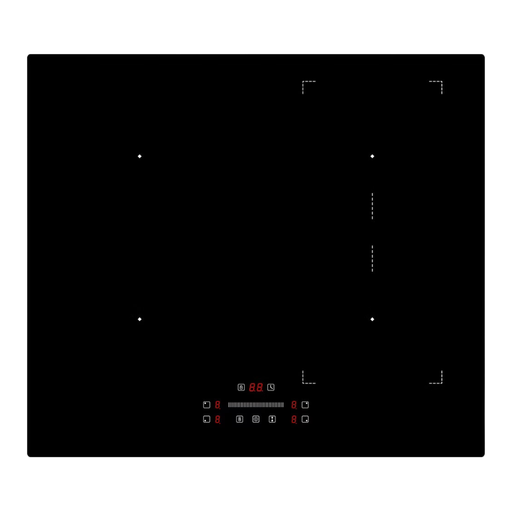
Exquisit EKI624-30
An option if you want to use several pans at once and combine zones to make room for a larger pan.
Four cooking zones, bridge function and PowerBoost. Supplied with a cable but no plug; check the connection and installation requirements.
View at Joybuy
 No image available
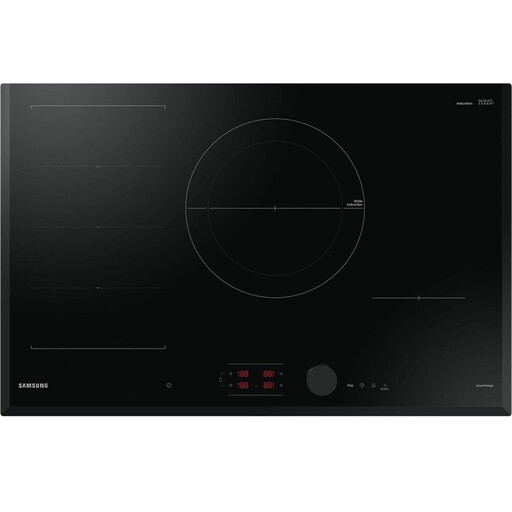
Samsung NZ84C6058KK
A wide built-in option if you’re looking for space for several pans. Check that the hob will fit in your available kitchen space.
Four cooking zones and Flex Zone Plus. Stated width: 800 mm; stated total power: 7,4 kW.
View at Joybuy
 No image available
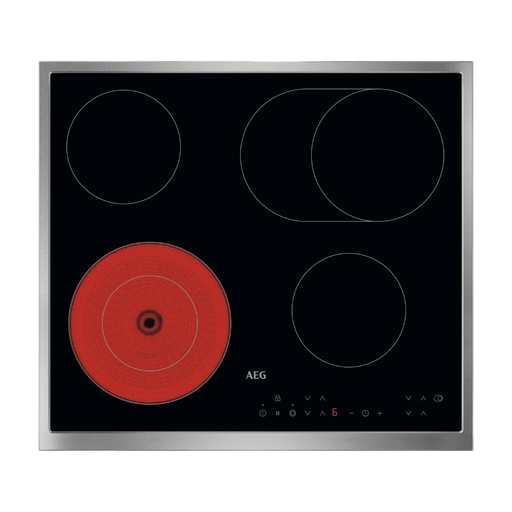
AEG TN64RA06XB
A ceramic option if induction doesn’t suit your pans or personal preference. Bear in mind the different heating time and residual heat.
Four cooking zones and an extendable zone. Stated cut-out: 56 × 49 cm; connection listed as 220–240 V / 400 V 2N.
View at Joybuy
 No image available
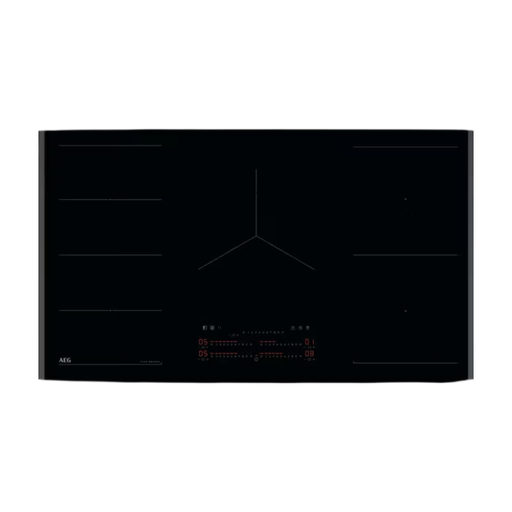
AEG TK95II08FB
A built-in induction option if you want to combine cooking zones to accommodate larger pans or cook several dishes.
Four cooking zones, Flex Bridge and PowerBoost.
View at Joybuy
 No image available
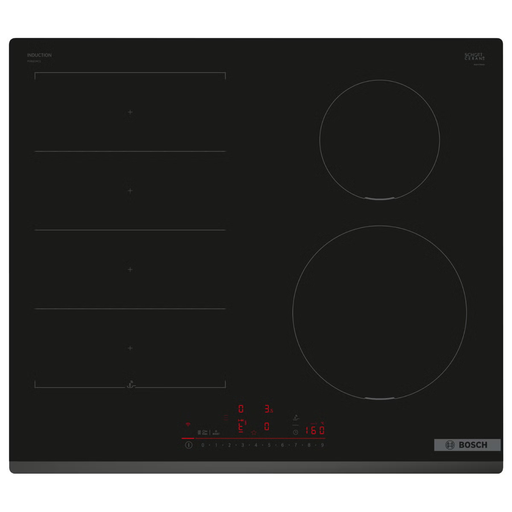
Bosch PIX631HC1E
A built-in induction option if you’re looking for four cooking zones and want room for larger pans too.
60 cm wide, with four cooking zones and FlexInduction. Listed features include DirectSelect and PowerBoost.
View at Joybuy
Frequently asked questions
Can I use my existing pans on an induction hob?
It depends on the base. Milieu Centraal recommends checking that it contains a magnetic layer, for example by testing it with a magnet. Also check that the base is the right size for the cooking zone.
Do four cooking zones mean four pans will fit at once?
Not necessarily. Measure the bases of the pans you want to use at the same time and compare how they’ll fit with the zone layout and width of the exact model.
Will a hob with a Perilex plug fit any Perilex socket?
No. ETNA warns that Perilex sockets can be wired differently. Ask a qualified installer to test the connection for the exact model and follow the installation instructions.
What’s the difference between induction and ceramic cooking?
Induction responds faster and requires a suitable pan base; ceramic retains more residual heat. Milieu Centraal gives average annual figures of around 225 kWh for ceramic, compared with around 175 kWh for induction. These are average annual figures, not an estimate of the energy used for one meal or by every model.
Is a freestanding two-zone hob enough for a family dinner?
It can be, if you need no more than two pans at once while cooking or you’re using the hob as an extra. For the Inventum VKI3020ZWA, the manufacturer lists two 19 cm zones and a maximum total output of 2000 W. Check that the pan sizes and power suit the way you plan to use it.


