For custard, a hob with an adjustable cooking setting and a zone that suits your pan is a practical choice. Keep stirring as you heat it, following the recipe. A portable induction hob is suitable if your pan has a magnetic base, while heating elements can be an alternative if your pan is not induction-compatible. If you need several zones, your available worktop space and the required connection will also help determine which hob is right for you.
Who is this option for?
Custard maker who wants to adjust the heat
You’re stirring custard that needs attention as it thickens, and want to be able to adjust the heat as you go. Your saucepan and the recipe instructions are key: Albert Heijn Allerhande says to stir continuously while heating.
Cook who wants to keep using their existing pans
You want to use your current pan for weekend lunch. If you’re considering induction, check that the base is magnetic, as Milieu Centraal advises, or compare hobs with heating elements.
Lunch cook using several pans at once
You’re making another dish alongside the custard and need separate cooking zones. The space available and the connection in your kitchen will help you decide which type of hob is suitable.
What should you look for when buying?
Start with your pan and how easily you can adjust the heat. Then consider how many zones you’ll actually use at once and which connection is available. Albert Heijn Allerhande’s custard recipe calls for continuous stirring, and Milieu Centraal recommends checking whether your pan is suitable for induction.
| What to consider |
What to look for |
Who is this relevant to? |
| Adjusting the heat |
Check how the cooking settings are controlled and choose one you can adjust while stirring. Don’t rely on a function name such as ‘keep warm’ alone. |
I want to be able to adjust the heat as the custard thickens while following the recipe; around 36% of consumers cite heat control as their main purchasing priority. |
| Using an existing pan |
Check with a magnet whether the pan base is suitable for induction, and compare the pan size with the cooking zone. |
I want to keep using my current saucepan; around 29% of consumers prioritise keeping their existing pan. |
| Cooking at the same time |
Count the pans you’ll genuinely have on the hob at the same time, then compare the number and size of the zones. |
I want to make custard and another lunch dish at the same time; around 21% of consumers say cooking several dishes simultaneously is their main need. |
| Space and connection |
Check the overall dimensions, available space, and the specified plug and connection for the exact model. |
I need the hob to fit on my worktop and work with my connection; this combination is the main purchasing priority for around 14% of consumers. |
Common buying mistakes
-
Mistaking a keep-warm setting for a cooking setting
The temperature of the keep-warm function on the Inventum KI120T cannot be adjusted. That doesn’t mean the function is suitable for thickening custard: Albert Heijn Allerhande’s recipe says to stir continuously while heating.
Choose an adjustable cooking setting and follow the recipe steps rather than relying on the name of a function.
-
Buying an induction hob without checking your pan
An induction hob requires a pan base with a magnetic layer, as Milieu Centraal explains. Without a suitable pan, you may not be able to cook with the one you already own.
Test the base with a magnet and compare the pan size with the cooking zone before choosing a model.
-
Assuming every electric hob uses the same connection
According to Inventum, the Inventum KI120T uses a single-phase connection; the ETNA KCV254KWIT requires a two-phase Perilex connection, according to ETNA. Plugs and connections therefore vary by model.
Before ordering, compare the connection details for the exact appliance with your kitchen setup, and follow the manufacturer’s connection instructions.
Brands to compare
Inventum
The Inventum KI120T is a portable single-zone induction hob for anyone looking for an extra cooking spot.
- According to Inventum, the KI120T has a power rating of 2000 W, 10 settings and is suitable for pans measuring 15–20 cm.
- The keep-warm temperature cannot be adjusted on this model. You’ll still need an induction-compatible pan.
Severin
According to the manufacturer, the Severin DK 1014 has two independently controlled cast-iron zones, making it an option if you want to use two pans without induction.
- The manufacturer specifies stepless controls and zones rated at approximately 1000 W and 1500 W.
- The double hob takes up space, and the stated settings don’t indicate how custard will heat or thicken.
Tristar
The Tristar KP-6245 is a portable double hob with heating elements for two pans.
- Tristar specifies zones measuring 15.5 and 18.5 cm, each with its own thermostat and five settings.
- Five settings don’t guarantee a specific low cooking temperature; compare the zone dimensions with your pans.
ETNA
The ceramic ETNA KCV254KWIT is a four-zone model for kitchens with the required connection.
- ETNA specifies rotary controls, four zones, a width of 54 cm and a residual heat indicator.
- According to ETNA, this model requires a two-phase Perilex connection and does not have a child lock.
Hobs at Joybuy
These models are portable induction hobs for anyone looking for an extra cooking zone. Check that your pan base is suitable for induction and that the pan fits the zone.
 Image unavailable
Fritel IP 1266 single-zone induction hob
Suitable if you’re looking for one extra induction zone for your custard pan; check that the pan base is magnetic.
The product name specifies 2000 W, an XL cooking zone measuring Ø 26 cm, 10 power settings, a touchscreen and a timer.
View at Joybuy
 Image unavailable
Rommelsbacher CT 2002/IN single-zone induction hob
A portable single-zone hob for anyone who needs one extra induction zone while cooking.
Before use, check that your pan is suitable for induction and fits the cooking zone.
View at Joybuy
 Image unavailable
Rommelsbacher CT 3430/IN double induction hob
The double version is a good fit if you want to use a second pan at the same time as your custard pan.
For both zones, check that your induction pan is suitable and that its base is the right size.
View at Joybuy
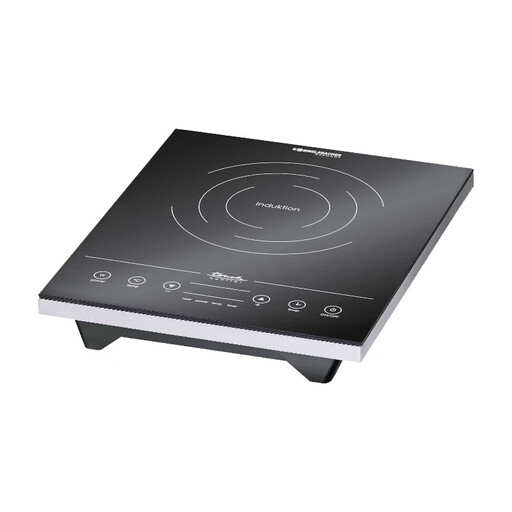 Image unavailable
Rommelsbacher Ceramic Single Cooking Plate CT 2010/IN
This single-zone hob is designed as an extra cooking spot for one pan; check that your pan is compatible before using it.
Compare the pan base and size with the cooking zone and the instructions for this model.
View at Joybuy
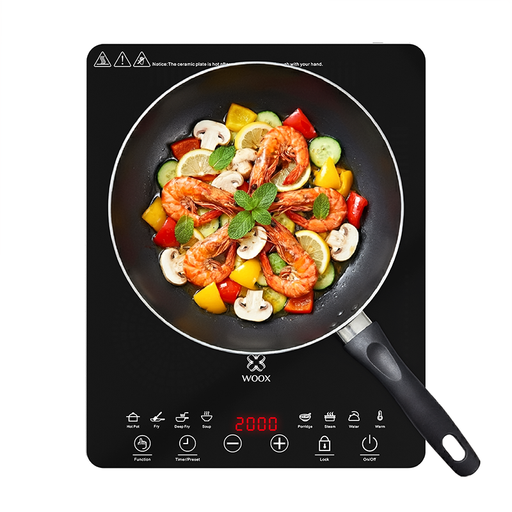 Image unavailable
WOOX MX0237 RapidTherm portable induction hob
Suitable if you’re looking for a portable induction zone for your worktop; use a pan that is suitable for induction.
The product name specifies 2000 W, a 155 mm radius for the heating coil, and 8 temperature and power levels. Keep the ventilation openings clear.
View at Joybuy
Frequently asked questions
How do you use a hob to make egg custard?
Follow your chosen recipe and keep stirring as the custard thickens. Albert Heijn Allerhande’s recipe gives 75–80 °C as a checkpoint for this custard; this is not a temperature guarantee for a hob. The Voedingscentrum advises heating dishes containing raw egg thoroughly.
Can the Inventum KI120T be plugged into a standard Dutch socket?
According to Inventum, the KI120T has a single-phase plug for an earthed socket in the Netherlands. The ETNA KCV254KWIT requires a two-phase Perilex connection, according to ETNA. Always check the connection instructions for the exact model and your kitchen setup.
How do you clean a hob after lunch?
Switch off the hob and follow the manufacturer’s cleaning instructions. Milieu Centraal recommends using a cloth with washing-up liquid for induction hobs; for other types and materials, follow the instructions for the specific model.
What are your rights when you buy a hob online?
For applicable distance purchases in the Netherlands, you generally have a 14-day cooling-off period, according to the Dutch government. Check the terms and any exceptions that apply to your specific purchase. Separately, the seller remains responsible for the statutory guarantee if the product does not meet what you could reasonably expect under normal use, as the Authority for Consumers and Markets explains.


