
The careful custard stirrer
You want to keep stirring as the custard thickens, and turn down the heat or remove the pan from the hob in good time.


For a small portion of custard, start by choosing a hob that suits the base and diameter of your saucepan. Induction may be a suitable option if the pan is magnetic; a ceramic or cast-iron hob offers an alternative, although residual heat needs extra attention when cooking on a ceramic hob. The Netherlands Nutrition Centre advises stirring continuously as the custard thickens and switching off the heat as soon as it has thickened.
You want to keep stirring as the custard thickens, and turn down the heat or remove the pan from the hob in good time.
You’re making one portion and want to check whether your pan is suitable for the chosen cooking zone, particularly if you’re using induction.
You’re looking for a single portable cooking zone that fits on your worktop, and want to check its dimensions and how to position it safely beforehand.
A good fit if: your saucepan has a magnetic base and falls within the model’s stated pan-size range.
Keep in mind: pans that aren’t suitable for induction won’t work; the minimum and maximum pan diameters vary by model.
A good fit if: you want to compare a single-ring hob with dial controls without choosing induction.
Keep in mind: keep stirring and remove the pan from the heat in good time as the custard thickens.
A good fit if: you want to compare a smooth cooking surface with dial controls, and the cooking zone suits your pan.
Keep in mind: the zone may stay hot after it’s switched off. Also check that the smaller heating diameter is suitable for your saucepan.
| What to consider | What to check before buying | Who should pay extra attention? |
|---|---|---|
| Adjusting the heat | Check how you can lower the heat while stirring and how to stop the hob from heating. | I want to keep stirring and turn down the heat in good time as soon as the custard starts to thicken. Around 36% of consumers rank heat control as their top buying priority. |
| Choosing the right saucepan | For induction, check whether the base is magnetic and compare the pan size with the range specified for the exact model. | I want to use my small saucepan and avoid finding out after buying that it isn’t suitable for the hob. Around 29% of consumers prioritise pan compatibility. |
| Worktop space | Compare the hob’s external dimensions with the space available and follow the model’s positioning instructions. | I want enough room around the hob to stir the pan safely. Around 21% of consumers choose worktop space as their top priority. |
| Costs and support | Check whether your current pan is suitable for the technology you’ve chosen, and look into the seller and repair information. | I want to factor in what my current pan and post-purchase support could mean for me. Around 14% of consumers prioritise costs and aftercare. |
An induction hob needs a suitable pan with a magnetic base. The supported pan size also varies by model, so a small pan may fall outside the stated range.
Check the base of your pan and compare its diameter with the specifications of the exact hob you’re considering.
The manufacturer’s settings don’t guarantee a particular result when making custard. You still need to stir it and switch off the heat as soon as it has thickened.
Choose controls you can adjust while stirring, and stay by the pan.
A CE mark doesn’t prove that an independent body has tested the specific product.
Check the product information and CE mark for the particular model you want to buy.
The KI120T is a portable single-zone induction hob designed for use with a suitable induction pan.
The Touch 2000 is a portable induction option to compare if you use a smaller induction-compatible saucepan.
The CT 2200/E is a portable ceramic hob for anyone looking to compare a heating method other than induction.
The KP 1091 is a single-ring electric hob with a cast-iron plate and dial controls.
The 303010 is a portable induction hob with touch controls to compare.
This selection includes portable hobs with a single cooking zone, mainly induction models and one ceramic hob.
 No image available
A portable induction hob to compare if you use an induction-compatible saucepan and want to adjust the heat with a dial.
Power: 1000 W. Five power levels. One cooking zone.
 No image available
A portable induction option to compare if your cookware is induction-compatible and you’d like to use a touch control panel.
Power: 2000 W. Ten power levels. Six functions.
 No image available
A portable induction hob to consider if your pan is induction-compatible and you want to compare dial and touch controls.
Power: 2000 W. Ten power levels. Stated pan-size range: 12–26 cm.
 No image available
A portable induction hob to compare for a small saucepan with a ferromagnetic base.
Single-zone induction hob.
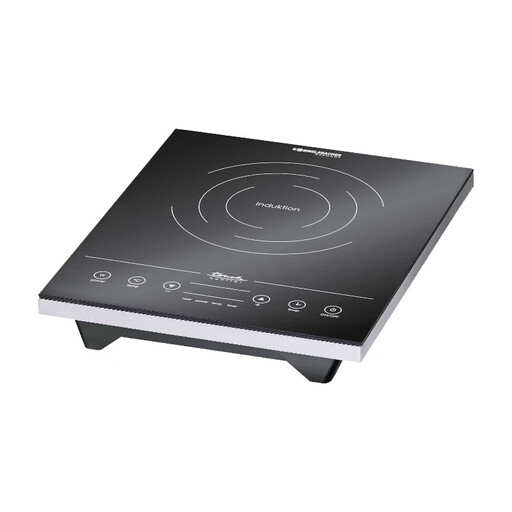 No image available
A portable ceramic hob to compare if you’re not looking for an induction hob; check that the cooking zone suits your saucepan.
Single-zone ceramic hob.
Yes, if you choose induction. Milieu Centraal advises checking whether the base of the pan has a magnetic steel layer. Also compare your pan’s diameter with the range stated by the manufacturer for the exact model.
No, don’t use the timer as a substitute for stirring and keeping an eye on the pan. The Netherlands Nutrition Centre advises stirring continuously and switching off the heat as soon as the custard has thickened.
Compare a non-induction option, such as a cast-iron or ceramic hob. Check that the cooking zone suits your pan for the specific model, and follow the instructions for use.
The NVWA states that CE marking is mandatory for electrical consumer products. Check the mark and product information for the specific model; a CE mark isn’t proof of independent testing.
Follow the instructions for your model. The SEVERIN KP 1091 manual says to unplug the appliance before cleaning, let it cool down and never immerse it in water.