Who is this choice relevant to?

Custard maker who wants to adjust the heat

If you make custard alongside or after dinner, you’ll want to lower the heat as soon as the mixture starts to thicken. The Voedingscentrum recommends stirring continuously as it cooks and switching off the heat as soon as the custard has thickened; the hob controls don’t replace this.

Cook using several pans at once

If you’re also preparing other dishes for everyone at the table, think about whether you need one extra cooking zone or want to heat two pans at the same time. Inventum and ETNA, among others, offer models with one or two zones.

Buyer with an existing pan or limited space

If you want to keep using your current custard pan or have little space to spare, check the pan size, whether it’s suitable for induction and where the hob will go. Milieu Centraal explains how to use a magnet to check whether a pan’s base is suitable for induction.

What should you look for when choosing?

Portable single-zone induction hob

A good fit if: the custard pan is the only extra pan you need and you want to put the hob away after use.

Bear in mind: you can’t use a second pan on this hob at the same time. Also check that your pan has a magnetic base.

Portable two-zone induction hob

A good fit if: you want to heat another part of the meal while the custard thickens and your pans are suitable for induction.

Bear in mind: two zones need more worktop space. Check the controls and the exact model’s electrical rating.

Portable ceramic or electric hob

A good fit if: induction doesn’t suit your pan or circumstances and you’d prefer a different type of hob.

Bear in mind: a ceramic hob retains residual heat after being switched off, so lower the heat in good time or remove the pan.

Built-in induction hob

A good fit if: you’re replacing a fixed hob or making a permanent change to your kitchen and need several zones.

Bear in mind: before buying, check the cut-out dimensions, electrical rating and installation instructions for the model.

What to consider What to look for when buying Who is this most relevant to?
Adjusting the heat Compare the settings and controls on the exact model; don’t look only at its maximum power. If I’m making custard while the rest of the meal is cooking, I want to be able to turn the heat down easily. Around 36% of consumers say their main priority is being able to adjust the heat as the custard thickens.
Zones for the meal Work out how many pans you want to use at once, then compare the cooking zones and pan sizes. If I want to use a second pan alongside the custard, I look for two usable zones. Around 29% of consumers say cooking at the same time is their main priority.
Existing pan and purchase costs Use a magnet to check whether the pan’s base is suitable for induction, and compare the pan size with the model’s specifications. If I want to keep using my current pan, I first check whether it’s compatible with the cooking method I’ve chosen. Around 21% of consumers prioritise their existing pan and the possibility of having to buy another one.
Positioning and connection Measure the worktop or cut-out, and check the electrical rating, plug type and installation instructions. If I have limited space or need a specific connection, the hob must fit where I want to put it. Around 14% of consumers focus mainly on positioning and the electrical connection.

Common things to consider

  • Confusing a heat setting with the temperature of the custard

    A setting refers to how the hob is controlled; it doesn’t guarantee a particular temperature for the custard in the pan. The Voedingscentrum recommends stirring continuously as the custard thickens and switching off the heat as soon as it has thickened.

    Keep an eye on the custard in the pan and use the settings to adjust the heat. Don’t rely on a temperature setting alone.

  • Choosing induction without checking your existing pan

    An induction hob needs a pan with a magnetic layer in its base. The permitted pan diameter can also vary between models.

    Check the pan’s base with a magnet and compare its diameter with the model’s specifications before choosing a hob.

  • Assuming every hob connects in the same way

    The number of zones doesn’t tell you what kind of connection a model needs. Check the electrical rating, plug type and installation instructions for the exact appliance.

    Check these details before buying. If the hob has a Perilex connection, follow ETNA’s advice and ask a qualified installer to test and connect it.

  • Underestimating the residual heat from a ceramic hob

    With a ceramic hob, the hob itself heats up first, so the surface can remain hot after it’s switched off.

    Lower the heat in good time or remove the pan as soon as the custard has thickened enough, and don’t touch a cooking zone while it’s still hot.

Brands to consider

Inventum

This selection includes portable hobs with one or two zones, as well as a model with cast-iron cooking zones.

  • According to Inventum, the KI120T suits pans with a diameter of 15–20 cm; the VKI3010ZWA has two induction zones.
  • The stated pan diameter applies to the KI120T. Induction models require suitable pans.

ETNA

The models mentioned include a portable hob with two induction zones and a built-in model with two zones.

  • ETNA lists eight cooking settings and an optional temperature setting for the KIV12ZIL; the KI129ZT is 29 cm wide.
  • Portable and built-in hobs suit different installations. Check the model’s dimensions and installation instructions.

Princess

The 303021 is a portable ceramic hob with two zones.

  • Princess lists 16 and 19 cm zones with separate thermostats.
  • The manufacturer says the zones remain hot, so bear residual heat in mind when making custard.

Bosch

The PIE695HC1E is a built-in induction hob with four zones.

  • Bosch lists a connected load of 7400 W and a built-in cut-out.
  • Bosch says the model isn’t supplied with a plug as standard. Check the connection and installation requirements before buying.

Siemens

The EU63KBEB5D is a built-in induction hob with four zones.

  • Siemens lists touchControl, a switch-off timer and a child lock.
  • Consider whether these features would be useful for the way you cook; they don’t replace keeping an eye on the custard and stirring it.

Hobs at Joybuy

This selection includes portable induction hobs with one or two zones, an induction cooker and built-in hobs with ceramic zones.

Induction hob with two cooking zones

Induction hob with two cooking zones

An option if you want to use another pan alongside the custard; the product name lists five temperature settings.

The product name also mentions keeping food warm, boiling, simmering, frying and slow cooking over low heat. Suitable induction cookware is required.

View at Joybuy

Portable induction hob with one cooking zone

Portable single-zone induction hob

Suitable if you need one extra cooking spot for the custard and want to be able to move the hob after use.

The product name lists five heat settings, one cooking zone and 1000 W. The pan must be suitable for induction.

View at Joybuy

Joyami JCL02M induction cooker

Joyami JCL02M induction cooker

An induction option to compare if you’re looking for an electric cooking spot for your custard.

The product name lists 220V/240V/2100. Check the exact electrical specifications and connection; an induction pan is required.

View at Joybuy
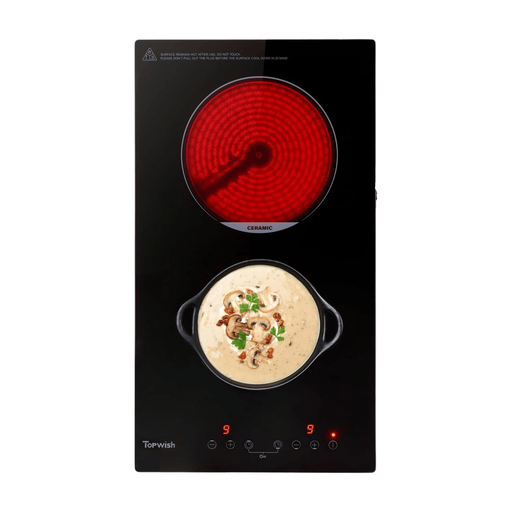
TOPWISH built-in hob with two ceramic zones

TOPWISH built-in hob with two ceramic zones

A built-in option if you want to heat two pans at once and are looking for a ceramic hob.

The product name lists touch controls, a child lock, a residual heat indicator, 3000 W and 29 cm. Check the required cut-out and connection before buying.

View at Joybuy
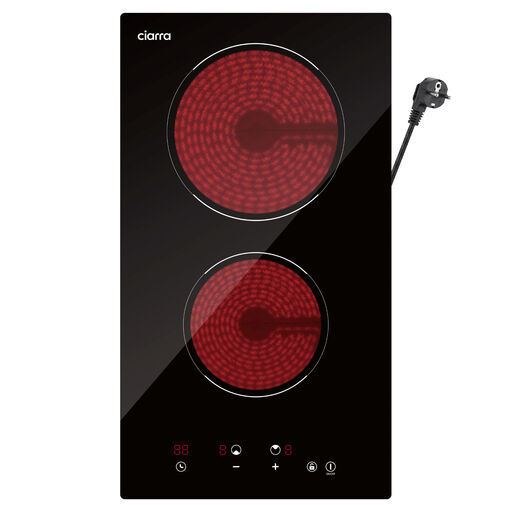
Ciarra CRGDBCH302T built-in hob with two ceramic zones

Ciarra CRGDBCH302T ceramic built-in hob

An option to compare if you want two ceramic zones in a permanent kitchen installation.

The product name lists two zones, 3000 W, nine power settings, touch controls and a timer. Check the cut-out and installation instructions.

View at Joybuy

Frequently asked questions

Should I focus mainly on the maximum power when making custard?

No. What matters most is being able to adjust the heat easily. The Voedingscentrum recommends stirring continuously as the custard thickens and switching off the heat as soon as it has thickened. A high maximum power rating doesn’t, by itself, tell you how easy it is to control the heat.

Will my current custard pan work on an induction hob?

That depends on the base of the pan and whether its size suits the hob. Milieu Centraal recommends checking that the base is magnetic; you can do this with a magnet. Then compare the pan size with the specifications of the model you’re considering.

Is one cooking zone enough if I’m making dinner too?

One zone is enough if the custard pan is the only extra pan you need to use on that hob. If you want to heat a second pan at the same time, compare models with two zones and check that you have enough worktop space and a suitable connection.

Can I install a hob with a plug in the same way as a built-in hob?

No. Follow the installation instructions for the exact model. For a Perilex connection, ETNA recommends asking a qualified installer to test and connect it, as Perilex sockets can be wired in different ways.

What should I bear in mind when making custard on a ceramic hob?

Allow for residual heat: a ceramic hob can stay hot after being switched off. Keep an eye on the custard, lower the heat in good time or remove the pan as soon as it has thickened enough, and don’t touch a cooking zone while it’s still hot.
