
Demonstrator with one pan of leeks
You demonstrate the recipe using one pan and want to be able to turn down the heat while participants watch. Consider the controls at low settings, the pan size and where you’ll place the hob.


For one pan, a portable induction hob is an option if your pan has a flat, magnetic base; to cook two things at once, you’ll need two independently controlled zones. Ceramic and cast-iron hobs don’t have the same specific requirements for induction pans, but their cooking zones heat up themselves. The stated settings don’t show how evenly a hob simmers on a low setting.
You demonstrate the recipe using one pan and want to be able to turn down the heat while participants watch. Consider the controls at low settings, the pan size and where you’ll place the hob.
You might want to cook leeks and a second dish at the same time. Check that the hob has two independently controlled zones and that you have enough worktop space and suitable power connections.
You choose a hob to suit the pans already available at the workshop venue. With induction, the pan base needs to be suitable, flat and the right size for the zone.
A good fit if: you use one pan at a time and its base is suitable for induction.
Keep in mind: you can’t put a second pan on the same hob at the same time.
A good fit if: you want a smooth cooking surface and choose a hob to suit one or two pans.
Keep in mind: the heated zone stays hot after use.
A good fit if: you’re looking for rotary controls and independently controlled zones.
Keep in mind: the hotplates themselves get hot, so take care where you touch them and position any cables safely.
A good fit if: your workshop kitchen is a permanent set-up and you need more zones.
Keep in mind: a built-in hob needs a separate assessment of its installation and connection. Test results for built-in models don’t apply to portable hobs.
| Consideration | What to look for | Who is this important for? |
|---|---|---|
| Gentle cooking | Check how to adjust the low settings and whether there’s a timer. Keep an eye on the pan: settings and timers don’t prove how evenly a model simmers. | If I want to cook the leeks gently, I want to be able to adjust the heat while cooking. Around 33% of consumers put gentle cooking first. |
| Number of pans | Decide whether one pan is enough. If you’re comparing two-zone hobs, check the separate controls, zone sizes, overall dimensions and stated connection power. | If I want to cook a second dish at the same time, I need two independently controlled zones. Around 27% of consumers prioritise cooking two things at once. |
| Pan compatibility | Induction requires a suitable, flat, magnetic base and a pan of the right size. Compare the base with the stated zone size, not just the diameter of the pan’s top. | If I want to keep using the workshop pans, I’ll first check that they’re suitable for the hob. Around 20% of consumers want to keep their existing pans. |
| Worktop and connection | Read the model’s placement and connection instructions. If you’ll be using several appliances at once, also assess the venue’s power supply. | At a temporary workshop venue, I want to be able to position and connect the hob appropriately. Around 20% of consumers put the work area first. |
The Inventum manual for the KI120T specifies at least 10 cm of ventilation space at the sides and rear of that model. This isn’t a general clearance requirement for all hobs.
Ceramic hobs have built-in heating elements. Induction works differently and requires a suitable pan base.
Check the heating technology and test whether the pan you want to use at the workshop is suitable.
If an existing pan doesn’t work on induction, you may need a different pan for that hob.
Specifications don’t tell you how consistently a model heats on a low setting. The Consumentenbond’s simmering tests cover built-in hobs and aren’t test results for the portable models in this guide.
Use specifications to help narrow down your options, and keep an eye on the pan while cooking.
The available power supply and placement requirements depend on the venue and the model you choose.
Read the manuals and have the connection assessed before using several hobs at the same time.
An unsuitable set-up may require changes to the cooking area or electrical connection.
Example models with one induction zone and two cast-iron zones.
Example ceramic models with one or two heated zones.
Examples of a portable induction hob and a double cast-iron hotplate.
An example model of a double cast-iron electric hotplate.
This selection includes portable induction hobs with one or two zones and an infrared hob for indoor use. Compare the pan requirements, controls and available space before choosing.
 Image unavailable
Could be a good fit if you’re looking for an infrared hob for indoor use at your workshop.
The product description lists infrared heating, manual power control and a timer. The surface gets hot during use.
 Image unavailable
Could be a good fit if you use one pan at a time and its base is suitable for induction.
The product description lists 2000 W, 8 power settings, temperature settings from 60–270 °C and a timer of up to 3 hours. According to the description, suitable cookware has a flat, magnetic base and a diameter of 12–26 cm.
 Image unavailable
Could be a good fit if you want to use one induction pan at a time.
The product name lists 2000 W and an XL zone of Ø 26 cm. The description lists cookware measuring 12–26 cm, 10 power settings, a timer and automatic switch-off. The pan must be suitable for induction and have a flat base.
 Image unavailable
Could be a good fit if you use one pan at a time and have induction cookware.
The product description lists one induction zone for pans measuring 10–20 cm, 10 temperature settings and a 180-minute timer with automatic switch-off. According to the description, the hob is suitable for induction pans only.
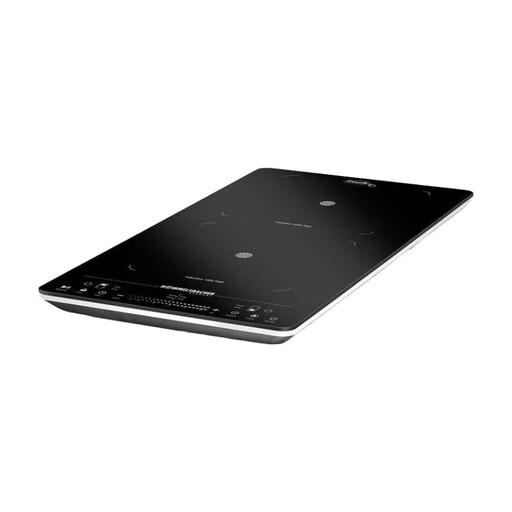 Image unavailable
Could be a good fit if you want to use two induction pans at the same time.
The product description lists two independently controlled induction zones for pans measuring 120–260 mm, 10 power settings and a timer of up to 180 minutes. The pan bases must be flat and magnetic.
No. Induction requires a suitable, flat, magnetic pan base; also check that the base is the right size for the cooking zone. Inventum lists a pan size range of 15–20 cm for the KI120T.
No. The number of settings isn’t an independent measurement of how evenly a model cooks on a low heat. The Consumentenbond’s simmering tests cover built-in hobs with four to six zones, not the portable models featured here.
Don’t assume that you can without checking first. Brandweer Nederland recommends plugging high-power appliances directly into a socket rather than using an extension lead or cable reel. Also follow the connection instructions for your chosen model, and have the available installation assessed if you’ll be using several appliances at the same time.
Follow the model’s manual, stay nearby while cooking and keep flammable materials away from the cooking area. For the Inventum KI120T, the manual specifies a flat, heat-resistant surface and at least 10 cm of ventilation space at the sides and rear.
Electrical equipment covered by Directive 2014/35/EU, including equipment with a rated AC voltage of 50 to 1,000 V, must meet requirements that include CE marking and clear user and safety information. The European Union’s EUR-Lex website describes this directive. Check the marking and documentation for the exact item on offer; a CE declaration doesn’t prove simmering performance.