
Cooking compote in one pan
You’re looking for a separate cooking zone for the compote and want to be able to adjust the heat as it reduces. Consumentenbond assesses low, steady heat separately from heating speed.


If you’re only making compote on an extra hob, a single cooking zone with an adjustable low setting and a zone that suits your pan should do the job. If you want to cook a second dish at the same time on the same portable hob, look for two independently controlled zones. With induction, your pan needs a magnetic base; the number of settings alone doesn’t tell you how evenly a hob maintains a low temperature over a long period.
You’re looking for a separate cooking zone for the compote and want to be able to adjust the heat as it reduces. Consumentenbond assesses low, steady heat separately from heating speed.
You want to cook the compote and a second dish at the same time on the same portable hob. In that case, the number of cooking zones and whether you can control them independently both matter.
You want to find out first whether your existing saucepan will work on induction. Milieu Centraal recommends checking that the base has a magnetisable steel layer.
| What to consider | What should you check? | Who is this important for? |
|---|---|---|
| Gentle heating | Look at the controls and, if possible, find an independent simmering test for the exact model. Consumentenbond assesses low, steady heat as a separate test result. | I want to let the compote cook gently after heating it and be able to adjust the heat; around 33% of consumers put gentle heat first. |
| Using an existing pan | Use a magnet to check whether the pan base is suitable for induction, then compare its diameter with the cooking zone or the stated pan size range. | I want to keep using my current saucepan and find out first whether it will suit the hob I choose; around 27% of consumers prioritise pan compatibility. |
| Using two pans at once | Check the number of independently controlled zones, the diameter of each zone and the model’s connection requirements. | I want to cook the compote alongside a second dish using two pans on the same hob; around 20% of consumers give cooking two dishes at once their highest priority. |
| Positioning and connection | Check the available worktop space, plug, rated power and the clearance specified in the manual. | I want to know in advance where the hob can be positioned safely and whether the connection there is suitable; around 20% of consumers prioritise positioning and connection. |
The number of settings tells you how you can adjust the heat, but it doesn’t prove that a model maintains a low, even temperature over a long period. Consumentenbond assesses this separately.
Use the number of settings as a guide to the controls, and look for test results for the exact model where available.
The heating method determines which pans you can use. Induction requires a magnetic pan base; an electric hotplate heats through a heating element.
Check the product information to see whether it’s an induction hob or an electric hotplate, then check whether your pan is suitable.
Two zones take up more space, and connection requirements vary by model. ‘Freestanding’ doesn’t automatically mean that every hob will work with every connection.
Compare the dimensions, plug and rated power with the space where you plan to use the hob, and check the manual.
The KI120T is a portable, single-zone induction hob designed for pans within its stated size range.
The KP 1091 is an electric hotplate with a single cast-iron zone and continuously adjustable temperature control.
The KP-6245 is a portable hob with two electrically heated zones, for anyone who wants to cook two dishes at once.
The TILLREDA 805.901.55 is a portable, single-zone induction hob that gives you extra cooking space.
The 303010 is a portable, single-zone induction hob with adjustable power and a timer.
This selection includes portable hobs with one or two zones, as well as built-in models for making compote on its own or alongside a second dish.
 No image available
For cooking compote and a second dish at the same time; the product title lists five temperature settings and says it can be used for simmering, but that doesn’t prove it maintains a steady low temperature.
 No image available
For an extra zone to cook a pan of compote; the product title lists five power settings and 1.000 W. The pan base must be suitable for induction.
 No image available
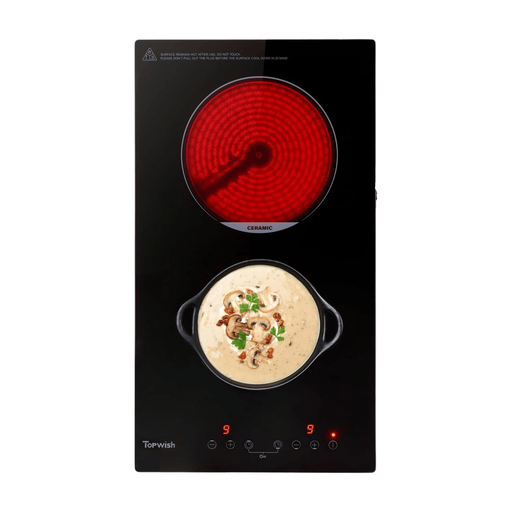
For anyone who wants to cook two dishes on a fixed, built-in hob. The product information lists two zones, nine settings, a timer and a total power of 3.000 W. Installation requires a 26 × 49 cm cut-out; check your electrical circuit.
 No image available
For anyone looking for an extra cooking zone; the product title lists ten power settings and the product information lists six functions. Only cookware with a magnetic base is suitable.
 No image available
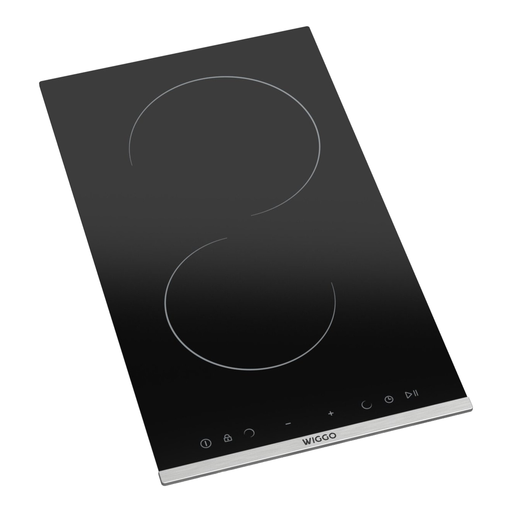
For anyone who wants to cook compote and a second dish on a fixed, built-in hob. The product information lists two zones rated at 1.400 W and 1.800 W, individual timers and a single-phase connection. Check that your pans are suitable for induction.
Only if you choose an induction hob. Check whether a magnet sticks to the base of your pan, then make sure the pan size suits the cooking zone.
No. The fire service advises staying close to the hob and keeping flammable materials away. A timer can remind you, but it’s no substitute for keeping an eye on things.
You can’t tell from the words ‘portable’ or ‘freestanding’. Check the plug and rated power of the exact model, as well as the connection where you plan to use it; according to Consumentenbond, requirements vary by model.
Follow the care instructions for the model you choose. For the TILLREDA, IKEA recommends wiping away food residue after use with a damp cloth and mild detergent, and advises against using abrasive or sharp materials.
Ask your pacemaker technician or cardiologist whether induction cooking is suitable for you. Milieu Centraal lists ceramic cooking as a possible alternative; this is a personal check, not a general ban on induction.