
Making sauce with one extra pan
You want to heat a saucepan alongside your existing hob and adjust the temperature as you cook. Milieu Centraal describes induction as quick to adjust; also check that your pan base is suitable.


If you need one suitable saucepan alongside your existing hob, a portable single-zone induction hob is a sensible option. If you want to use other pans at the same time, compare the number of zones and the power your connection can support. A conventional electric hotplate may suit you if your pan is not induction-compatible, but it is slower to respond and retains residual heat. Before buying, check the base of your pan, the stated pan size and the connection requirements for the specific model.
You want to heat a saucepan alongside your existing hob and adjust the temperature as you cook. Milieu Centraal describes induction as quick to adjust; also check that your pan base is suitable.
You’re preparing the sauce and other dishes at the same time, so the number of usable zones and the total connection power both matter. The Consumentenbond warns that freestanding models rated at around 3.5 kW cannot always run several zones at a high setting simultaneously.
You want to know whether your current pan will work on induction and whether your kitchen can power the hob you choose. The Consumentenbond explains the type of connection that more powerful induction hobs may need; check the requirements for the specific model.
Ideal if: your existing hob zones are in use and one induction-compatible saucepan is all you need.
Bear in mind: you can heat one pan at a time, and its base must fit the zone.
Ideal if: you want to use other pans at the same time as your saucepan.
Bear in mind: according to the Consumentenbond, the total connection power may limit how many zones can run at a high setting simultaneously.
Ideal if: you’re looking for a permanent kitchen solution and regularly use several or larger pans.
Bear in mind: check the cut-out dimensions and electrical connection; a more powerful model may require alterations.
Ideal if: your pan is not suitable for induction or you want to use a heated cooking zone.
Bear in mind: the zone heats up and retains residual heat after cooking; if you choose a small hotplate, make sure your pan is the right size too.
| What to consider | What should you check? | Who should pay particular attention? |
|---|---|---|
| Adjusting the heat | Compare the control settings and your pan base; the number of settings alone does not show how well a model can simmer gently. | If you want to turn down the heat while making sauce, precise control should be your top priority. Around 31% of consumers put this need first. |
| Room for pans | Count how many pans need to be on the hob at once, and compare the number of zones with the total connection power. | If you’re preparing sauce and other dishes at the same time for a community meal, extra cooking space matters most. Around 25% of consumers put this need first. |
| Electrical connection | Check the plug, power rating and available circuit for the specific model. Have the connection for a more powerful built-in hob assessed. | If you first need to find out what your kitchen’s electrical system can support, a suitable connection is the key consideration. Around 25% of consumers prioritise this. |
| Existing saucepan | Check that the base is suitable for induction and compare its diameter with the hob’s stated pan size range. | If you want to keep using your current pan, compatibility comes first. Around 19% of consumers make keeping their existing pan their top priority. |
When you use several zones, the hob and other appliances on the same circuit may have to share the available power.
Before choosing a hob, compare its total connection power and plug with the way you need to use it at the same time as other appliances.
If your current pan is not suitable for induction, you’ll need a compatible pan to use an induction hob.
A hot pan can transfer heat back to the glass; a conventional electric cooking zone also retains residual heat.
Stay near the hob while cooking and keep flammable materials away. Let the cooking area cool before touching or cleaning it, or putting away a portable hob.
An example of a portable single-zone induction hob: the KI120T.
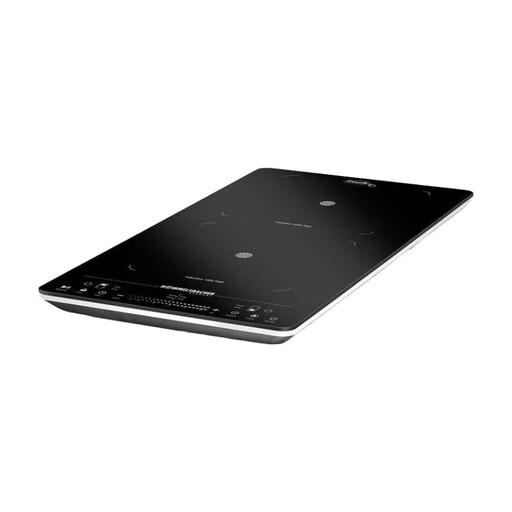
An example of a freestanding induction hob with two zones: the DK 1031.
The models mentioned include a portable induction hob (IK-6178) and a conventional cast-iron hotplate (KP-6185).
An example of a permanent built-in option: the 60 cm-wide PXY675DC1E induction hob.
This selection features freestanding induction hobs with one or two zones, giving you extra cooking space alongside your existing hob.
 No image available
A separate cooking spot for one pan; the pan must be suitable for induction.
2000 W, ten heat settings, six functions and a child lock.
 No image available
A separate zone for one saucepan; check that its base falls within the stated pan size range.
2000 W, ten power settings, adjustable temperature from 60–240 °C and a timer of up to three hours. Suitable for pans measuring 12–26 cm.
The product information advises people with a pacemaker to consult their doctor before use.
 No image available
A separate extra cooking spot for one pan; the pan needs a flat, ferromagnetic base.
The zone is suitable for pans measuring 12–23 cm. The model has ten power settings, ten temperature settings from 60–240 °C and a timer of up to 180 minutes.
The product information advises people with a pacemaker or active medical implant to consult their doctor before use.
 No image available
Two zones give you room for a saucepan and another pan; both must be suitable for induction.
The stated zone dimensions are 120–260 mm. The rated power is 3100 W, with a maximum of 3400 W; the model has ten temperature settings from 60–240 °C.
The product information warns that the surface may be hot during and after use, and advises keeping magnetic objects and pacemakers at a safe distance.
 No image available
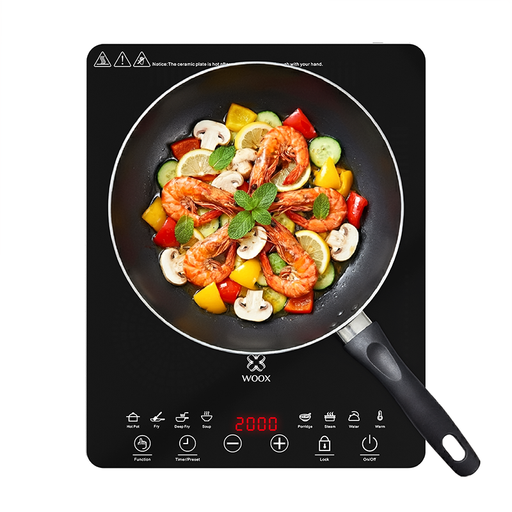
A separate induction zone for one pan; use cookware that is suitable for induction.
2000 W, eight adjustable settings, a timer, automatic switch-off, pan detection and a child lock.
You can if the base is suitable for induction and fits the cooking zone. Check the base and compare its diameter with the model’s stated range; the Consumentenbond points out that a pan much larger than the zone may only heat up in the centre.
Check the plug and connection requirements for the specific model, and make sure the available circuit is suitable. Other appliances or several cooking zones on the same circuit may limit the power available for simultaneous use.
Stay near the hob while cooking and keep flammable materials away, as Brandweer Twente advises. A keep-warm function does not guarantee that food will stay safe throughout the meal: the Voedingscentrum advises against leaving highly perishable food out of the fridge for more than two hours.
In the Netherlands, the seller is responsible for providing a solution under the statutory guarantee. According to the Rijksoverheid, there is no fixed statutory guarantee period for all products; what you can expect depends, among other things, on the product and the sales information.
No, not simply because it is described as a community meal. The NVWA explains that the obligation applies to businesses that prepare, process or sell food, among others. If the event is commercial or otherwise run as a professional activity, the organiser should assess which rules apply.