For creamy leeks and other dishes cooked at the same time, a built-in induction hob with enough zones is a sensible option if your pans and electrical connection are suitable. Induction responds quickly when you adjust the heat. A freestanding, single-phase induction hob may be a good choice if you don’t want a built-in model, but its power may be limited when several zones are set to a high heat at once. Ceramic is an alternative if induction doesn’t suit your pans or preferences: Milieu Centraal’s general annual comparison gives figures of around 225 kWh for ceramic, compared with 175 kWh for induction.
Who is this choice relevant to?
Cooking with several pans
You’re preparing another course or side dish alongside your creamy leeks and want to know how many zones you can use at once. The Consumers' Association points out that using several zones at a high heat at the same time can be tricky with a single-phase induction hob.
Cooking gently
You want to be able to adjust the heat while your food is cooking, so pay attention to the controls, heat settings and any timer on the specific model.
Fitting a hob in an existing kitchen
You want to know in advance whether the hob is compatible with your existing connection, worktop cut-out and pans, so you can plan the installation and use around your kitchen.
What should you look for when choosing?
Don’t just look at the number of cooking zones: check how the heat and power work with your pans and electrical connection, too.
| What to consider |
What should you check? |
Who is this important for? |
| Using several pans at once |
Compare the zone sizes, connected load and power distribution when several zones are on. |
If you want to cook the leeks and other dishes at the same time, the usable power for each zone matters. Around 36% of consumers say space and power for several pans are their main priority. |
| Adjusting the heat with care |
Check the controls for each zone, the heat settings available and any timer functions. |
If you want to adjust the heat while cooking a creamy dish, check the controls on the specific model. Around 29% of consumers prioritise being able to cook gently. |
| Electrical connection and kitchen |
Check the required electrical connection, cut-out dimensions and any installation requirements before you buy. |
If you want to keep your existing kitchen, you’ll want to know whether the hob will fit without unexpected installation work. Around 21% of consumers prioritise a suitable connection and installation. |
| Pans and cooking method |
Check that your pans are suitable for induction and compare the base of each pan with the cooking zone. |
If you want to keep using your current pans, check that they’re compatible with your chosen hob. Around 14% of consumers prioritise keeping their pans and using a cooking method that suits them. |
Pitfalls to avoid
-
Assuming four zones means four zones at full power
With a freestanding, single-phase hob, power may be shared between the zones in use. You may notice this when several dishes need a high heat at the same time.
Check the connected load and power distribution for the exact model, and think about which pans will need a lot of power at the same time.
-
Looking at the hob but not the electrical connection
A built-in hob may require a different connection from the one available in your kitchen. A ceramic hob may also need a two-phase connection.
Ask someone to check the connection and cut-out dimensions in advance, and get installation advice before you buy if necessary.
Upgrading the consumer unit, electrical connection or worktop may require extra installation work. What’s needed will depend on your existing kitchen.
-
Forgetting that ceramic zones can stay hot after you switch them off
A ceramic cooking zone may still be hot after the hob has been switched off. According to ETNA, the KC260ZT has a residual-heat indicator.
Check the instructions and residual-heat indicator for your chosen model, and don’t touch the zone while it’s hot.
Brands to consider
ETNA
The KI1160ZT is an example of a built-in induction hob, while the KC260ZT is a ceramic alternative.
- ETNA says the KI1160ZT has four zones, ten heat settings and a two-phase connection. The KC260ZT has four ceramic zones and also requires two phases.
- Check that the required connection is suitable for your kitchen. These details apply to these models, not to every ETNA hob.
Inventum
The freestanding VKI6010ZIL induction hob is an example for anyone looking for four zones without a built-in cut-out.
- Inventum lists a standard plug and automatic power distribution across the four zones.
- According to the Consumers' Association, a single-phase hob may have limitations when several zones are used at a high heat at the same time.
Siemens
The EX875LVB1E built-in induction hob is an example for anyone looking for several zones and a flexible cooking area.
- Siemens lists five zones and a flexible cooking zone for this model.
- Check the dimensions and installation requirements for your kitchen. The model specifications aren’t the result of an independent test cooking creamy leeks.
AEG
The NII84F00UB is a built-in induction option for larger or differently shaped pans.
- AEG lists four zones, a Flex Bridge section that can be combined and a connected load of 7350 W for this model.
- What can be installed beneath the hob may affect where it can be fitted, so check the installation diagram.
Hobs at Joybuy
The Joybuy selection below includes ceramic hobs and built-in induction hobs for anyone who wants to use several pans or adjust the heat while cooking.
 No image available
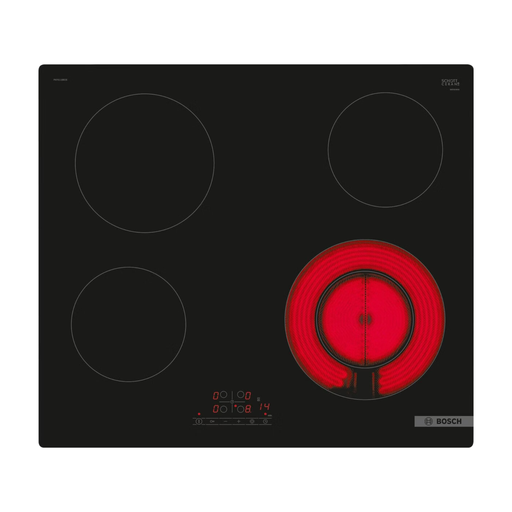
Bosch PKF611BB2E Series 4 ceramic hob
A ceramic option if you don’t want to use an induction hob. Check in advance that the connection is suitable for your kitchen.
Four cooking zones, 17 power settings, zones measuring Ø120–210 mm and a timer for each zone. Requires a two-phase connection with a 5-pin Perilex connector; cable and plug not included. The surface may stay hot after use.
View at Joybuy
 No image available
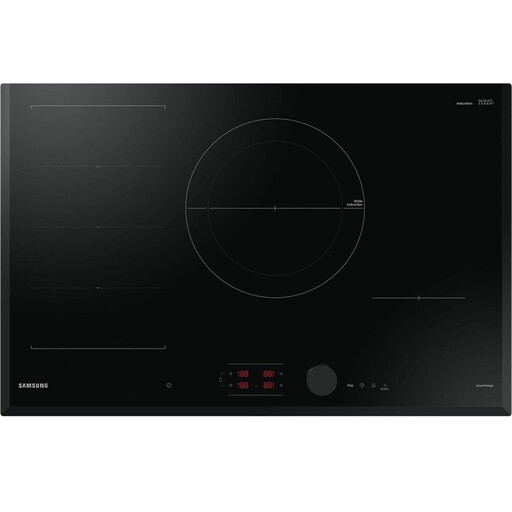
Samsung NZ84C6058KK built-in induction hob
A built-in induction option with four zones and a Flex Zone Plus area for cooking with several pans.
80 cm wide, with 15 power settings and a boost function. Built-in installation by a qualified electrician is required.
View at Joybuy
 No image available
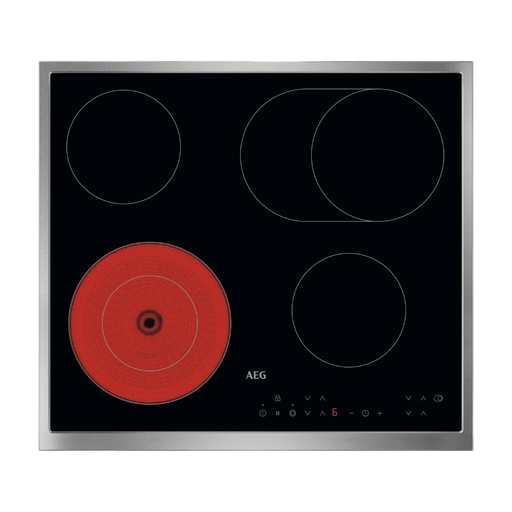
AEG TN64RA06XB built-in ceramic hob
A built-in ceramic option with four zones for anyone who uses several pans.
60 cm wide, with an extendable vario zone and timer. The surface may stay hot after use, so pay attention to the residual-heat indicator.
View at Joybuy
 No image available
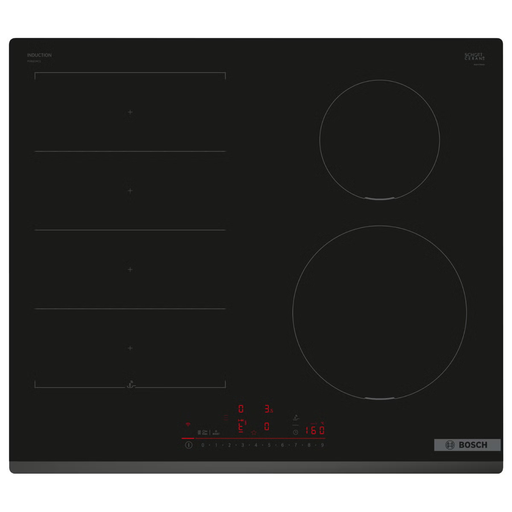
Bosch PIX631HC1E built-in induction hob
A built-in induction option with four zones and a flexible zone for different pan sizes.
59 cm wide. The product description lists pan temperature control with 11 settings, DirectSelect controls and Power Boost. Follow the model’s installation instructions.
View at Joybuy
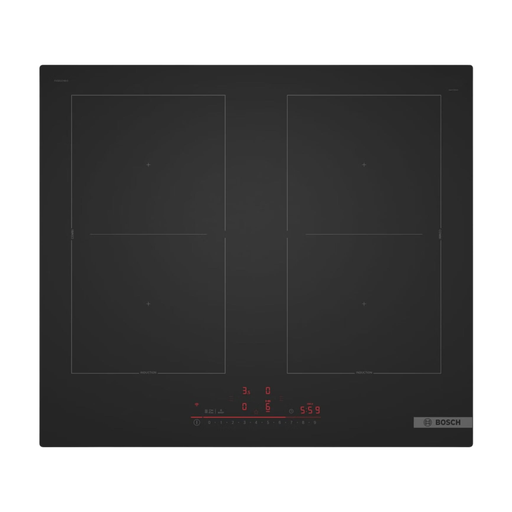 No image available
Bosch PVQ61CHB1E built-in induction hob
A built-in induction option with four zones and a FlexInduction zone that can combine two zones.
The product description lists 17 power settings and a timer with automatic switch-off. Requires a cut-out of 270 × 490 mm; the description specifies a 16A fuse and a 220–240 V connection.
View at Joybuy
Frequently asked questions
Will you need to change your electrical connection for a built-in hob?
That depends on the model’s connected load and required connection, as well as your existing installation. ETNA specifies a two-phase connection for the KI1160ZT. Before you buy, have someone check what’s available in your kitchen and consumer unit.
Can you use your current pans on an induction hob?
Check whether the base of each pan is magnetic, for example with a magnet. Also compare the pan base with the zone sizes specified in the instructions for your chosen hob.
How do you clean spilled cream from an induction hob?
Use a non-scratch cloth or sponge, as recommended by the Consumers' Association for cleaning an induction hob. Also follow the instructions for your model.
Who can help if the hob breaks too soon during normal use?
Contact the retailer to claim your statutory guarantee. ACM ConsuWijzer explains that in the Netherlands, there isn’t just one fixed time limit: what you could reasonably expect from the product also matters.
What product regulations must an electric hob meet in the Netherlands?
Electric hobs placed on the market in the Netherlands must meet the applicable European product safety requirements. After the required conformity assessment, the manufacturer must apply the CE marking and draw up an EU Declaration of Conformity. This alone doesn’t tell you whether the hob is suitable for your electrical connection.


