
Vandaag of morgen in huis

Kwaliteit gegarandeerd

Welkomstaanbiedingen ontgrendelen: GRATIS bezorging | Tot 80% korting | Gratis 30 dagen JoyPlus-proefperiode
Download de app
An electric hob may seem straightforward: plug it in or have it installed, and start cooking. Yet many people end up with the wrong product because they overlook the size, cooking technology or electrical connection. A compact hob, for example, may not provide enough room for two pans, while a built-in hob cannot simply be connected to every circuit.
Pay particular attention to these three common pitfalls:
An induction hob heats a suitable pan using a magnetic field. This means the cooking surface responds quickly when you change the setting. You need pans with a magnetic base for this. If necessary, test them with a magnet before buying a new cookware set.
A ceramic hob uses heating elements beneath a glass surface. These hobs generally work with a wider range of pans, provided the base is flat. The surface remains hot for some time after switching off, so a residual heat indicator is a useful safety feature.
A simple electric hob with enclosed metal hotplates is particularly practical as a standalone solution for a student room, office, campervan or holiday home. The rotary controls are easy to understand, although the surface may be less flat than glass or ceramic.
For a single cooking zone, 2000W is a common rating. This is suitable for cooking from a standard socket, depending on the appliance specifications and the electrical installation. A 3000W hob with two zones offers more capacity, but check that the connection and circuit can handle it.
Larger models have higher connected loads. A 4-ring hob or induction hob with several zones may require a fixed connection and installation by a qualified professional. Always follow the instructions and local regulations. If in doubt, have the connection checked by a registered electrician.
As well as the total wattage, check:
A 2-ring hob measuring approximately 29 or 30 cm wide fits into a small kitchen, but also check the depth and the cut-out dimensions. A double hob is useful when you want to cook pasta and sauce at the same time. For several pans and larger family kitchens, a 4-ring hob is more practical.
With a hob with timer, you can set a zone to switch off after a specified period. A hob with touch controls is easy to wipe clean, but may be less responsive when the control panel is wet or greasy. Rotary controls are often more direct to use, especially on a standalone hob.
A hob with child lock will not stop the surface from becoming hot, but it can help prevent accidental operation. Also look for residual heat indicators, automatic switch-off, overheating protection and pan detection.
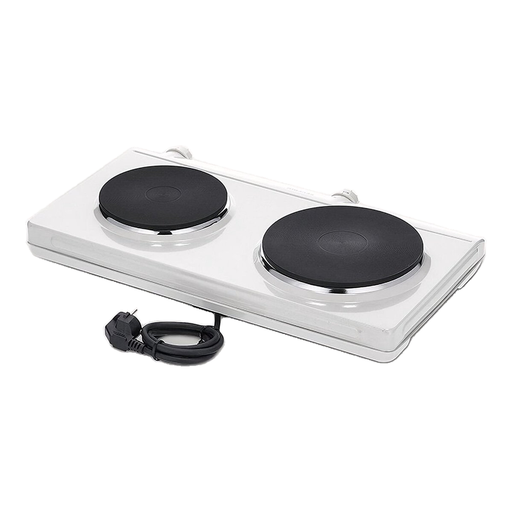
Why it suits this profile: This standalone double hob is suitable for small kitchens, student rooms or as extra cooking space. Each zone has its own rotary control.
This is not a complicated built-in model: the product description specifies a freestanding design, two independent temperature controls and enclosed hotplates. However, check beforehand that your worktop is sufficiently heat-resistant.
Two cooking zones, a total output of 2500W, separate rotary controls and, according to the product description, enclosed hotplate surfaces that are easy to clean.
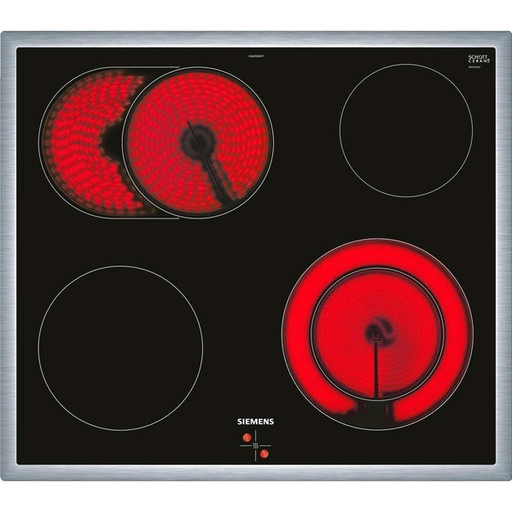
Why it suits this profile: This 60 cm-wide built-in model is designed for a standard kitchen with room for four cooking zones and different pan sizes.
The specifications state the cut-out dimensions, the required worktop and installation by a qualified electrician. This makes it clear from the outset that it is not a standalone model for a standard socket.
Four zones, a dual-ring zone, an extendable roasting zone and a residual heat indicator. According to the product description, the glass-ceramic surface is relatively easy to clean.
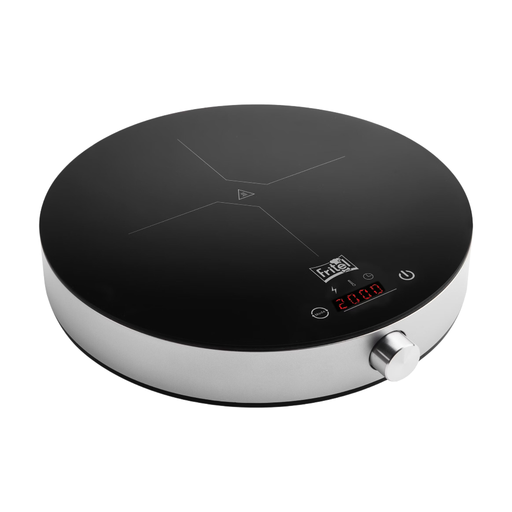
Why it suits this profile: This portable hob with a single induction zone is useful as an extra zone in an office, campervan or holiday home.
The product information specifies a cooking zone measuring 12 to 26 cm. Before ordering, check that your pan falls within this range and is suitable for induction.
Adjustable from 200 to 2000W, 10 power levels, a timer of up to 3 hours and automatic switch-off, according to the product description.
We have put together a complete, up-to-date list of products that fully meet these strict selection criteria and the applicable European safety regulations.
That depends on the type and power rating. A standalone hob rated at, for example, 1500W or 2000W is often supplied with a plug, but always check the instructions and the condition of the socket. Models with several zones or a higher connected load may require a separate circuit or fixed connection.
Use pans with a flat, magnetic base. Holding a magnet against the underside of the pan provides an initial indication. The product information may also specify a diameter range, such as 12 to 26 cm. A pan that is too small, too large or non-magnetic may not be detected correctly.
Running costs depend on the power rating, the selected setting and the cooking time. A 2000W appliance operating at maximum power for one hour theoretically uses 2 kWh. In practice, consumption is often lower because the thermostat or power control does not remain at maximum continuously. So do not compare wattage alone; also consider how often and for how long you cook.
