
One-pan cook with limited space
You make compote in a single pan and want to be able to put the hob away afterwards. Look for a portable single-zone hob with easy-to-use controls, and make sure you have a stable, safe place to cook.


For a single pan of berry compote, a portable single-zone induction hob is a sensible choice if your pan is compatible and you want to adjust the heat while cooking. If you don’t have a suitable induction pan, a conventional electric hob may be a better fit. Two zones are most useful if you regularly use a second pan at the same time and have enough kitchen space and electrical capacity. Stay by the hob while cooking and check which other appliances are connected to the same circuit.
You make compote in a single pan and want to be able to put the hob away afterwards. Look for a portable single-zone hob with easy-to-use controls, and make sure you have a stable, safe place to cook.
You want to keep using your own pan, so check whether its base is suitable for induction. A conventional electric hob may be an alternative if your pan isn’t compatible.
You regularly make another dish alongside your compote and are weighing up a second cooking zone against the worktop space available and the capacity of your electrical connection.
| What to consider | What to check when buying | Who is this important for? |
|---|---|---|
| Adjusting the heat | Check how you adjust the heat and whether the model has a timer. A timer is a reminder, not a substitute for supervision. | If I want to simmer compote gently, I want to be able to turn the heat down once it has come to the boil. Around 33% of consumers say that being able to adjust the heat is their top priority. |
| Using your own pan | For an induction hob, check that the base of your pan is magnetic and suits the cooking zone. The Consumers’ Association also recommends checking the pan requirements for your chosen model. | I want to keep using my existing pan and check first that it will work on the hob. Around 27% of consumers prioritise pan compatibility. |
| Space and electrical connection | Measure the space available for using and storing the hob. Check the electrical connection and which other appliances are on the same circuit; the Fire Service recommends plugging high-power appliances directly into a socket. | In a small shared kitchen, I want to know where the hob can be placed safely and whether I can put it away after use. Around 27% of consumers say space and the electrical connection matter most. |
| Using two pans at once | Check the number of zones, the controls for each zone and the stated total power. Also take into account any other appliances on the same circuit. | If I regularly make a second dish alongside the compote, an extra zone could be useful. Around 13% of consumers say cooking with two pans at once is their top priority. |
A glass-ceramic surface alone doesn’t tell you which heating technology a model uses. According to Severin, the Severin KP 1071 is an induction hob with a glass-ceramic cooking zone.
Check the full model number and whether the manufacturer describes the appliance as an induction hob. Then check what type of pan base it requires.
When you use several zones and other appliances at the same time, the load on the whole circuit matters. On a single-phase induction hob, the available power may be shared between multiple zones.
Compare the total connected load and take into account any other appliances that will be running on the same circuit at the same time.
A conventional electric hob heats the ring itself. With induction, the cooking zone can also become hot from the hot pan.
Keep the cooking area clear, stay nearby while cooking and follow the cooling and cleaning instructions for your chosen model.
Tristar’s range discussed here includes both a portable single-zone induction hob and a conventional double electric hob.
Severin offers the conventional single-ring KP 1091 and the KP 1071 induction hob, among other models.
According to IKEA Netherlands, the TILLREDA 805.901.55 is a portable single-zone induction hob for a small kitchen or as an extra cooking spot.
The VKI3010ZWA is a freestanding double-zone induction hob for anyone who regularly uses two pans at once.
This selection focuses on freestanding single-zone hobs for making compote in one pan. Check whether each model is an induction hob and what type of pan base it requires.
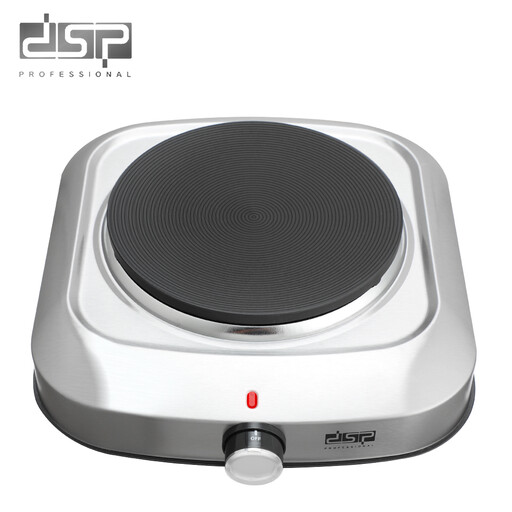 No image available
Suitable if you use one pan and would rather not choose an induction hob.
1500 W; adjustable temperature; portable worktop hob.
 No image available
Suitable if you want to adjust the heat while cooking and have a compatible induction pan.
10 power levels; timer function; only suitable for induction-compatible pans.
 No image available
Suitable if you use one pan and want to choose from different heat settings; the pan must be suitable for induction.
10 power settings; touch controls; safety lock.
 No image available
Suitable if you want to adjust the heat for one pan and use a compatible induction pan.
2000 W; 10 power levels; timer up to 3 hours; suitable for induction pans with a base diameter of 12–26 cm.
 No image available
Suitable if you use one pan and want to adjust the heat while cooking; check that the pan is suitable for induction.
18/IN model designation; the stated pan requirement is a flat, induction-compatible base with a diameter of 12–20 cm.
No. The pan base must be suitable for induction and fit the cooking zone. Check whether the base is magnetic and review the requirements for your chosen model.
It depends on the total load when appliances are running at the same time. Check which appliances are connected to the circuit; the Fire Service advises plugging high-power appliances directly into a socket rather than using an extension lead with multiple sockets.
Stay nearby while cooking and keep flammable items away from the hob. Follow the model’s cleaning instructions; the Consumers’ Association recommends using a non-scratch cloth on a glass induction hob and avoiding abrasive cleaners.
No. According to the Dutch government, you are also entitled to a legal guarantee in the Netherlands. There is no fixed statutory guarantee period of two years; what you can expect from a product depends, among other things, on the product and how it is normally used.