
Vandaag of morgen in huis

Kwaliteit gegarandeerd

Welkomstaanbiedingen ontgrendelen: GRATIS bezorging | Tot 80% korting | Gratis 30 dagen JoyPlus-proefperiode
Download de app
An electric height-adjustable desk can be useful if you work from home, study or game and want to switch regularly between sitting and standing. However, an attractive product photo tells you little about stability, noise levels or day-to-day use. A low price, for example, may come with a small desktop, limited cable space or controls without a memory function.
Use this buying guide to compare the key features of a height-adjustable desk based on verifiable product specifications. You’ll also find a few suitable options for different uses.
A desk that can rise high enough isn’t automatically right for your working posture. Check the lowest setting, desktop dimensions and clearance underneath the desk too. The models covered here have an adjustment range of around 72 to 120 cm, while the Ochama model starts at 71 cm.
A desktop that’s too deep or too small can also be impractical. A size of 120 x 60 cm is often enough for a laptop, but a 160 x 70 cm desk gives you more room to move around if you use a monitor, keyboard and documents.
Terms such as quiet, sturdy and premium often come from marketing copy. So check the construction and stated load capacity. The selected electric desks have a steel frame and a maximum static load of 70 kg. That’s a product specification; actual stability also depends on assembly, flooring and how the weight is distributed.
According to the product description, the motor and steel frame help the desk adjust smoothly. This is a claim made in the product information, not a guarantee that every user will experience the same noise level.
A USB-C port, memory function and cable management can be useful, but check how they work. A USB-C port doesn’t automatically mean that every laptop or monitor can be powered through it. Also check whether the desk has enough cable grommets and whether the controls can be locked.
The selected models list two cable holes, a fabric organiser and a hook. According to the product description, the USB-C port on the controls is suitable for fast charging. Before buying, check the latest specifications and compatibility with your own equipment.
For a home office with one monitor, 120 x 60 cm is a compact option. If you have two screens, speakers or lots of accessories, 140 x 60 cm or 160 x 70 cm is more practical. Measure the available space beforehand, including skirting boards, the distance from the wall and where the cables will run to a socket.
Be aware of the difference between static load capacity and dynamic load. The stated 70 kg is the maximum static load according to the product information. Distribute heavy equipment evenly and don’t exceed this limit.
A sit-stand desk is especially practical when you can adjust the height quickly. A memory function lets you save your preferred settings, for example one position for sitting and another for standing. That way, you won’t have to keep searching for a comfortable setting.
The models below have an adjustment range of around 72 to 120 cm. The JOYFURNOS and Ochama products also have shortcut buttons or four memory presets, depending on the model. Check the product page for details of the controls.
A desk with cable management helps prevent cables from hanging over the back edge or getting caught when you adjust the height. Leave enough slack and secure cables so they don’t pull on the frame.
The product information states that these desks are intended for indoor use only. Keep electrical components away from liquids. On some models, the overheating protection activates if the desk is adjusted continuously for more than two minutes; according to the manual, you must then wait 18 minutes.
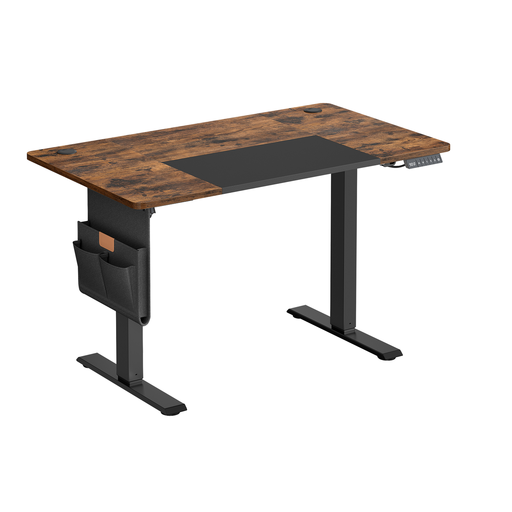
Why it suits this profile: The compact 120 x 60 cm desktop fits in a smaller study, bedroom or home office. The memory function and USB-C port add practical features without taking up a lot of desk space.
The stated dimensions and maximum static load of 70 kg make it clear what you’re buying. Cable management, an organiser and hooks help keep accessories tidy.
120 x 60 cm, height range of 72 to 120 cm, memory function, USB-C port and a steel frame, according to the product information.
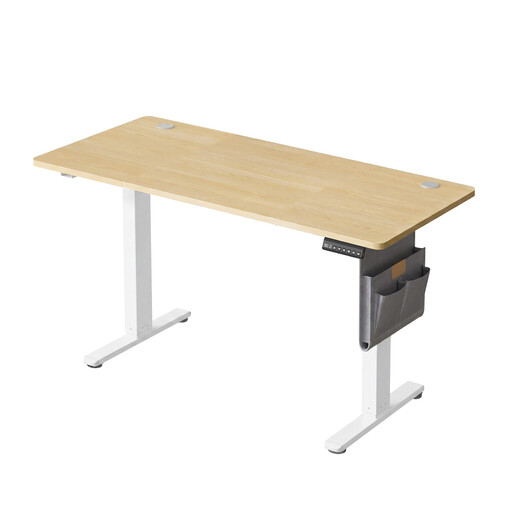
Why it suits this profile: This spacious computer desk is ideal for intensive home working with one or more screens, documents and accessories. The wood finish suits both traditional and modern home offices.
The fixed 160 x 70 cm size means you won’t discover after buying that the desktop is too small. Two cable holes and an organiser help keep your setup tidy.
160 x 70 cm, maximum static load of 70 kg, memory function, USB-C connection, adjustable feet and lockable controls.
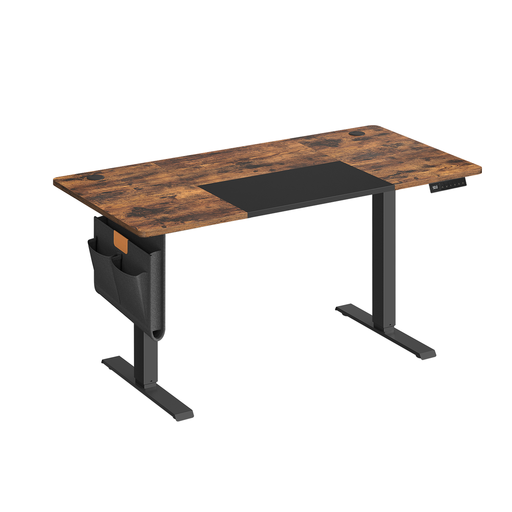
Why it suits this profile: Four memory presets are useful when several people share the same desk or when you want to switch quickly between working and gaming heights.
The 140 x 60 cm desktop offers more space than a compact model without needing the depth of a large desk. You can check the stated load capacity and assembly information in advance.
Four memory presets, stepless height adjustment from 72 to 120 cm, USB-C port, cable management and a maximum static load of 70 kg.
Before assembly, check that the floor is level and leave space between the desk and the wall when adjusting its height. According to the product information, direct contact with the wall can cause scratches or damage. Set the built-in sensor carefully so that it can detect fixed obstacles more effectively.
Use only a suitable adapter and keep liquids away from the controls, motor and connections. Secure cables with enough room to move. For an intensive gaming or work setup, it’s a good idea to add up the total weight of monitor arms, your PC, speakers and accessories.
We’ve put together a complete, up-to-date list of products that fully meet these strict selection criteria and the applicable European safety regulations.
It depends on your space, equipment and the desktop size you need. A 120 x 60 cm model suits a compact laptop setup. For multiple screens or lots of peripherals, 140 x 60 cm or 160 x 70 cm is more practical. Also check that there’s a socket nearby and that cables can move freely when you adjust the desk.
Its lifespan depends on factors such as assembly, load, frequency of use and maintenance. Don’t exceed the stated maximum load, keep liquids away from electrical components and use the overheating protection as instructed in the manual. Avoid raising and lowering the desk continuously for long periods when it isn’t necessary.
Power consumption depends on the motor, how often you adjust the desk and its standby mode. For the models mentioned, the product information states that the controls have an energy-saving mode. The desk mainly uses electricity while being adjusted; check the technical specifications of your chosen model for exact figures.
