
Vandaag of morgen in huis

Kwaliteit gegarandeerd

Welkomstaanbiedingen ontgrendelen: GRATIS bezorging | Tot 80% korting | Gratis 30 dagen JoyPlus-proefperiode
Download de app
An electric height-adjustable desk can be useful when you work from home, study or game and want to change your sitting position regularly. However, many models look similar. The differences often come down to dimensions, adjustment range, controls and frame stability.
Watch out for these three common pitfalls:
A height-adjustable desk should suit both your height and your chair. The models in this selection have an adjustment range of around 72 to 118 or 120 cm. Before ordering, measure the heights you need at home for both sitting and standing.
The space available will then determine the size:
Also consider the clearance around the desktop. An electric sit-stand desk moves up and down, so don’t place it right against a wall or beneath a shelf that could block its movement.
The desks listed have a maximum static load capacity of 70 kg. This figure matters when you’re working out the total weight of the desktop, monitors, PC, lamp, books and other accessories.
A steel frame and adjustable feet can help create a stable setup. However, that doesn’t mean every desk will be completely wobble-free at its maximum height. So check that:
A sturdy desk isn’t automatically an ergonomic one. Make sure your monitor, keyboard and chair are adjusted correctly too.
A desk with a memory function can save two to four favourite heights, depending on the model. This is especially handy if several people use the same desk or you regularly switch between work and study.
Some models also have a USB-C port, cable grommets, an organiser or hooks. According to the product descriptions, certain JOYFURNOS models have a USB-C port with charging functionality. Check the product page for the charging specifications; a USB-C port doesn’t automatically mean you can charge every type of laptop through it.
According to the product specifications, JoySelect models have a digital control panel with two memory settings. They are also listed as CE-certified and certified to a European standard. Treat this as product specification information, not as a guarantee that every desk will meet your personal requirements in every working environment.
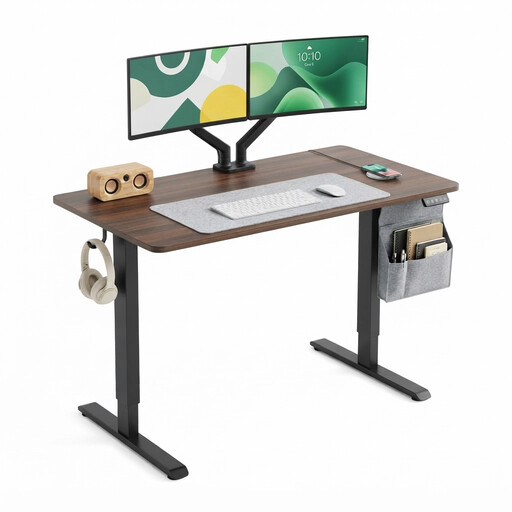
Why it suits this profile: This compact model is a good first electric desk for working from home, studying or light gaming. The walnut-coloured desktop works well in a bedroom or smaller home office.
The product listing specifies an adjustment range of 72–118 cm, a load capacity of 70 kg and two memory settings. That makes the key basics clear.
120 x 60 cm, digital control panel, two memory settings, two hooks and a steel frame.
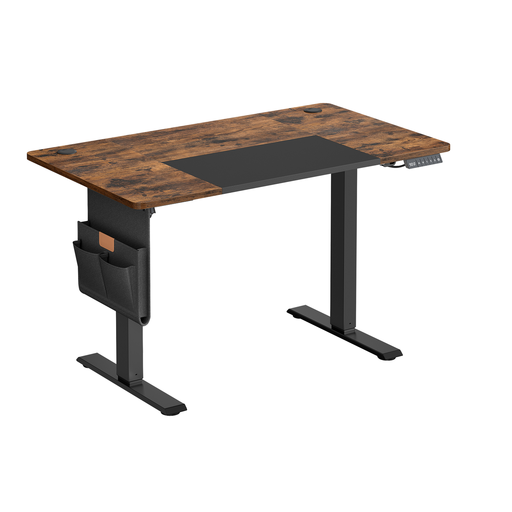
Why it suits this profile: This model combines memory settings with a USB-C port, cable management and storage. It’s a good fit for a tidy home office where you use several devices every day.
The specifications also spell out the limits: a maximum static load of 70 kg and a pause after prolonged continuous adjustment. Bear this in mind when using the desk.
Memory function, USB-C port, cable management, three hooks and an adjustment range of 72–120 cm.
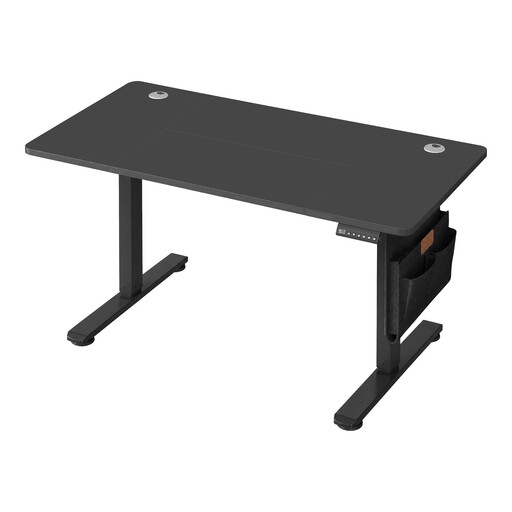
Why it suits this profile: The spacious desktop is designed for intensive work, studying or use as a gaming desk with multiple screens and accessories.
The 160 x 70 cm dimensions and 70 kg load capacity are clearly specified. This makes it easier to check whether the desk suits a heavy monitor setup.
Spacious desktop, memory function, USB-C port, cable grommets, adjustable feet and a control panel lock.
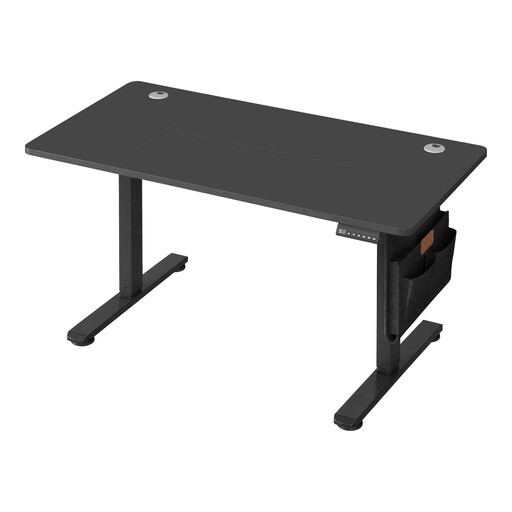
Why it suits this profile: At 140 cm wide, it gives you more workspace than a compact desk, while its 60 cm depth still suits many bedrooms and home offices.
The product information lists memory settings, USB-C, cable grommets and a maximum static load of 70 kg. You can compare the available space and features you need before you buy.
140 x 60 cm, memory function, USB-C port, cable management and adjustable feet.
We’ve put together a complete, up-to-date list of products that meet these strict selection criteria and the applicable European safety regulations.
Start with a height that lets you keep your shoulders relaxed and your forearms roughly horizontal on the desktop. Adjust your monitor so you don’t have to look down for long periods. Then test both sitting and standing positions. Only programme your preferred settings once your chair, screen and keyboard are properly positioned.
Its lifespan depends on assembly, load, frequency of use and maintenance. Don’t exceed the stated load capacity, and avoid letting the desk move constantly against a wall or piece of furniture. On some models, the overheating protection switches on after around two minutes of continuous adjustment. If this happens, wait for the specified cooling period.
Most of the electricity is used while the desk is moving. So, with normal use, the motor is only on for short periods. A control panel with an energy-saving mode may reduce standby power consumption, depending on the model. Unplug the desk if you won’t be using it for a long time, and keep electrical components away from liquids.
