If you mainly want to warm the air in the room, consider a fan heater or convector. If you usually sit in one spot, targeted radiant heat may be a better fit. For longer periods of use, insulation, hours of operation and electricity consumption are important considerations. Before buying, also check the instructions and the requirements that apply to the exact model.
Who is this guide for?
Anyone who wants to warm a room for a short time
You want to make a small, chilly room more comfortable quickly while you’re in it, and can take fan noise and the heater’s position into account. This need is reflected in information from Brandweer Nederland, Kieskeurig.nl and Duux.
Anyone who usually sits in one spot
You often work or relax in the same spot and don’t need to heat the whole room evenly. Milieu Centraal describes infrared heating as warming the area within its range.
Anyone who spends longer in the room
You want to consider fan noise, insulation and electricity consumption when the heater is on for longer. Information from Milieu Centraal, Eurom and De’Longhi makes these factors relevant to the heating options described.
What should you look for?
Ceramic fan heater
A good fit if: you want warm air to circulate around a small room while you’re there for a short time; compare the stated room coverage with the size of your own space.
Consider: a fan can be audible, and using a heater briefly doesn’t necessarily tell you what it will cost over many hours of operation.
Infrared panel for one spot
A good fit if: you usually stay in one place to work or sit, and don’t need the whole room to reach the same temperature.
Consider: you’ll feel less direct warmth outside the panel’s range. Milieu Centraal says that continuously heating an entire room is generally suitable only when it is very well insulated.
Convector or oil-filled radiator
A good fit if: you want to warm the air in the room without a fan running continuously, and have enough space for the heater.
Consider: the manual for the Eurom convector reviewed limits its intended use to well-insulated rooms or occasional use. De’Longhi says the oil in its radiator continues to give off heat for a while after it has been switched off.
| What to consider |
What should you check? |
Who is this important for? |
| Quick warmth from the air |
Compare the power, settings and stated room coverage of the exact model with the size of your room. |
If I mainly use the room for short periods, I want warm air quickly and can take fan noise into account. Around 25% of consumers prioritise quick warmth from the air. |
| Warmth in one spot |
Check that your seat is within range and that the heater can be placed or mounted where you need it. |
If I usually sit in the same spot, the whole room doesn’t need to be equally warm. Around 25% of consumers prioritise warmth in one specific spot. |
| Low fan noise |
Check whether the heater has a fan and which setting any noise claim applies to. |
If I spend longer working or reading in the room, I want to avoid being disturbed by fan noise. Around 19% of consumers prioritise low fan noise. |
| Electricity consumption |
Work out consumption using the power in kW and the hours when the heating element is actually heating; then apply your own tariff. |
If I expect to use the heater for many hours, I want to find out first whether heating just one spot will be enough. Around 19% of consumers prioritise running costs. |
| Safe positioning |
Read the clearance and connection instructions, and check whether you can plug the heater directly into a wall socket. |
If space is limited, I want to know first whether the heater can be positioned safely according to the instructions. Around 12% of consumers prioritise safe positioning. |
Common mistakes
-
Assuming high wattage means low running costs
Power alone doesn’t tell you how much electricity you’ll use. Milieu Centraal warns that electric heaters are not necessarily an economical way to heat a home.
Work out consumption for your own usage, and decide whether heating one spot will be enough before warming the whole room.
-
Expecting an infrared panel to warm the whole room
According to Milieu Centraal, radiant heat is limited to a particular area; you may feel less direct warmth outside its range.
Position the panel to suit your usual seat. If you need warm air in several spots at once, compare options designed to heat a room too.
-
Assuming every convector is suitable for long-term use
The manual for the Eurom Safe-T-Convect 2400 reviewed limits its intended use to well-insulated rooms or occasional use. This condition does not automatically apply to every model.
Read the manual for the exact model and take your room’s insulation and expected usage time into account.
-
Using an extension lead or socket adaptor because the wall socket is further away
Brandweer Nederland advises plugging high-power appliances, including small electric heaters, directly into a wall socket rather than using a cable reel or extension socket.
Beforehand, check where the heater can be positioned according to the manual, and whether a wall socket is within reach.
Brands to consider
Eurom
The product ranges reviewed include both a convector for heating a room and an infrared panel for targeted warmth.
- Eurom describes the Safe-T-Convect 2400 as quiet during normal use, and says the E-Infrared 600 can be placed on feet or mounted on a wall.
- The manual for the convector reviewed limits its intended use to well-insulated rooms or occasional use; this does not automatically apply to all Eurom models.
Duux
The Threesixty² is a compact ceramic fan heater with adjustable controls.
- Duux says the Threesixty² has three heat settings, app control and tip-over and overheat protection.
- The stated room coverage and heating speed are manufacturer claims, not independent measurements in your apartment.
De’Longhi
The Radia S TRRS0920 is an example of a portable, oil-filled radiator.
- The Dutch product page lists a power output of 900–2000 W, a room thermostat and wheels.
- De’Longhi says the oil continues to give off heat for a while after the radiator is switched off. In a small room, consider the space available and the dimensions of the heater.
Philips
The CX2120/01 is a compact ceramic heater featured in Dutch product listings.
- The Dutch product listing states a power output of 1500 W and room coverage of up to 15 m².
- The Philips page consulted was for the refurbished CX2120/01R1. Don’t assume that the features or conditions for that version also apply to the new CX2120/01 without checking.
Heaters for warming a room
This Joybuy selection features ceramic electric fan heaters for warming a room.
 No image available
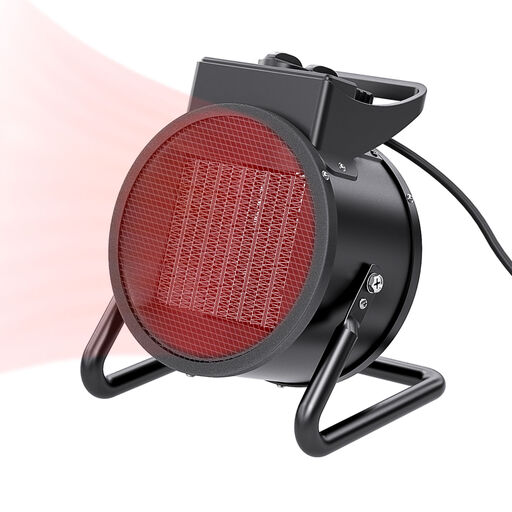
LZQ PTC fan heater, 2 kW, 3 settings
An option to compare if you’re looking for a ceramic fan heater for a room at home or in the office.
The product name lists a PTC element, a thermostat, three settings and a power output of 2 kW.
View at Joybuy
 No image available
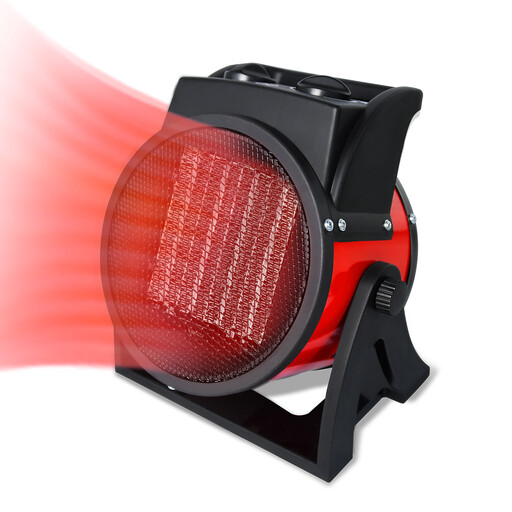
LZQ ceramic PTC construction heater, 2 kW, 3 settings
This model is worth considering if you’re looking for a ceramic electric heater for your home, apartment or workshop, among other spaces.
The product name lists a PTC element, a thermostat, three heat settings and a power output of 2 kW.
View at Joybuy
 No image available
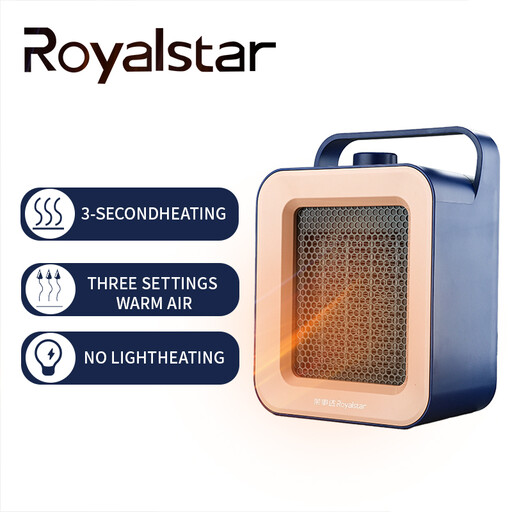
Royalstar S790W fan heater, 1500 W
An option if you’re looking for a compact electric fan heater with a carry handle.
The product information lists settings of 750 W and 1500 W.
View at Joybuy
 No image available
Philips 2000 Series CX2120/01, 1500 W
This compact ceramic heater may suit you if you want to compare its stated features and positioning instructions with your room.
The product information lists settings of 600 W and 1500 W, and stated coverage of up to 15 m². According to the instructions, keep it at least 1 m away from flammable materials and use an earthed socket; extension leads and adaptors are not recommended.
View at Joybuy
 No image available
OmniHeat ceramic fan heater, 1800 W
An option to compare if you’re looking for a ceramic heater with thermostat controls for a smaller space.
The product name lists a remote control, timer, ECO mode and oscillation. The product information also states coverage of up to 25 m² and includes warnings about use in damp rooms.
View at Joybuy
Frequently asked questions
Is an infrared panel suitable for heating an entire room continuously?
An infrared panel is best suited to warming one spot where you spend time. Milieu Centraal says that using infrared panels to heat an entire room continuously is generally suitable only in a very well-insulated home.
Can I plug an electric heater into an extension socket?
Brandweer Nederland advises plugging high-power appliances, including small electric heaters, directly into a wall socket rather than using an extension socket or cable reel. Also follow the manual for the model you choose.
How can I estimate electricity consumption before buying a heater?
Multiply the power in kW by the number of hours the heating element is actually on; this gives you the consumption in kWh. Multiply that figure by your own tariff. A thermostat, a lower setting and your room’s insulation can affect how long the heater actually runs.
What are my rights if I buy online or receive a faulty product?
For a standard online purchase, you generally have a statutory 14-day cooling-off period after delivery, with some exceptions. The seller is also responsible for the statutory guarantee if a product used normally does not meet what you could reasonably expect; paying for an extra guarantee does not replace this right. ACM ConsuWijzer explains these rules.
Does an electric room heater have to comply with EU product rules and have an energy label?
Electric local space heaters within the scope of the applicable rules must meet EU ecodesign requirements; electrical equipment covered by the Low Voltage Directive must meet safety requirements. The European Commission says that electric local space heaters are outside the scope of the energy labelling scheme cited. This does not establish whether an individual model meets the applicable requirements.


