
Vandaag of morgen in huis

Kwaliteit gegarandeerd

Welkomstaanbiedingen ontgrendelen: GRATIS bezorging | Tot 80% korting | Gratis 30 dagen JoyPlus-proefperiode
Download de app
An electric heater may seem straightforward to choose: check the wattage, compare the price and place the appliance in the room. However, many poor purchases are caused by features that are presented as more impressive in product adverts than they are in practice. As a Joybuy Product Recommendation Officer, I therefore focus primarily on verifiable specifications and suitability for the intended use.
A 1,800-watt heater can warm a room faster than a 600-watt model, but it also uses more electricity while heating. Energy consumption depends on the power rating, how long the heater is used and how often the thermostat switches the heating element on.
A simple calculation:
power in kilowatts × usage time in hours = consumption in kWh
An appliance rated at 1,500 watts that runs continuously for one hour therefore uses 1.5 kWh. A thermostat can reduce the actual running time, but you should always treat an energy-saving claim as a product estimate. According to Philips’ own information, the CX2120/01 can save up to 25% when using the temperature settings; this is not a guarantee for every home or user.
The stated area is a guideline. Insulation, ceiling height, draughts, outdoor temperature and the temperature you want to achieve all make a significant difference. A compact heater for a desk or bedroom is not automatically suitable for an open-plan living room.
As well as floor area, consider the power rating and air circulation. A fan heater distributes heat quickly, while a convector heater allows air to circulate gradually. An oil-filled radiator heats up more slowly, but continues to give off warmth for some time after it is switched off.
A heater with tip-over protection will generally switch off when the appliance falls or tilts over. Overheat protection can switch the appliance off if the temperature becomes too high. These features are useful, but they do not make a heater suitable for use under curtains, next to bedding or on an unstable surface.
Check that the model has a clear CE marking, use an earthed socket when required by the instructions, and never block the air inlet or outlet. Do not use an extension lead if the manufacturer advises against it.
For a small bedroom, hallway or home office, a compact heater rated at around 600 to 1,500 watts may be sufficient as supplementary heating. Models rated from 1,000 to 1,800 watts are available for medium-sized rooms. Always consider the combination of wattage and stated area.
A heater with multiple settings is practical. This means you can use an energy-efficient heater not only at full power, but also on a lower setting once the room is already partly warm.
A low stated noise level is relevant in a bedroom. Philips lists a noise level of 24 dB(A) for the CX2120/01. Noise levels are sometimes not specified for other models; in that case, do not automatically assume quiet operation.
A heater with a thermostat can automatically attempt to maintain the set temperature. Pay attention to the difference between a mechanical thermostat, digital controls and a smart heater with Wi-Fi. Wi-Fi control is useful for schedules and remote operation, but check app support, the child lock and whether there is a physical on/off button.
The minimum useful safety features are:

Why it suits this profile: Thanks to its compact size and weight of 0.93 kg, this model fits on or next to a desk and is easy to move around.
The stated 600 W power rating is suitable for targeted supplementary heating. The ceramic PTC technology, thermostat and tip-over protection are clearly described.
45° oscillation, automatic shut-off and overheat protection; dimensions: 18,8 × 14,2 × 18,8 cm.

Why it suits this profile: This model combines multiple settings with a lightweight design weighing 1.51 kg and a built-in handle for regular use in different rooms.
The three temperature settings and two power settings mean you do not have to heat continuously at 1,500 W. Tip-over and overheat protection are included.
Stated noise level of 24 dB(A), temperature setting from 20 °C to 30 °C and five listed safety features.
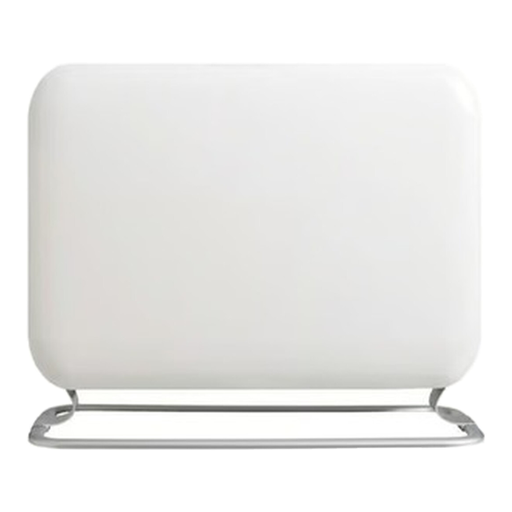
Why it suits this profile: Suitable for anyone who wants to schedule fixed electric heating via Wi-Fi, for example in a home office or a room used according to a timetable.
The stated capacity is 18 m² and the power rating is 1,200 W. This prevents you from relying solely on a general marketing claim about room size.
Wi-Fi control, weekly programmes, holiday setting and child lock according to the product description; the noise level is not specified.
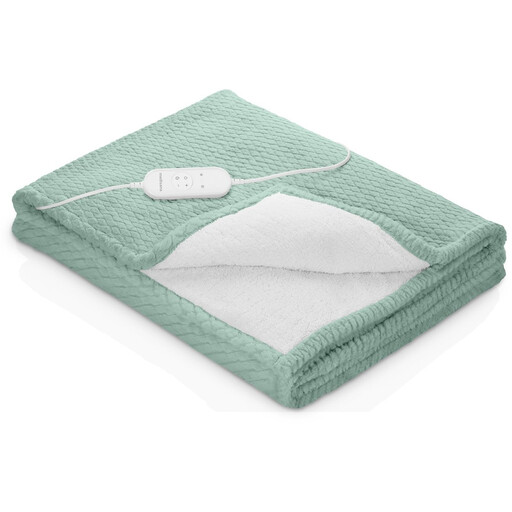
Why it suits this profile: Ideal for use on the sofa or in bed when you mainly want to warm yourself rather than an entire room.
At 120 W, this is not a room heater. The product is therefore clearly intended to provide personal warmth rather than heat an entire home.
Nine temperature settings, automatic shut-off after 120 minutes, overheat protection and a detachable controller.
We have put together a complete, up-to-date list of products that fully meet these strict selection criteria and the applicable European safety regulations.
That depends on the wattage, how long you use it and your electricity tariff. An appliance rated at 1,000 watts uses 1 kWh when heating continuously for one hour. A thermostat can reduce the number of minutes the heater is actively heating. So do not just check the purchase price; consider the power rating and how long you intend to use it.
Use the stated area as a guideline and take insulation, draughts and ceiling height into account. A desk heater may be sufficient for a small workspace. For a medium-sized room, a convector heater or oil-filled radiator is a more logical choice. If you are unsure, a model with multiple heat settings is more flexible than an appliance with just one fixed setting.
Place the heater on a flat, stable and non-flammable surface. Keep it away from curtains, furniture, bedding and paper, never cover the appliance, and do not use it in a damp room unless the manufacturer expressly permits this. Unplug it before cleaning or moving it, and allow a hot heater to cool down first.
