
Vandaag of morgen in huis

Kwaliteit gegarandeerd

Welkomstaanbiedingen ontgrendelen: GRATIS bezorging | Tot 80% korting | Gratis 30 dagen JoyPlus-proefperiode
Download de app
An electric heater can quickly provide extra warmth in a bedroom, home office, student room or workplace. However, a model with a high wattage, digital display and features such as “rapid heating” is not automatically right for your situation. The best choice depends on the size of the room, how long you use it, noise levels and safety features.
As a Joybuy Product Recommendation Officer, I focus mainly on verifiable specifications. This helps you avoid paying for features you will not use or buying a heater that is too noisy, too powerful or difficult to position in practice.
A 2000W heater can deliver heat quickly, but at maximum power it also uses 2 kWh per hour. The actual cost depends on your electricity tariff, the selected setting and how long the heating element remains active. A thermostat or ECO mode can help reduce the time spent heating at full power, but “energy efficient” is not a fixed characteristic of every product.
Look out for:
According to DREO’s own research, the Atom 416 can use up to 40% less energy in energy-saving mode. This is a brand claim; actual consumption varies depending on the room, insulation, temperature and usage time.
Manufacturers often specify a suitable room size, but this value does not guarantee the same level of warmth in every home. A poorly insulated room with high ceilings requires more power than a small, well-insulated home office.
You should also check:
A small portable heater is particularly useful for targeted warmth. For a living room, a convector heater or a model with oscillation can distribute heat more evenly.
A quiet heater with a fan will usually still make some noise. Look for a stated noise level in decibels and remember that measurement conditions may vary between brands. For a bedroom or home office, a lower stated level is more useful in practice than a general term such as “whisper quiet”.
The DREO Atom 416 lists 34 dB as its lowest level. Philips lists 24 dB(A) for the Compact Ceramic Heater. These figures come from the brands’ product information and cannot be directly compared without using the same measurement method.
A ceramic heater or ceramic fan heater often uses a PTC ceramic heating element. PTC stands for Positive Temperature Coefficient. In product descriptions, this technology is associated with rapid heating and heating without an open flame. This does not mean that the casing or air outlet stays cool: components can become hot during use.
For PTC models, pay particular attention to:
A heater with a thermostat switches the heating on and off according to the set temperature. This helps prevent the appliance from constantly running at maximum power. A heater with a timer is useful when you want the heating to stop after a certain period.
A timer is not a substitute for supervision. Switch off the electric heater and unplug it when you are not using it, unless the instruction manual describes a specific safe-use situation.
A heater with tip-over protection switches off, according to the product description, when the appliance tips over. A heater with overheat protection stops operating if the temperature becomes too high. These features reduce certain risks, but they do not make incorrect use safe.
Always place the heater:
Never cover an electric heater or block the air inlet or outlet. Ideally, use a suitable earthed wall socket and follow the instruction manual.

Why it suits this profile: This compact model is designed for smaller rooms of up to 15 m² and offers two power settings of 600W and 1500W. Weighing 1,51 kg, it is easy to move between your workspace and bedroom.
The lower setting means you do not always have to use maximum power. The stated figures of 24 dB(A), 15 m² and 1500W make the choice easier to assess than relying on a marketing term alone.
PTC ceramic technology, tip-over and overheat protection, three temperature settings and an integrated handle.
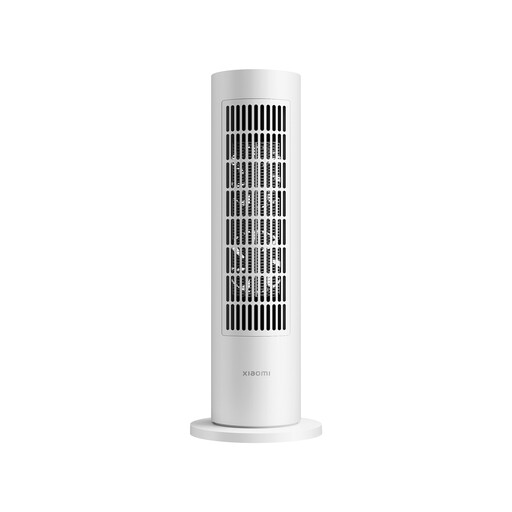
Why it suits this profile: This tower heater combines 2000W of power with a smart thermostat, 70° oscillation, timer and app and voice control.
The available features are clearly specified. However, bear in mind that the Mi Home app and an internet connection are required for full functionality.
2000W PTC heating, 70° oscillation, automatic switch-off and tip-over protection.

Why it suits this profile: This model has an ECO mode, 24-hour timer, adjustable thermostat, five settings and a carry handle for use in, for example, a bedroom, office or living room.
The timer and thermostat help you plan extended use more effectively. The “energy-saving” description remains a product claim; assess your consumption based on the power rating and usage time.
PTC ceramic technology, ECO mode, 24-hour timer, thermostat, and tip-over and overheat protection.

Why it suits this profile: The stated noise levels from 34 dB, thermostat range of 5–35°C, remote control and 12-hour timer are well suited to a bedroom or quiet workspace.
The noise level is given as a figure rather than simply described as “quiet”. According to DREO’s own research, the model can save up to 40% energy; treat this as a brand claim, not a guaranteed saving.
1500W PTC heating, stated minimum of 34 dB, thermostat, remote control and eight layers of safety according to the product description.
We have put together a complete, up-to-date list of products that fully meet these strict selection criteria and the applicable European safety regulations.
For a small, well-insulated bedroom, 600W to 1500W may be enough for targeted warmth. A 2000W heater provides more power, but is not automatically necessary. Consider the room size, insulation and whether you want to heat the whole room or just a desk.
Only use features that are clearly described in the instruction manual, such as a timer and thermostat. Place the appliance on a stable surface, keep textiles at least 1 metre away and never cover the heater. If in doubt, switching it off and unplugging it is the safest option.
Calculate this using: power in kW × electricity price per kWh. A 2000W heater uses 2 kWh per hour when running continuously at maximum power. A 1500W model uses 1,5 kWh in the same situation. A thermostat, ECO mode and a lower setting can reduce the total time spent running at full power, but the result varies depending on the property and settings.
