
Vandaag of morgen in huis

Kwaliteit gegarandeerd

Welkomstaanbiedingen ontgrendelen: GRATIS bezorging | Tot 80% korting | Gratis 30 dagen JoyPlus-proefperiode
Download de app
An electric heater seems simple enough: plug it in, set the heat and you’re done. But models vary considerably in power, noise levels, controls and safety features. A small fan heater can be handy at a desk, while a ceramic heater with a thermostat may be a better choice for a bedroom or home office.
There are also other electric heating products for specific situations, such as a heated blanket, electric blanket or warming plate. So, the right choice isn’t necessarily the one with the highest wattage. Start by asking yourself: which room or situation do you want to heat?
A 2,000-watt heater can warm a space quickly, but at full power it also uses more electricity than a 600- or 1,000-watt model. The actual cost depends on the wattage, how long you use it and the setting you choose.
Look out for:
So, an “energy-efficient heater” isn’t automatically economical in every situation. Lower wattage and shorter use can matter more than a marketing label.
A fan heater uses a fan to circulate warm air. This usually heats a space quickly, but the fan can be audible. If you plan to place the heater beside your bed or desk, check whether the product lists its noise level or is specifically described as a quiet electric heater.
For example, according to the product information, the OmniHeat offers several noise settings starting at 38 dB. This is a product specification, not a guarantee that every user will find the appliance completely silent.
A compact portable heater may be placed close to curtains, furniture or bedding. Before buying and using one, check whether it has:
Never cover an electric heater, and don’t use a fan heater on soft bedding. Always follow the manufacturer’s instructions and safety warnings.
Power is measured in watts. A 600-watt model is suitable for personal heating at close range, for example at a desk. Models rated at 1,500 to 2,000 watts are designed to provide more powerful supplementary heating, but they won’t necessarily heat a room evenly.
Also consider:
A ceramic PTC heater uses a ceramic heating element. Product descriptions often highlight fast, steady heat, but focus on the specific settings, wattage and safety features.
A heater with a thermostat can help maintain your chosen temperature. A heater with a timer is useful if you don’t want the appliance running indefinitely. A heater with a remote control is more convenient when it’s placed beside the sofa or bed.
Check how long you can set the timer for. This can range from 1 to 12 hours or up to 24 hours. A longer timer isn’t always more useful: for short periods of use in a home office, a simple switch-off function may be enough.
A portable heater should stand securely and be easy to move. A concealed or ergonomic handle can help, but only move the appliance once it has been switched off and allowed to cool.
For a warming plate, the surface area, temperature control and portability matter most. For a heated blanket, check the dimensions, whether it’s washable, whether it switches off automatically and whether the control is detachable.
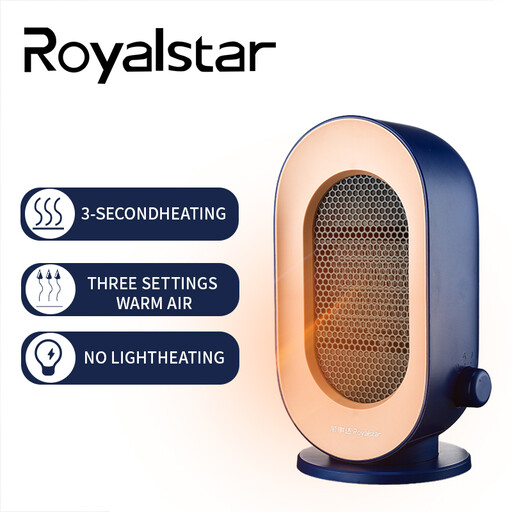
Why it suits this profile: This compact model has three heat settings and a power rating of 600 watts. It’s well suited to short bursts of personal heating in a home office or workplace.
Its lower wattage means you don’t need to use a 2,000-watt model just to create a small warm spot for yourself. The product information also lists tip-over and overheating protection.
600W power, three settings, compact size and two listed safety features.

Why it suits this profile: This model combines a ceramic heating element with four settings, oscillation, ECO mode, a remote control and a thermostat adjustable from 5 to 35 °C.
The adjustable thermostat and timer give you more control than simply switching the heater on and off. The product information also lists tip-over and overheating protection.
1800W, 24-hour timer, ECO mode, oscillation and remote control.
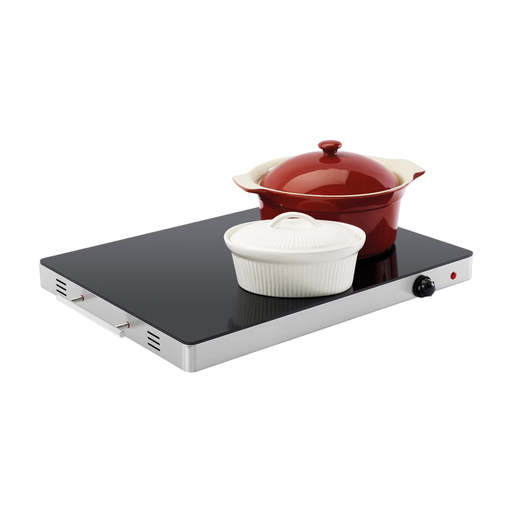
Why it suits this profile: For families, dinner parties and small offices that want to keep food warm, this warming plate is more practical than a room heater. Its surface measures 54 × 41 cm.
It’s designed to keep dishes and food warm, rather than blow warm air around the room. According to the product information, the temperature can be adjusted from 20 to 130 °C.
XXL size, 400W power, glass top and Cool Touch handles.
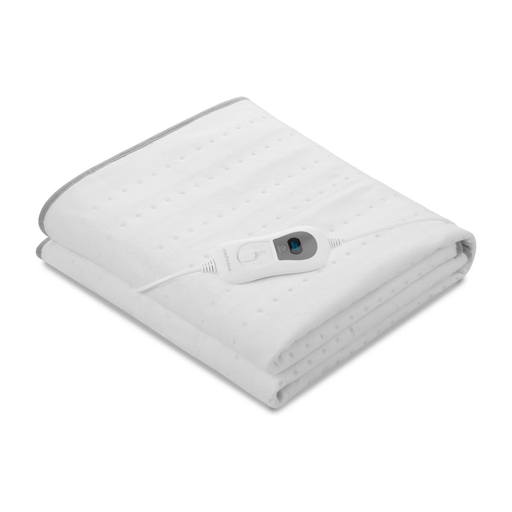
Why it suits this profile: An electric blanket warms the bed rather than the whole room. This model is suitable for mattresses measuring 200 × 90–100 cm and has three heat settings.
It has a power rating of 60W, and the product information lists automatic switch-off after 180 minutes and overheating protection. Use the blanket flat and unfolded.
60W, three temperature settings, detachable control and washable design.
We’ve put together a complete, up-to-date list of products that meet these strict selection criteria and the applicable European safety regulations.
Place the heater on a flat, hard surface and leave at least the clearance specified in the manual. Keep curtains, paper, clothing and furniture away from the warm air outlet. Don’t use an extension lead or multi-socket adaptor if the manual advises against it, especially with high-wattage appliances.
Switch the appliance off and unplug it before cleaning, moving or storing it. Check the cable, plug and casing regularly. If you notice a burning smell, damage or unusual heat, stop using it immediately.
It depends on your electricity tariff, the heater’s wattage, how long you use it and the size of the room. An electric heater can be useful for temporarily heating a single workspace or room. Compare the power consumption in watts, and use a timer or thermostat if one is available.
A low-wattage model may be enough for personal warmth. Models rated at 1,500 to 2,000 watts are often available for larger rooms. The capacity you need also depends on insulation, draughts and room size. Don’t look at wattage alone: consider the thermostat and how the heat is distributed too.
Only if the manual says it’s safe to do so and the appliance is kept clear of bedding, curtains and other flammable materials. A timer, tip-over protection and overheating protection are important features. Electric blankets have different safety rules: don’t fold or cover one while it’s in use, and unplug it when you’re not using it.
