
Vandaag of morgen in huis

Kwaliteit gegarandeerd

Welkomstaanbiedingen ontgrendelen: GRATIS bezorging | Tot 80% korting | Gratis 30 dagen JoyPlus-proefperiode
Download de app
An electric heater may seem simple: plug it in and switch on the heat. Yet many buyers make the same mistakes. A model with a high wattage is not automatically suitable for every room, an energy-saving mode does not necessarily reduce your electricity use, and an attractive display says little about safety.
As Joybuy Product Recommendation Officer, I focus mainly on verifiable details: power output, stated heating area, control options, noise level and safety features. This helps you avoid paying for features you will not use.
A 2,000-watt heater can provide heat quickly, but at full power it also uses 2 kWh per hour. Actual consumption depends on how long it is switched on, the thermostat setting, insulation and room size. A small bedroom often does not need 2,000 watts, while a poorly insulated living room may need to be heated for longer.
Always compare the power output with the stated coverage area. Also bear in mind that brands may use different conditions when specifying the area a heater can cover.
An electric heater converts electricity into heat efficiently, but a higher power rating still means greater consumption when the appliance runs continuously at its maximum setting. Features such as ECO mode, a thermostat and a timer can help limit unnecessary heating. According to DREO’s own information, automatic power adjustment can save up to 40% energy on certain models. This is a brand claim and is not a guaranteed result in every Dutch home.
Calculate the cost easily:
power in kW × hours of use × your electricity tariff = estimated cost
A 1,500-watt heater running at full power for two hours uses approximately 3 kWh. The thermostat may cause the heating element to switch off intermittently.
A heater with tip-over protection and overheat protection is a sensible choice, particularly in a bedroom, home office or household with children and pets. These features do not replace safe use. Place the appliance on a hard, level surface, never cover it and keep curtains, bedding and furniture at a safe distance. Do not use a portable heater in a bathroom or other damp area unless the product information expressly permits it.
A visible CE marking means that the manufacturer declares the product meets the relevant EU requirements. It is not an independent quality ranking. Also check the instructions, manufacturer details and warranty terms.
For a small room, desk or personal workspace, a compact 600-watt ceramic heater may be sufficient. For a bedroom or office of around 10 to 20 m², 1,500-watt models are often more versatile. An electric heater for a living room with 2,000 watts is particularly useful when you want to provide temporary additional heat in a larger room.
Do not just look for “fast heating”; also consider:
An electric fan heater or ceramic PTC heater blows warm air into the room. This usually provides noticeable heat quickly, but fan noise can be distracting. A quiet electric heater will generally have a stated noise level in decibels. DREO lists 25–42 dB for various models; PELONIS lists 50 dB for another model. Compare these figures carefully, as measurement conditions may vary.
An infrared heater mainly warms people and surfaces directly reached by the radiation, according to the product description. This can be pleasant on a patio or in a study, but it is not the same as evenly heating the air throughout an entire room. When using a heater outdoors, check its IP rating. According to the product specifications, the Alpina TBH800 has IP44 and is intended for indoor and outdoor use. IP44 means protection against splashing water, not heavy rain or immersion.
An oil-filled radiator distributes heat more gently and remains warm for some time after being switched off. On the other hand, this type of model is heavier and less convenient to move around frequently.
A heater with a thermostat prevents the appliance from continuing to heat unnecessarily once the desired temperature has been reached. A heater with a timer is useful when you want to set a switch-off time in advance. If you want to control the heater remotely, you can choose a smart Wi-Fi heater. In that case, check whether the app is compatible with your phone and smart home platform, and whether the Wi-Fi connection is reliable.
Never place a portable heater directly beneath a socket, on a soft rug or immediately next to flammable materials. Ideally, use a wall socket suitable for the required power output and avoid long extension leads.

Why it suits this profile: Its compact size and low power output make it suitable for a desk, small study or personal workspace where localised warmth is desirable.
The limited power output prevents you from immediately choosing a heavy 2,000W model for a small area. Do not expect it to provide full heating for a large living room.
PTC ceramic heating, 45° oscillation, overheat protection and tip-over switch-off. The stated weight is 0.93 kg.
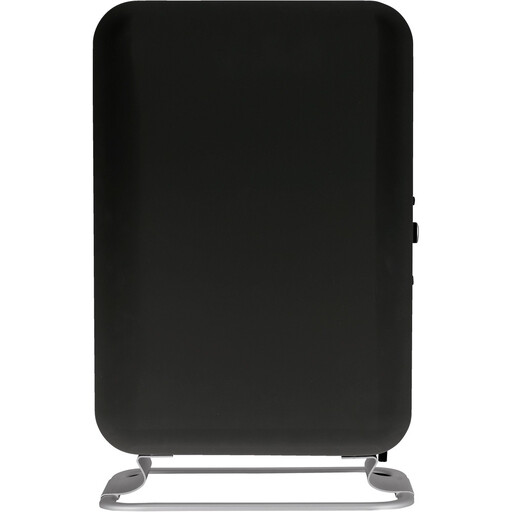
Why it suits this profile: Suitable for anyone looking for fixed supplementary heating with app control, schedules and a stated coverage area of up to 34 m².
The three power settings of 800/1200/2000W give you more choice than simply running at full power. However, the radiator weighs 12.1 kg and is less suitable for frequent repositioning.
Wi-Fi and Bluetooth connectivity, thermostat, frost-free mode, tip-over protection and overheat protection.
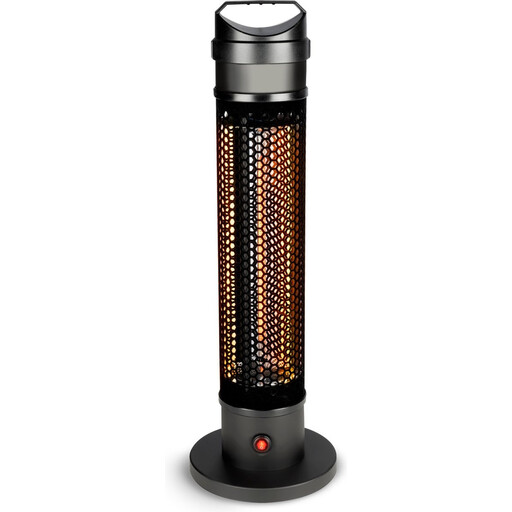
Why it suits this profile: A practical option for a patio, conservatory or targeted heat in a study, with a handle for easy movement.
The 800W power output limits consumption compared with more powerful models. Its stated heating area is approximately 2–5 m², so it is not intended for a large room.
Infrared heating, 360° heat distribution, tip-over protection, touch protection and IP44 according to the product specifications.

Why it suits this profile: This compact model is designed for bedrooms, offices and studies where fast heating and low noise are important.
The thermostat, timer and three power settings help you manage longer heating periods more effectively. According to DREO’s own information, the noise level is between 25 and 42 dB.
1,500W power output, adjustable thermostat from 5–35°C, 12-hour timer, remote control, oscillation, and tip-over and overheat protection.
We have put together a complete, up-to-date list of products that fully meet these strict selection criteria and the applicable European safety regulations.
Choose a model with an adjustable thermostat, timer, tip-over protection and a low stated noise level. A 1,500-watt ceramic fan heater may be suitable for a medium-sized bedroom, but always check the coverage area, insulation and ventilation options. Keep it away from bedding and curtains, and do not operate the appliance while it is covered.
This depends on the power output and how long it is used. A 2,000-watt model uses approximately 2 kWh per hour at full power; an 800-watt model uses approximately 0.8 kWh per hour. A thermostat can reduce average consumption because the element does not remain active continuously. Calculate the cost using your current electricity tariff.
Lifespan varies depending on the model, frequency of use and maintenance. Keep the ventilation openings free from dust in accordance with the instructions, move the appliance using the handle and do not use it if the cable or casing is damaged. Check the warranty and your statutory consumer rights before buying.
