
Vandaag of morgen in huis

Kwaliteit gegarandeerd

Welkomstaanbiedingen ontgrendelen: GRATIS bezorging | Tot 80% korting | Gratis 30 dagen JoyPlus-proefperiode
Download de app
An electric heater is useful when you only want to heat a bedroom, office, student room or living room temporarily. You can place the appliance wherever you need warmth, then put it away afterwards. However, choosing the wrong model can result in noise, high electricity costs or a heater that is unsuitable for the space.
Pay particular attention to these three common pitfalls:
The heating technology mainly determines how the heat is distributed and how much noise you hear.
For a bedroom, a quiet heater for a bedroom with a thermostat can be useful. For a living room, a model with higher power and broad heat distribution is a more logical choice. A portable heater with a handle is ideal for users who move the appliance between rooms.
Power is usually stated in watts. A 1500W heater uses a maximum of 1.5 kWh per hour when running continuously at full power; a 2000W heater uses a maximum of 2 kWh per hour. The actual cost depends on your electricity tariff, the temperature setting and how often the thermostat switches the heating element on.
Use this simple calculation:
power in kW × usage time in hours × your electricity tariff = estimated cost
A thermostat does not stop a heater from drawing a lot of power, but it can prevent the appliance from continuing to heat unnecessarily once the set temperature has been reached. Also look critically at statements such as “suitable for 20 m²” or “suitable for 30 m²”. Treat these as guidelines rather than a guaranteed result.
For a bedroom or home office, the stated noise level is important. Dreo lists a range of 25–42 dB or a level of 34 dB for various PTC models, depending on the model. These figures come from the brand’s product information; your experience may vary depending on the fan setting and placement.
A convector heater without a fan can be a logical choice if noise is a deciding factor. A heater with a timer is useful when you want to set an automatic switch-off time in advance. A heater with a thermostat is helpful for maintaining a more stable room temperature. A heater with a remote control or smart controls is particularly convenient when you do not want to keep walking over to the appliance.
Check whether the product description lists the following features, among others:
A CE marking is no reason to ignore safety rules. Place the heater on a stable, dry surface, never cover it and keep curtains, bedding and furniture at a safe distance. Do not use an indoor model in the bathroom or another damp area unless the manufacturer explicitly permits this. A patio model with IP44, such as an infrared model described for this purpose, is not automatically suitable for rain or permanent outdoor use.
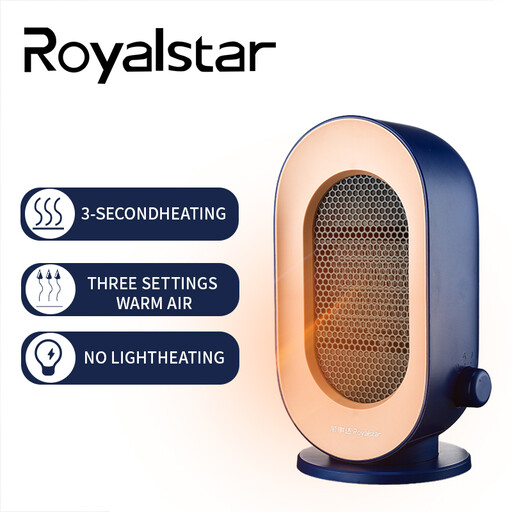
Why it suits this profile: The low power rating and compact design are ideal for a desk, small study or personal workspace where you do not need to heat the whole home.
The 600W specification makes the maximum consumption clear. However, do not expect it to heat a large living room.
Three heat settings, tip-over protection and overheating protection.

Why it suits this profile: This compact ceramic heater combines a thermostat, timer and remote control with a stated noise level of 25–42 dB.
The product information lists eight safety systems, including tip-over and overheating protection. The claim of “up to 40% energy savings” comes from DREO and is not a guaranteed saving for every home.
1500W, temperature control from 5–35°C, 12-hour timer and CE plus CB certification according to the product listing.
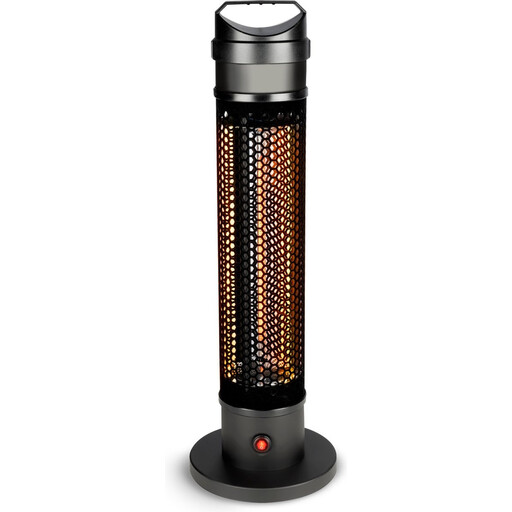
Why it suits this profile: This model is designed for a patio, balcony or small seating area and has a handle for easy movement.
The stated heating area is approximately 2–3 m². This makes it clear that it is not intended to heat a whole living room.
800W infrared heating, IP44 rating, 360° heat distribution and tip-over protection according to the product information.
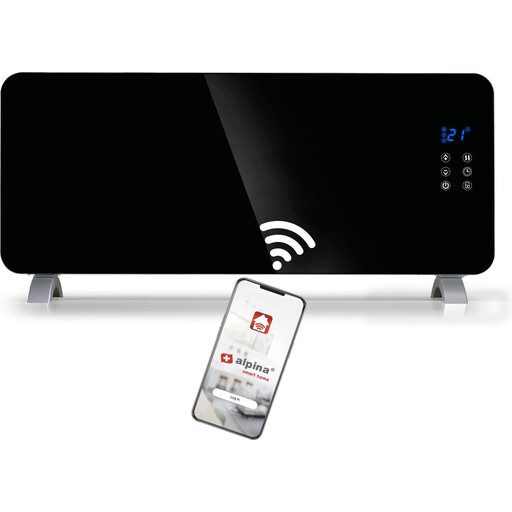
Why it suits this profile: A fixed heater for the living room, home office or bedroom, with a choice of wall-mounted or freestanding use.
The ECO mode is specified as 1000W and the powerful mode as 2000W. The Wi-Fi function does not replace correct placement or adequate ventilation space.
Thermostat from 5–40°C, 1–24-hour timer, app control and overheating protection.
We have put together a complete, up-to-date list of products that fully meet these strict selection criteria and the applicable European safety regulations.
That depends on the power rating, how long you use it and your electricity tariff. A 2000W heater uses a maximum of 2 kWh per hour at full power. With a thermostat, timer and lower heat setting, actual consumption may be lower. So do not only compare the purchase price; also consider how long you use the heater each day.
For a small, well-insulated room, 600W to 1500W may be sufficient as supplementary heating. For a larger or colder room, models from 1800W to 2200W are more commonly available. Always check the stated area and take draughts, insulation and ceiling height into account.
Only use a model with suitable safety features and follow the instructions. Place the heater securely, keep textiles and furniture at a safe distance and use a timer if one is available. Do not operate an appliance while it is covered or unattended, and switch it off once the room is warm enough.
