
Vandaag of morgen in huis

Kwaliteit gegarandeerd

Welkomstaanbiedingen ontgrendelen: GRATIS bezorging | Tot 80% korting | Gratis 30 dagen JoyPlus-proefperiode
Download de app
An electric heater can be useful if you only want to heat your bedroom, home office or a small part of your living room. However, models vary considerably in power, noise, controls and safety features. A low purchase price tells you little about how easy a heater will be to use in the long term.
The most common pitfalls are:
The power you need depends on the size of the room, insulation, ceiling height and the temperature you want to reach. A compact portable heater rated at 600 watts is best suited to a desk, a small bedroom or personal spot heating. Models rated at 1500 watts are often recommended for a home office or bedroom of around 10 to 20 m². Larger rooms may need more power, but always check the stated heating area.
Pay attention to the difference between maximum power and adjustable settings. A model with settings of, for example, 900, 1300 and 1500 watts gives you more control than a heater that only runs at full power.
A ceramic heater uses a PTC element. Air is blown over the warm element, spreading heat quickly around the room. A ceramic fan heater is compact and suitable for occasional electric spot heating. However, the fan can be audible.
A heater with a thermostat automatically reduces the heat output when it reaches the set temperature. This can be more practical than running the heater continuously at full power. Some models also offer an ECO mode. If a brand claims a saving, such as “up to 40%”, treat this as a claim from the brand’s own product information. Actual energy use depends on the settings, insulation and how long you use the heater.
Calculate the cost easily:
power in watts ÷ 1000 × number of hours used × your electricity tariff
A 1500-watt heater running at full power for one hour uses 1.5 kWh in theory. In practice, a thermostat can reduce average energy use by switching the element off intermittently.
Noise levels matter when choosing a heater for the bedroom or home office. Product information that includes a rating such as 25–42 dB or 34 dB makes comparisons easier. Bear in mind that noise levels can vary depending on the fan setting.
A heater with a timer switches off after a set period. This is useful when you want to warm a room before using it. You should also look for:
Never cover an electric heater. Keep curtains, bedding, paper and furniture at a safe distance, don’t use the heater in a damp room, and unplug it when you’re not using it. Wait until it has cooled before moving it.
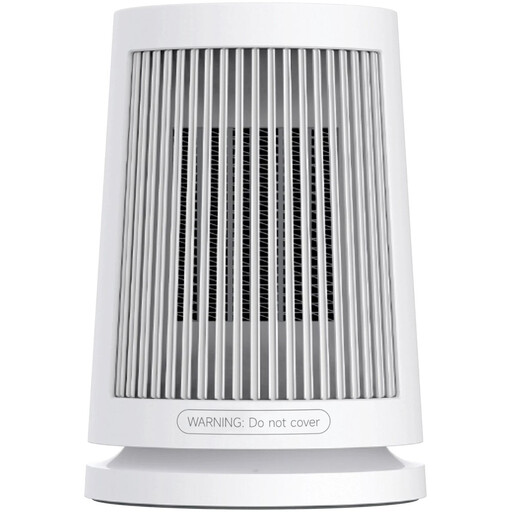
Why it suits this profile: Its low stated power and compact size make it a good fit for a desk, student room or small personal workspace where you want targeted warmth.
The specifications state that it has 600 watts of power, a thermostat, 45° oscillation, and tip-over and overheat shut-off. This makes its key features easy to check.
Weighs 930 grams, measures 142 × 132 × 188 mm and features ceramic PTC heating.

Why it suits this profile: A good choice if you want a quiet heater for a bedroom, office or home office, and value precise temperature control and a remote control.
The product information gives a noise range of 25–42 dB, three power settings, a thermostat adjustable from 5–35°C and several safety features. The claimed energy saving of up to 40% is based on DREO’s own information.
Adjustable from 5–35°C, with a 12-hour timer, oscillation and a weight of approximately 1.44 kg.

Why it suits this profile: Its higher power and stated coverage of 15–25 m² are designed for more intensive heating in a larger living room, studio or office.
The stated specifications include 2000 watts, 25–42 dB, 70° oscillation, thermostat control, and tip-over and overheat protection. However, the higher power rating means you’ll need to pay extra attention to electricity costs.
Temperature adjustable from 5–35°C, a 12-hour timer, remote control and a 51.3 cm tower design.
We’ve put together a complete, up-to-date list of products that meet these strict selection criteria and the applicable European safety regulations.
Yes, as long as the model is designed for indoor use and placed on a flat, stable surface. Choose a quiet heater with a thermostat and timer. Keep blankets, curtains and bedding well away, and never run the heater while it’s covered. Always follow the manufacturer’s safety instructions.
That depends on the heater’s power rating and your electricity tariff. A 1500-watt model uses around 1.5 kWh per hour at full power. Multiply this by your current tariff to work out the cost. A thermostat can reduce average energy use by switching the heater off temporarily or running it at a lower setting.
Its lifespan depends on how long you use it, dust, storage and the quality of the fan and electronics. Clean the air vents as instructed in the manual, move the heater by its handle only, and don’t use it if the casing, cable or plug is damaged. The warranty period is useful information, but it doesn’t predict the heater’s exact lifespan.
