
Vandaag of morgen in huis

Kwaliteit gegarandeerd

Welkomstaanbiedingen ontgrendelen: GRATIS bezorging | Tot 80% korting | Gratis 30 dagen JoyPlus-proefperiode
Download de app
An electric heater can quickly warm a bedroom, home office or living room without turning up the central heating. However, it is not wise to focus solely on wattage or claims such as “fast heating”. The right choice depends on the room, the noise level you require, the controls and the safety features.
A 2000-watt electric heater will generally heat a room faster than a 1000-watt model, but it will also use more electricity when running continuously at full power. You can calculate energy use easily:
power in watts ÷ 1000 × usage time in hours = kilowatt-hours
A 2000-watt heater running at maximum power for one hour therefore uses 2 kWh. A thermostat, ECO mode or timer can help prevent unnecessary heating, but does not automatically make the appliance energy-efficient. Always check which settings are actually available.
Brands often specify a maximum room size, but actual performance also depends on insulation, ceiling height, draughts and the outside temperature. A fan heater or ceramic heater distributes heat quickly, but is mainly suitable for targeted or temporary heating. For a larger, reasonably well-insulated room, a convector heater may be more suitable.
Also watch out for conflicting product information. A description may state 15 m², while another product specification lists 25 m². In that case, use the more conservative figure and check the manual.
An oil radiator works without a fan and is therefore generally quiet during use. With a fan heater, the noise level is more important. A specification such as 34 dB or 25–42 dB gives you more useful information than simply the word “quiet”. Bear in mind that noise measurements can vary between brands and testing methods.
For a small workstation or study, a compact PTC heater rated between 600 and 1500 watts may be sufficient. For a living room or larger bedroom, models rated at 1800 to 2000 watts are more commonly available. Do not look only at the maximum power; check the lower settings too. A model with 750, 1200 or 1500-watt settings gives you more control during milder weather.
A lower surface temperature of a PTC element does not mean that touching it is always safe. Follow the manufacturer’s safety instructions and keep textiles, curtains and furniture at a safe distance.
A heater with a thermostat switches off the heating element once the set temperature has been reached. A heater with a timer can switch off automatically after a set period. Also check for:
A remote control or app is convenient, but does not change the heater’s basic energy consumption. Do not place an electric heating appliance in a bathroom or other damp area unless the manual explicitly permits this.
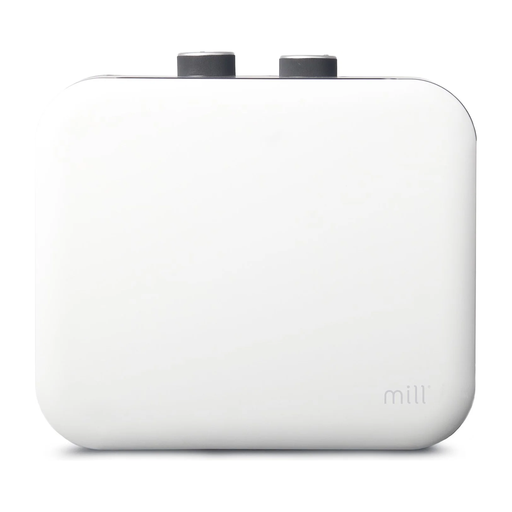
Why it suits this profile: A compact electric heater for anyone looking for simple controls and quick warmth in a room of up to approximately 30 m² according to the product specification.
The two settings of 1200 and 1800 watts allow you to avoid heating at maximum power all the time. Tip-over and overheating protection are listed in the product information.
PTC heating, mechanical thermostat, a weight of 2.2 kg and a stated cable length of 1.4 metres.
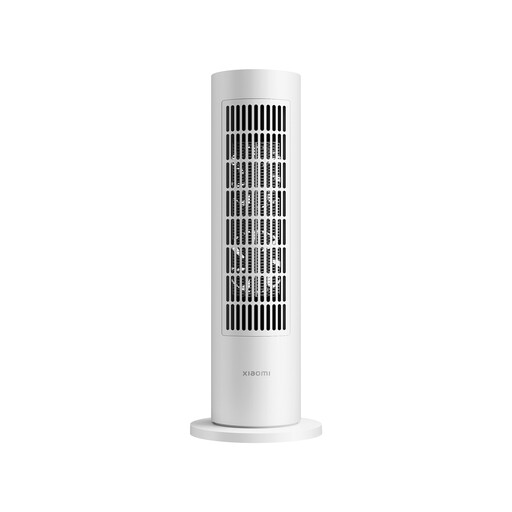
Why it suits this profile: Suitable for users who want to manage electric heating via an app, voice control and a smart home platform.
The product description lists a thermostat as well as tip-over and overheating protection. The Mi Home app is required for smart control.
2000 watts, a PTC ceramic element, 70° oscillation, a timer and app and voice control according to the product specification.
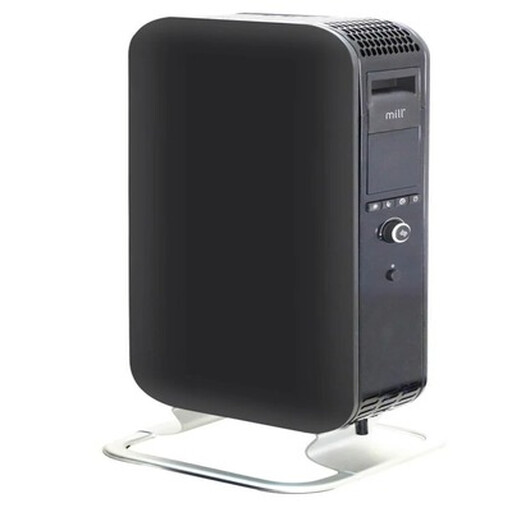
Why it suits this profile: An oil radiator for anyone looking for even, quiet heat in a room of up to approximately 16 m².
As no fan is mentioned and the power can be set to 400, 600 or 1000 watts, this model is well suited to longer periods of quiet heating.
Day and night programme, LED display, thermostat, and tip-over and overheating protection according to the product details.
According to Mill’s own research, this model’s day and night programme can reduce energy consumption by up to 25%. This is a brand claim; the actual result depends on usage, insulation and the temperature setting.
We have put together a complete, up-to-date list of products that fully meet these strict selection criteria and the applicable European safety regulations.
Always place a portable heater on a hard, level and stable surface. Keep at least the distance specified in the manual; for several models, approximately one metre from curtains, bedding and other flammable materials is recommended.
Also bear the following points in mind:
A CE marking is relevant for products offered on the European market, but you should also check the manual, manufacturer details and specific safety features. CE marking does not guarantee that a heater is suitable for every room or application.
It can be, particularly if you choose a quiet ceramic heater or an oil radiator with a thermostat. Check the stated noise level, use a timer and position the appliance away from bedding and curtains. Do not leave a heater running unattended if the manual advises against it.
Electricity consumption is mainly determined by the power rating and how long the heater is used. A 1000-watt model uses less per hour than a 2000-watt model when both are running at maximum power. A thermostat, lower heat setting and timer can reduce the number of hours the heater runs. However, no electric heating element can produce more heat than the electrical power it uses allows.
Its lifespan depends on build quality, frequency of use, dust and maintenance. Keep ventilation openings clear, follow the cleaning instructions and stop using the heater immediately if you notice a burning smell, sparks or a damaged cable. Keep the manual and proof of purchase for warranty claims or statutory conformity rights.
