
Vandaag of morgen in huis

Kwaliteit gegarandeerd

Welkomstaanbiedingen ontgrendelen: GRATIS bezorging | Tot 80% korting | Gratis 30 dagen JoyPlus-proefperiode
Download de app
An electric heater can quickly warm a bedroom, home office or study without having to heat your entire home. However, the difference between a useful space heater and a poor purchase is often greater than the product photo suggests.
Pay particular attention to three common pitfalls:
The right choice therefore depends on the room, the desired heating speed and how long you use the heater.
A ceramic heater uses a PTC heating element. Many models distribute the heat with a fan. This makes a ceramic fan heater suitable when you want to feel warmth quickly, for example at a desk or in a cold bedroom.
Check the following:
A compact 600 W heater can be practical for personal warmth at a desk, but is less suitable for bringing a medium-sized living room up to temperature. Product information for some models states power ratings of around 1,500 to 2,000 W for rooms of approximately 15 to 25 m². The actual heating time also depends on insulation, outdoor temperature, ceiling height and draughts.
A convector heater warms the air flowing through the appliance. Some models work without a fan, making them suitable if you are looking for a quiet heater for the bedroom. A built-in fan can distribute warm air more quickly, but it also adds noise.
Do not look only at the stated floor area. Check the dimensions and the space required for positioning as well. A wall-style convector heater takes up more floor space than a portable electric heater, but may be more practical if it is going to remain in one place for a longer period.
If you do not want to heat the entire room, a heated blanket, electric blanket, heated cushion or heat mat may require less power than a space heater. A heated cushion is designed for a limited area of the body and is not a replacement for an electric heater.
For cold feet, heated insoles are an additional solution. According to the product description of the disposable insoles mentioned, they are activated by exposure to air. Always wear socks between the insole and your skin, and do not use them while sleeping.
A bottle warmer has a different purpose: it heats baby food and is not a space heater. Always follow the instructions and check the temperature of the food according to the manufacturer's guidance.
Power is usually stated in watts. A 1,500 W appliance theoretically uses 1.5 kWh per hour at full power. You can calculate the cost easily using:
power in kW × usage time × your electricity tariff
A thermostat or ECO mode can limit average consumption because the heating element does not operate continuously at its highest setting. However, an energy-saving claim should be treated as a statement made by the brand. According to DREO's own research, a particular model can save up to 40% energy; this percentage depends on the settings and conditions and is not guaranteed for every home.
A heater with a thermostat offers more control than an appliance with only low and high settings. Some models allow you to set a temperature range of 5 to 35 °C, while others use fixed settings.
Useful features include:
A display is practical, but bright LEDs can be distracting in a dark bedroom. In that case, a quiet mode or dimming function may be more important than additional heat settings.
Check whether the product information mentions overheat protection and a tip-over switch. These features reduce risks, but do not replace safe usage.
Position an electric heater:
Do not leave a heater running unattended. Switch the appliance off and unplug it before moving, cleaning or storing it. Also check that the plug, cable and casing are undamaged.
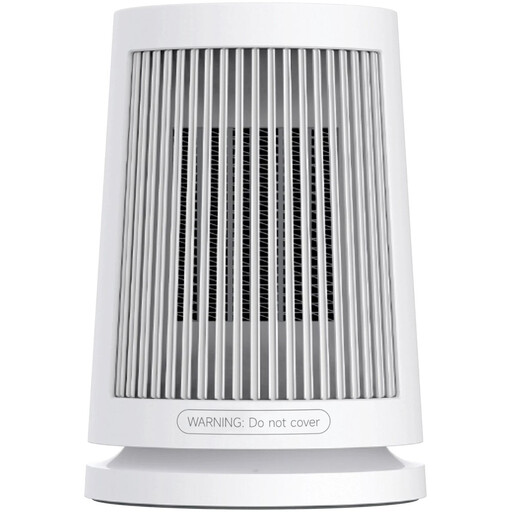
Why it suits this profile: This compact electric heater is designed for a desk, bedroom or other small space where targeted warmth is sufficient.
The 600 W power rating means you do not need to use a 2,000W model immediately for a small personal heat source. The listing also mentions tip-over and overheat protection.
PTC ceramic heating, 45° oscillation, compact size and a weight of 0.93 kg according to the product information.

Why it suits this profile: The product information states 24 dB(A), multiple settings and a portable design for rooms of up to 15 m².
The stated noise level makes the choice easier to assess than relying on the description “quiet” alone. The heater also has tip-over and overheat protection.
1,500 W maximum power, 600W setting, three temperature settings and a handle, with a weight of 1.51 kg.
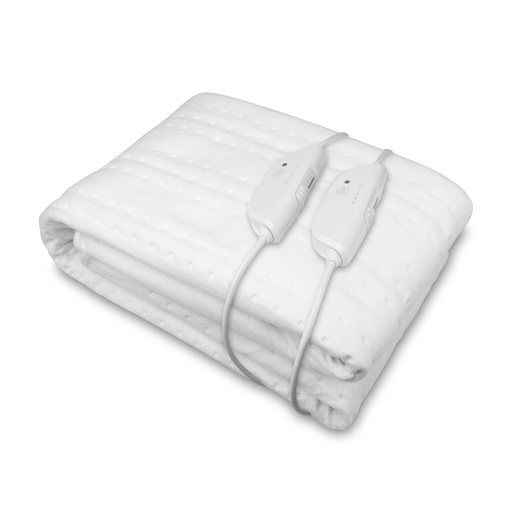
Why it suits this profile: For a bed or cold nights, an electric blanket can provide more targeted warmth than a space heater.
You heat the surface of the bed rather than an entire room. Use the blanket flat and unfolded, and follow the warnings about supervision, cleaning and switching off.
Size 150 × 160 cm, multiple heat settings, remote control and washable polyester according to the product description.

Why it suits this profile: According to the product information, this model combines a low stated noise level with a thermostat, timer and remote control.
The stated 25–42 dB range and timer of up to 12 hours provide specific points to check. The safety information mentions tip-over and overheat protection, among other features.
1,500 W, temperature setting from 5–35 °C, remote control, timer and compact dimensions of 15.8 × 15.4 × 25 cm.
We have put together a complete, up-to-date list of products that fully meet these strict selection criteria and the applicable European safety regulations.
That depends on the power rating and how long you use it. A 1,500 W heater uses approximately 1.5 kWh per hour at full power. With a thermostat, timer or lower setting, average consumption may be lower. Check this using your own electricity tariff.
Only use a model overnight if the instructions permit it and it has a timer and suitable safety features. Position the appliance away from bedding and curtains, never cover it, and do not leave it running when you leave the room. An electric blanket has different usage rules, so always follow its specific instructions.
The lifespan varies depending on the model, frequency of use and maintenance. Keep air vents free from dust, avoid moisture and only move the appliance once it has been switched off and cooled down. Stop using it if the cable is damaged or you notice a burning smell, sparks or irregular operation.
