What should you look for when choosing?
First decide whether you want to warm a particular spot or the air in the room. Then consider how long you’ll use the heater and which practical constraints matter to you.
Infrared panel for a particular spot
Suitable for: briefly heating a regular sitting or working spot that is well within the panel’s range. Milieu Centraal describes this as targeted supplementary heating.
Bear in mind: you won’t feel the direct warmth outside the panel’s range, so check that you can position it suitably in your room.
Ceramic fan heater
Suitable for: briefly warming the air in a small, occupied room, and if you want a heater you can move around.
Bear in mind: the fan may be audible, and electricity use depends in part on the selected power setting and how long you use it.
Convector heater
Suitable for: heating the air in a room, with the option of a setting that doesn’t use a fan.
Bear in mind: the Eurom Safe-T-Convect 2400 has a separate turbo setting with a fan; 2400 W is a model specification, not a recommendation for every small room.
Oil-filled radiator
Suitable for: anyone looking for a portable heater without the turbo fan feature found on the models reviewed, and who doesn’t need immediate heat alone.
Bear in mind: according to De’Longhi, the TRRS0920 continues to give off some heat for a while after being switched off; this doesn’t prove it uses less energy overall.
This table summarises the main considerations and needs to bear in mind when choosing.
| Buying concern |
What to look for |
Who is this important for? |
| Targeted or whole-room warmth |
Consider where you sit, how long you stay there and whether a panel can safely direct heat to that spot. |
If I usually sit in one place, I don’t want to heat the whole room unnecessarily. This matters to around 27% of consumers who prioritise targeted warmth. |
| Quiet heat in the room |
Check whether the model has a fan and whether you can switch it off on your preferred setting. Also check the thermostat and dimensions. |
If I work or relax in the room, a fan that runs constantly may be distracting. Around 20% of consumers prioritise quiet air heating above all else. |
| Speed and portability |
Check the dimensions, handle and heat settings, as well as the safety features of the specific model. |
For short periods of use, I want to be able to move or store the heater without it getting in the way. Fast, portable heat is a top priority for around 20% of consumers. |
| Electricity use |
Calculate kWh by multiplying the selected power in kW by the actual number of hours the heater is switched on. Then use your own rate per kWh. |
If I use the heater often or for long periods, I want to know what that means for my electricity bill. Around 20% of consumers put running costs at the top of their buying priorities. |
| Safe positioning and connection |
Follow the clearance requirements in the manual and, ideally, plug a small heater directly into a wall socket, as the Fire Service also recommends. |
In a small room, I want to know in advance whether I can keep furniture, curtains and cables far enough away. Safe positioning is the main buying concern for around 13% of consumers. |
Ceramic fan heaters at Joybuy
These product picks are ceramic fan heaters. Check whether the power output, required clearance and connection are suitable for your small room for each model.
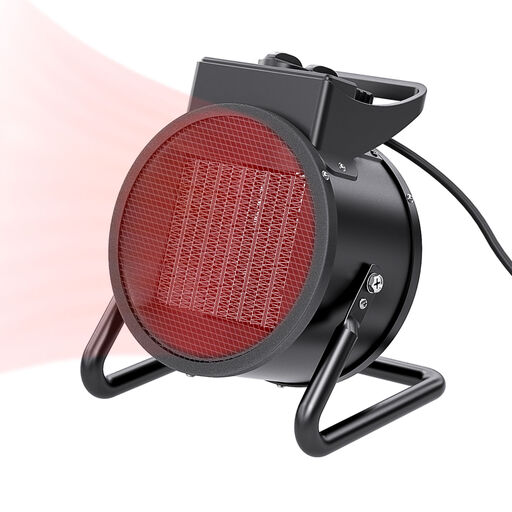 No image available
LZQ ceramic fan heater with thermostat, 2kW
A fan heater for supplementary warmth; match the power setting and how long you use it to the room.
The product name lists a PTC heating element, three settings and a power output of 2kW.
View at Joybuy
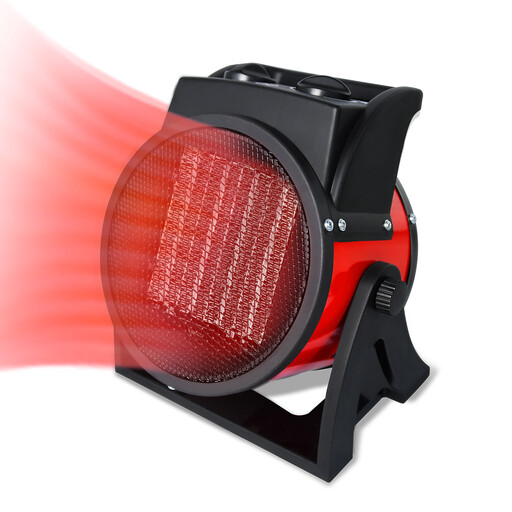 No image available
LZQ ceramic construction heater with thermostat, 2kW
An electric ceramic heater; check whether its stated use and power output suit the way you’ll use it in a small room.
The product name lists a PTC element, three heat settings and a power output of 2kW.
View at Joybuy
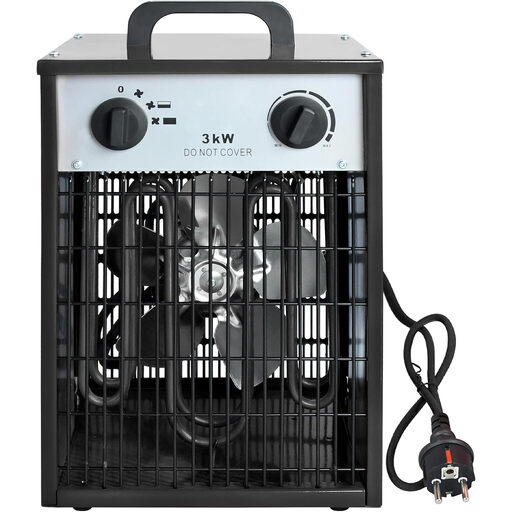 No image available
Black electric fan heater, 3KW, 4 heat settings
A fan heater for supplementary warmth; check whether 3KW is suitable for the room and its electrical connection.
The product name lists four heat settings and overheat protection.
View at Joybuy
 No image available
Philips 2000 Series CX2120/01 ceramic heater
The product information says it can be used in a room of up to 15 m²; check whether that stated room size suits your room and how you’ll use it.
The settings are 600 W and 1500 W. According to the product information, the appliance has a carry handle and weighs 1,51 kg.
The product information recommends an earthed socket, no extension lead or adapter, and a clearance of at least 1 metre from flammable materials.
View at Joybuy
 No image available
OmniHeat ceramic fan heater, 1800W
A ceramic fan heater for supplementary warmth; leave enough clear space around the appliance when positioning it.
The product name lists 1800W, a thermostat and a timer. The product information also mentions oscillation and a carry handle.
Keep flammable materials at least 1 metre from the air outlet and don’t cover the heater.
View at Joybuy
Frequently asked questions
When is an infrared panel a better choice than a standard heater?
An infrared panel may suit you if you sit briefly in one fixed spot that’s well within its range. Milieu Centraal describes it as targeted supplementary heating; it isn’t automatically the right solution for heating a whole room for long periods.
Can I plug an electric heater into a multi-socket adaptor or cable reel?
The Fire Service recommends plugging appliances with high electricity consumption, such as small electric heaters, directly into a wall socket where possible. Also follow the manual for the specific appliance.
How can I clean an electric heater safely?
Follow the manual for your model. For the Safe-T-Convect reviewed, Eurom says to switch the appliance off, unplug it from the socket and let it cool completely before cleaning.
What should I do if the heater develops a fault?
Report the fault to the seller. In the Netherlands, a product must meet the standards you can reasonably expect from it. The Dutch government says there is no fixed two-year statutory guarantee period for all products; a manufacturer’s or additional guarantee is separate from your statutory rights.
What product requirements apply to electric heaters in the Netherlands?
Electric appliances placed on the market in the Netherlands must meet European product requirements. According to Ondernemersplein, after the relevant assessment, the manufacturer must apply a CE mark and draw up an EU declaration of conformity. A CE logo on its own is not an independent safety test of the specific item on offer.


