What should you look for when buying?
| What to consider |
What should you check? |
Who is this important for? |
| Warmth where you sit |
Check that the mounting and direction of the radiant heat suit where you sit. |
If I usually sit in one spot, I mainly want to feel warm there, rather than having to heat the whole conservatory first. Around 33% of consumers prioritise localised warmth where they sit. |
| Heating the whole space |
Compare the stated coverage with the conservatory’s volume, glazing and insulation; also consider fan noise. |
If I move around the conservatory, I want the air in the space to be warmed as well as my seat. Around 27% of consumers prioritise heating the whole space. |
| Safe positioning |
Check the instructions for permitted positioning, clearance, exposure to moisture and electrical connection. |
If condensation or other moisture could be an issue in my conservatory, I want to know whether I can use the chosen model in that spot. Around 20% of consumers make suitable and safe positioning their top priority. |
| Electricity use over longer periods |
Compare the power input and the actual number of heating hours; a thermostat can affect how long the heater is switched on. |
If I use the heater often or for long periods, I want to weigh its electricity use against my own tariff. Around 20% of consumers put running costs first. |
A stated power rating or room coverage isn’t a measure of how much heat your conservatory retains. For electric heaters, the fire service recommends plugging the appliance directly into a wall socket wherever possible, rather than using a cable reel or extension block.
Heaters at Joybuy
These Joybuy products are freestanding electric heaters. Compare the listed features with the area you want to heat, and check before use that the instructions permit the intended location in your conservatory.
 No image available
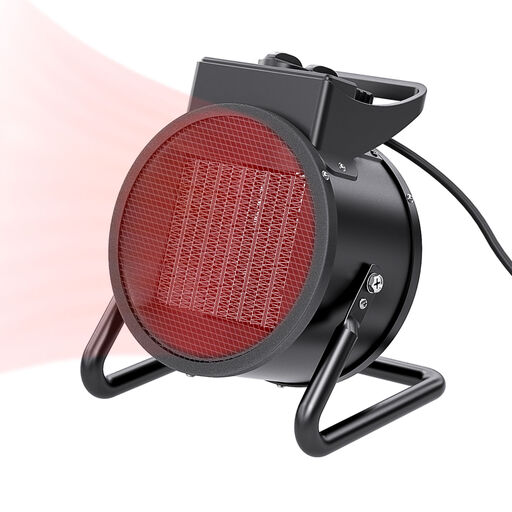
LZQ ceramic fan heater, 2 kW
Suitable if you’re looking for a freestanding heater with adjustable heat; check that the instructions allow it to be placed in your conservatory.
The product title lists a PTC heating element, a thermostat and three settings.
View at Joybuy
 No image available
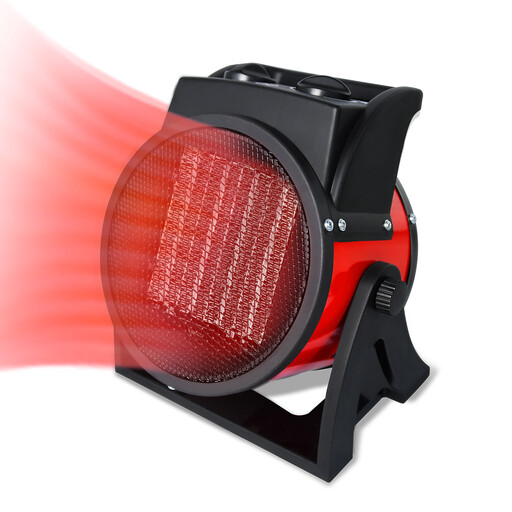
LZQ ceramic heater, 2 kW
A freestanding heater to compare if you’re looking for adjustable heat; check that the appliance and its position are suitable for how you plan to use it.
The product title lists a PTC heating element, a thermostat and three heat settings.
View at Joybuy
 No image available
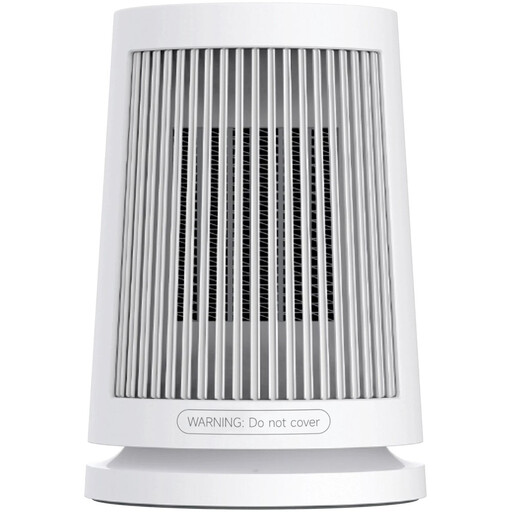
Xiaomi ceramic desktop heater, 600 W
This compact, portable model may suit localised heating; the product information warns against using it near water or in damp environments.
The product title lists a thermostat and 45° oscillation.
Before use, also check the product information for the stated tip-over and overheat protection.
View at Joybuy
 No image available
PELONIS ceramic heater, 2000 W
Worth comparing if you’re looking for a portable heater with several settings; the product information warns against using it near sources of water.
The product title lists five heat settings, a thermostat, an ECO mode and a 24-hour timer.
The title also mentions tip-over and overheat protection.
View at Joybuy
 No image available
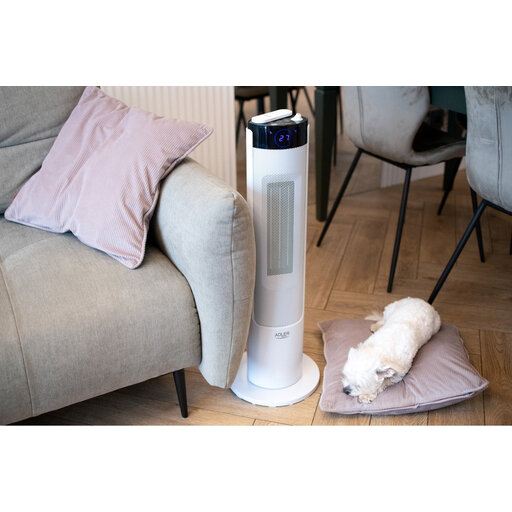
ADLER AD 7730 ceramic convector heater
A freestanding convector heater to compare if you’re looking for a thermostat and adjustable heat. The product information warns against using it in rooms with high humidity unless this is specifically permitted.
The product information lists a thermostat, two heat settings, oscillation, a timer and a remote control.
View at Joybuy
Frequently asked questions
How can I estimate the cost of running an electric heater?
To work out an upper estimate for continuous use, multiply the power input in kW by the number of hours and your price per kWh. A thermostat may reduce the actual heating time, so this calculation won’t necessarily reflect the electricity the heater really uses.
Can I plug a heater into an extension block or cable reel?
The fire service recommends plugging high-power appliances, including small electric heaters, directly into a wall socket wherever possible. Also check the instructions for the model you’ve chosen.
Is a device with IP24 automatically suitable for my conservatory?
No. The IP24 rating alone doesn’t mean it can be used anywhere in a conservatory. Eurom lists IP24 for the Mon Soleil 350 wifi; whether you can install it in your intended location also depends on the conditions and the installation instructions for that model.
What warranty and cooling-off period apply when buying online in the Netherlands?
As well as any manufacturer’s warranty, statutory warranty applies: when used normally, the product must meet what you could reasonably expect, and the retailer is your point of contact. According to ACM ConsuWijzer, online purchases generally come with a cooling-off period of up to 14 days after delivery, subject to legal exceptions.
Is CE an independent quality mark for an electric heater?
No. According to the Netherlands Food and Consumer Product Safety Authority, CE marking is compulsory for electrical consumer products, but independent testing isn’t generally required. The mark is the manufacturer’s declaration that the product complies with the relevant EU rules; check the CE mark and product identity of the specific appliance.


