Who is this guide for?

Hobbyist who always works at the same desk

You mainly sit in one spot and want targeted warmth for shorter sessions, without heating the whole room. Milieu Centraal describes infrared panels as a way to direct radiant heat towards a particular spot, such as a work table.

Hobbyist with a cluttered workspace

You work among paper, materials or equipment and want to work out where a heater and its cable can be placed safely. The Fire Service recommends plugging electric heaters directly into a wall socket wherever possible, rather than using a multi-socket adaptor or cable reel.

Hobbyist who moves around the room

You move between your desk and other spots in the room. In that case, heating the room may be more practical than warming just one fixed seat.

What should you look for when buying?

Infrared panel

Choose this if: you usually sit in the same spot and can position the panel, in line with the instructions, so its radiant heat reaches you.

The trade-off: Milieu Centraal describes this as targeted heat; areas outside its range won’t automatically be warmed along with the rest of your hobby room.

Compact fan heater

Choose this if: you want warm air near your workspace and have a suitable spot with good airflow.

The trade-off: the fan circulates warm air, but its noise may be distracting when you need to concentrate, and dust needs attention.

Whole-room heating

Choose this if: you spend longer in your hobby room, move between different spots and want more than just your desk chair warmed up.

The trade-off: a freestanding model takes up floor space; heat that lingers after you switch it off doesn’t prove that heating is cheaper.

What to consider What should you check? Who should give this more weight?
Targeted warmth or heating the room Think about where you usually sit and how long you use the heater for; check whether you can position the model as instructed. If I mainly sit in one spot, I want to warm my desk without automatically heating the whole room too. Around 33% of consumers give targeted warmth at their desk top priority.
Safe positioning Follow the clearance requirements for the model and check whether a wall socket is available. With paper, hobby supplies or equipment in my workspace, I want to identify a safe spot and power connection first. Around 25% of consumers put safe positioning first.
Warmth throughout the room Compare the stated power, controls and floor or wall space required for the specific model. If I move between work areas, I don’t want warmth just by my desk chair. Around 25% of consumers make warmth throughout the room their top consideration.
Noise while you work Check the noise information for the heating setting on the exact model, not just for a different fan setting. When I’m reading or doing detailed hobby work, I don’t want fan noise to disrupt my concentration. Around 17% of consumers give low noise the most weight.

Common mistakes

  • Assuming infrared will heat the whole hobby room

    Targeted radiant heat and heating an entire room are not the same thing. Milieu Centraal describes infrared panels as heating for a particular spot.

    A panel is best suited to you if you sit in the area it warms. If you want to heat the whole room, consider a whole-room heating solution too.

  • Plugging a heater into your desk’s multi-socket adaptor

    The Fire Service warns that cable reels can get hot and recommends plugging electric heaters directly into a wall socket wherever possible.

    Plan the position and power connection in advance, plug the heater directly into a wall socket where possible, and follow the model’s instructions.

  • Taking wattage as proof of low energy use

    The stated power doesn’t tell you how much electricity a heater will use over a full hobby session. How long it’s switched on and your own electricity tariff also matter.

    Compare power and hours of use on a like-for-like basis. Only consider savings claims in the context of the comparison conditions stated by the manufacturer.

Brands to consider

Eurom

Eurom offers, among other products, a compact ceramic heater and a wall panel; these models provide different ways to deliver heat.

  • Eurom lists 500 W, a thermostat and a timer for the Heat Plug-in.
  • For the Mon Soleil 350 Wifi, Eurom lists 350 W and wall mounting.
  • These are model specifications, not independent measurements of comfort, safety or savings. The wall panel is not necessarily suitable as a freestanding heater for a desk.

Rowenta

The Dutch range includes compact fan heaters such as the SO2351, as well as convector heaters for those looking for warm air.

  • Rowenta lists a power output of 2000 W and built-in safety features for the SO2351.
  • A manufacturer’s stated power output or coverage doesn’t prove that a model is right for every hobby desk or more energy-efficient than another electric heater.

De’Longhi

The Radia S TRRS0920 is a freestanding, oil-filled radiator for people who spend longer in the room.

  • De’Longhi lists 2000 W, three power settings and wheels for this model.
  • A radiator takes up floor space. Giving off heat after it’s switched off doesn’t mean that no energy was needed to heat it.

Products at Joybuy

This selection focuses on compact electric heaters for extra warmth at a desk or in a hobby or workspace. Check the positioning requirements and power connection needed for each model.

Philips 2000 Series CX2120/01 compact ceramic heater, 1500 W

Philips 2000 Series CX2120/01 ceramic heater, 1500 W

This compact ceramic heater may suit you if you want adjustable warmth at your workspace.

Power: 1500 W; three settings. Place the heater on a stable surface and keep it at least 1 metre from walls or furniture, as stated in the product information; keep it away from curtains and flammable materials too.

View at Joybuy

Xiaomi desktop heater, 600 W, PTC ceramic

Xiaomi desktop heater, 600 W, PTC ceramic

This desktop model may suit you if you’re looking for a compact heater for a fixed workspace.

Power: 600 W; 45° oscillation and an adjustable thermostat. Use it on a stable, flat surface, don’t cover it, and keep it away from flammable materials and water.

View at Joybuy
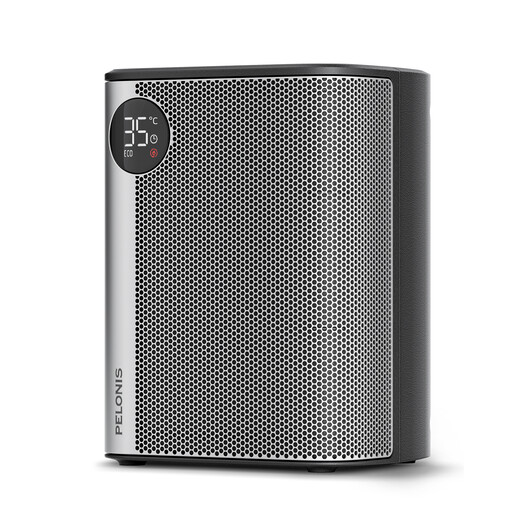
PELONIS ceramic heater, 2000 W, with timer and thermostat

PELONIS ceramic heater, 2000 W

This model may suit you if you want to adjust the warmth and how long it runs while you work.

Power: 2000 W; five heat settings, a thermostat and a 24-hour timer. The product information states that it’s for indoor use; don’t cover the heater or block the air vents.

View at Joybuy
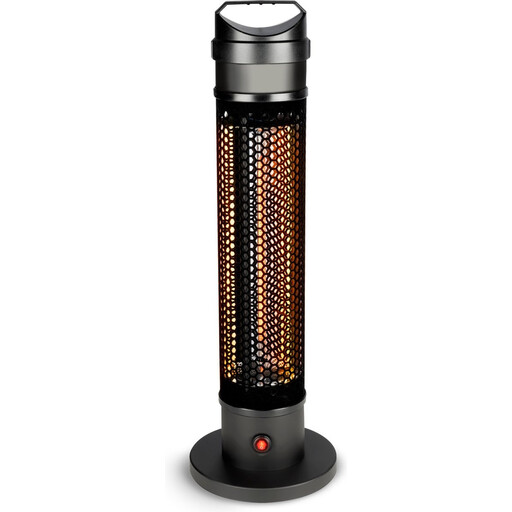
Alpina infrared heater, 800 W, carbon

Alpina infrared heater, 800 W, carbon

This freestanding infrared heater may suit you if you want warmth in one spot and need to move the appliance from time to time.

Power: 800 W. The product information gives a heating area of 2–3 m²; this doesn’t mean it will heat your entire hobby room.

View at Joybuy
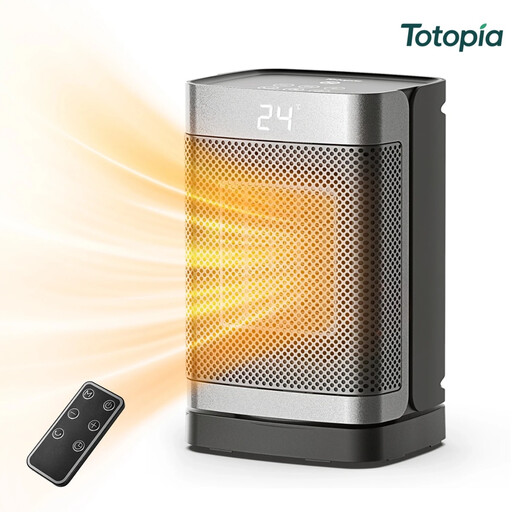
Totopia KPT-150 0596YL PTC heater, 1500 W

Totopia KPT-150 0596YL PTC heater, 1500 W

This model may suit you if you want to adjust the heat and running time during a work session.

Power: 1500 W; two heat settings and a 12-hour timer. The product information specifies a hard, stable surface and advises against placing it on carpet or soft fabrics.

View at Joybuy

Frequently asked questions

How do I choose between an infrared panel and a fan heater?

Choose based on the area you want to warm: according to Milieu Centraal, an infrared panel provides targeted radiant heat, while a fan heater warms and circulates air. Then check that you can position it safely and that the specific model’s noise level is suitable for your work.

Can I plug the heater into my desk’s multi-socket adaptor?

The Fire Service recommends plugging electric heaters directly into a wall socket wherever possible, rather than using a multi-socket adaptor or cable reel. You should also follow the manufacturer’s instructions.

How do I calculate the electricity cost of an electric heater?

For a setting that stays on continuously, multiply the power in kW by the number of hours and your own electricity tariff per kWh. A thermostat can change the actual amount of time the heater is on, so its rated power isn’t the same as the measured energy use for a session.

Does an electric heater in the Netherlands need a CE mark and an energy label?

CE marking is compulsory for electrical equipment covered by the Dutch Commodities Act Decree on Electrical Equipment; the Netherlands Food and Consumer Product Safety Authority explains this requirement. For local space heaters, the European Commission distinguishes between the scopes of energy rules: electric local space heaters are excluded from the energy labelling scheme referred to. So check the relevant product information and the CE mark on the item being offered.

What maintenance is important for a heater in a hobby room?

Regularly remove any build-up of dust and make sure the appliance can release heat. Check the instructions for cleaning advice and the clearance required for your chosen model.
