
Vandaag of morgen in huis

Kwaliteit gegarandeerd

Welkomstaanbiedingen ontgrendelen: GRATIS bezorging | Tot 80% korting | Gratis 30 dagen JoyPlus-proefperiode
Download de app
An electric heater seems simple: plug it in and enjoy the warmth. But unrealistic expectations can lead to unnecessarily high energy bills, distracting noise or a heater that’s unsuitable for the room. If you want to heat a bedroom, home office, student room or bathroom temporarily, it’s worth looking beyond the wattage alone.
Before you buy, watch out for these three common pitfalls:
For a small workspace or desk, a PTC heater of around 600 watts may be enough for personal supplementary heating. For a bedroom, living room or office of around 10 to 20 m², a power rating of 1,500 to 2,000 watts is more suitable. Check the stated coverage, too: it depends on insulation, ceiling height and outdoor temperature.
A ceramic heater or electric fan heater with a PTC element warms the air quickly. The ceramic element works without an open flame, but the casing and air outlet can get hot during use. An infrared heater works differently: it mainly warms people and surfaces within its direct range. This can be useful on a patio or beside a regular seating spot, but it’s less suitable for heating an entire room evenly.
A heater with a thermostat switches the heating element on and off to maintain the set temperature. This makes it easier to manage than a heater that runs continuously at full power. Look for multiple heat settings, too, such as 900/1,300/1,500 watts or 1,000/2,000 watts.
A heater with a timer is useful if you want it to switch off automatically after a set period. A heater with a remote control or app control is handy from bed or the sofa, but check whether all the functions are available without the app. A timer won’t prevent the risks of placing a heater in the wrong spot.
For a bedroom or home office, a quiet electric heater may matter more than a high heat output. Manufacturers sometimes state the noise level in decibels. According to DREO’s product information, certain models have a stated range of 25 to 42 dB; PELONIS lists around 50 dB for one model. These figures are manufacturers’ product claims and may vary depending on the setting.
Also look for:
A bathroom heater needs extra care. Check the IP rating and follow the instructions. A model with an IPX2 rating according to its product information, such as the Camry CR 7747, isn’t automatically suitable for use right next to a shower or bath. Only use an electrical appliance in a damp room if the manufacturer explicitly allows it and the installation complies with current safety regulations.
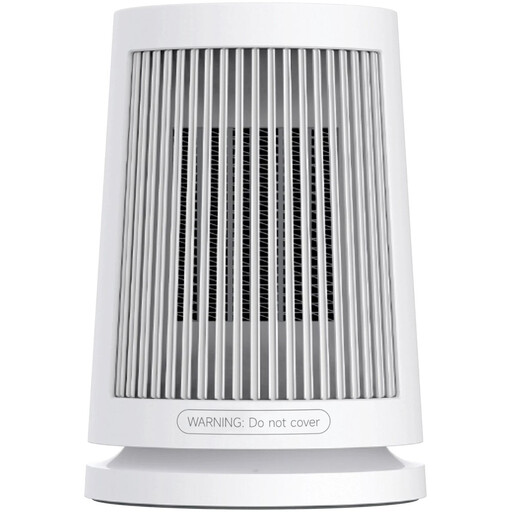
Why it suits this profile: This compact 930-gram model is designed for a desk, bedroom or other small space where targeted warmth is needed.
Its 600-watt power rating is clearly specified, so you’re less likely to mistake this model for a heater designed for a large living room.
PTC ceramic heating, 45° oscillation, thermostat, and tip-over and overheat protection.

Why it suits this profile: Its compact design, remote control, timer and temperature control make it a good fit for bedrooms, offices and home offices.
The manufacturer lists a thermostat range of 5–35°C, three power settings and a stated noise level of 25–42 dB. These specifications are based on DREO’s product information.
1500 watts, 12-hour timer, oscillation, remote control, and multiple safety features including tip-over and overheat protection.

Why it suits this profile: According to the product information, this wall-mounted model is designed for the bathroom and has a programmable weekly timer and two heat settings.
The IPX2 rating and overheat protection are specified, but positioning near water still depends on the instructions and correct installation.
1400/2000 watts, temperature setting from 10–49°C, LCD display and a programmable timer with multiple periods per day.
We’ve put together a complete, up-to-date list of products that meet these strict selection criteria and the applicable European safety regulations.
You can easily calculate the energy used with this formula: power in kilowatts × hours of use. A 1,500-watt heater uses around 1.5 kWh per hour at full power. Multiply this by your current electricity tariff. A thermostat can prevent the element from switching on continuously, but actual consumption varies depending on the room, temperature and insulation.
That depends on the instructions and the model’s features. Ideally, choose a heater with a timer, tip-over protection and overheat protection. Keep it clear of bedding and curtains, and never cover it. Check the heater for damage before use and unplug it when you’re not using it, unless the instructions specify a particular safe setting.
Its lifespan depends on how often it’s used, as well as dust, ventilation and maintenance. Keep the air vents clear, remove dust according to the instructions and move the heater using its handle. Stop using it if the cable, plug or casing is damaged. PTC ceramic models don’t need fuel, but they’re still electrical appliances that require careful use and regular checks.
