
Vandaag of morgen in huis

Kwaliteit gegarandeerd

Welkomstaanbiedingen ontgrendelen: GRATIS bezorging | Tot 80% korting | Gratis 30 dagen JoyPlus-proefperiode
Download de app
An electric heater can quickly add extra warmth to a bedroom, living room, home office, study or garage. But it’s not wise to focus only on the highest wattage or an unusually low price. A heater that’s too noisy, lacks a good thermostat or has to be awkwardly positioned can soon disappoint in everyday use.
The most common pitfalls are:
Power is measured in watts. A compact PTC heater rated at 600 watts is best suited to a desk, footwell or small, well-insulated room. An electric fan heater rated at 1,500 to 2,000 watts is more suitable for a bedroom, office or smaller living room.
Don’t just look at the stated room size. Also check:
A ceramic heater often uses a PTC heating element. PTC stands for Positive Temperature Coefficient. The element’s electrical resistance changes as it gets hotter. This doesn’t automatically mean every model is cheaper to run, but the technology can support consistent temperature control and rapid heat output.
A heater with a thermostat can maintain the set temperature more effectively than a basic model with only an on/off control. Check the temperature range and how the heater switches on and off. According to the product information, the OmniHeat 1800W has an adjustable thermostat from 5 to 35 °C and a 24-hour timer.
A heater with a timer is useful if you want to prevent the appliance from running unnecessarily. ECO mode may adjust the power automatically, but always check how the manufacturer defines this feature. For example, the OmniHeat is described as switching between high and low power depending on the room temperature.
You can work out the electricity consumption with a simple calculation:
power in kW × number of hours = consumption in kWh
A 1,800-watt heater running at full power for one hour uses a theoretical 1.8 kWh. A thermostat can reduce how long it runs, but actual consumption varies depending on the room and settings.
Where possible, choose a heater with tip-over protection and overheat protection. These features can switch off the appliance if it tips over or gets too hot. They don’t replace safe positioning.
Keep to the minimum distance specified in the manual. The product information supplied for several models recommends leaving at least one metre between the heater and curtains, furniture, bedding and other flammable materials. Don’t use an electric heater in a damp room unless the product is explicitly suitable for this. Ideally, plug the appliance directly into a suitable socket, and never cover the air inlet or outlet.
Also consider the noise level. A quiet ceramic fan heater may be more comfortable in a bedroom or study than a more powerful model with clearly audible airflow. A stated decibel rating is a useful point of comparison, but how loud a heater seems depends on the setting and the room.
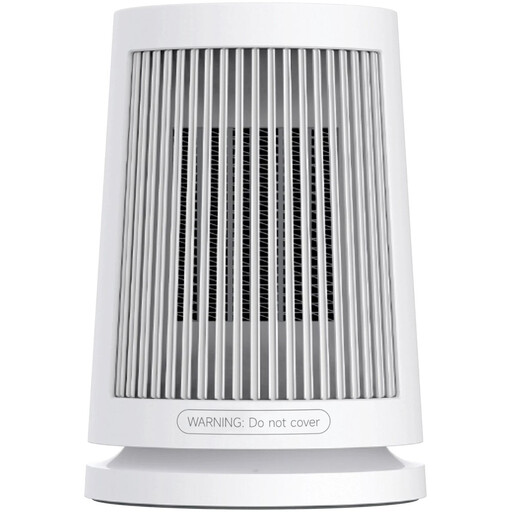
Why it suits this profile: Its compact size and stated 600-watt power make it a good fit for a desk, small bedroom or personal workspace where you need targeted heat.
Its lower power rating helps you avoid automatically choosing a high-powered model for a small room. The product information also lists tip-over and overheat protection.
600W PTC element, 45° oscillation, compact design and dual overheat protection, according to the product description.

Why it suits this profile: This model is aimed at people who value a low stated noise level, multiple settings and a portable design.
The product listing specifies 600W and 1500W settings, so you don’t always have to heat at full power. It also lists five safety features.
1500W maximum power, stated 24 dB(A), carry handle, and tip-over and overheat protection, according to the product information.
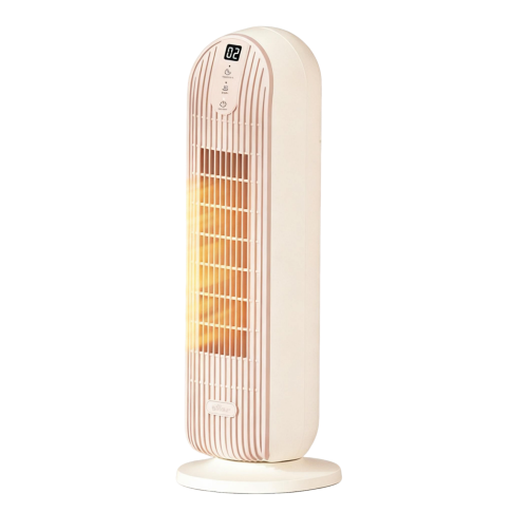
Why it suits this profile: According to the product details, this model offers 1200W and 2000W settings, 90° oscillation and a timer of up to 12 hours for larger living, working or hobby spaces.
The two power settings give you more control than simply heating at maximum power. The timer helps prevent the heater from being left on for too long.
1200W/2000W, 90° oscillation, HD display, concealed handle and a timer of up to 12 hours, according to the product description.

Why it suits this profile: The remote control, thermostat, oscillation and ECO mode are useful in a bedroom, living room or home office.
The timer and adjustable thermostat give you more control over how long the heater runs. The safety features are an extra safeguard: it still needs to be kept clear and uncovered.
1800W, four settings, thermostat from 5–35 °C, 24-hour timer, ECO mode, oscillation and remote control, according to the product information.
We’ve put together a complete, up-to-date list of products that meet these strict selection criteria and comply with the applicable European safety regulations.
That depends on its power rating, the cost of electricity, insulation and how many hours you use it. A 2,000-watt model uses a theoretical 2 kWh per hour at full power. A thermostat, timer or ECO mode can reduce how long it runs, but won’t automatically make the appliance energy-efficient in every situation.
Place the heater on a hard, flat and stable surface, with plenty of clear space around the air inlet and outlet. Keep it away from curtains, furniture, paper, bedding and other flammable materials. Don’t use a portable heater in a bathroom or other damp room unless it’s designed for that environment.
Lifespan varies depending on the model, how often it’s used and how well it’s maintained. Keep dust from building up in the air vents, only move the appliance once it’s switched off and has cooled down, and follow the manual. Good tip-over and overheat protection can help you use the heater safely, but won’t prevent wear and tear or damage caused by misuse.
