
Vandaag of morgen in huis

Kwaliteit gegarandeerd

Welkomstaanbiedingen ontgrendelen: GRATIS bezorging | Tot 80% korting | Gratis 30 dagen JoyPlus-proefperiode
Download de app
An electric heater can quickly make a bedroom, home office or living room more comfortable. However, models can vary considerably. A compact fan heater works differently from a convector heater, and a high wattage doesn’t automatically mean a heater is suitable for every room.
When buying, look out for these three common pitfalls:
A ceramic heater uses a PTC heating element. According to the product descriptions from the brands mentioned, this type of element delivers heat quickly. A fan then circulates the warm air around the room. This is useful when you want quick warmth at your desk, in a bedroom or in a small living room.
Be sure to check the noise level. A quiet electric heater is more comfortable when you’re sleeping or working from home. Some models list their noise level in decibels, such as 24 dB(A), 34 dB or a range of 25–42 dB. These figures are only directly comparable if they were measured under the same conditions.
A convector heater warms the air without necessarily using a fan, so it can run more quietly. The warm air rises and spreads gradually. This type is suitable if you want to heat a fixed space for longer periods, such as an office or living room.
A convector heater is often larger and less easy to move than a portable electric heater. So, check the dimensions, weight and cable length before you order.
Power is measured in watts. A 2000 watt heater uses 2 kilowatt-hours per hour at maximum power. The actual cost depends on your electricity tariff and how long you use it. A simple calculation is:
power in kW × number of hours used × your electricity tariff = estimated running costs
A 600 watt model may be suitable for providing targeted warmth at a desk, but it will take longer to heat a larger living room. According to product information, models from 1500 to 2000 watts are often intended for small to medium-sized rooms. Always check the stated coverage area and compare it with the insulation in your home.
An electric heater with a thermostat switches the heating element on or off to maintain the set temperature. This stops the heater from running continuously at full power when it isn’t needed. A timer is useful if you want the heater to switch off automatically after a set period.
Also look for multiple settings, such as 750 and 1500 watts, or an ECO mode. According to some brands’ product descriptions, ECO mode adjusts the power based on the ambient temperature. Think of this as a control feature, not a guaranteed saving. Your final costs depend on how long you use the heater, its power, the room and your electricity price.
At a minimum, look for:
Place the heater on a flat, hard surface. Never cover a heater or block its air inlet or outlet. Where possible, plug it directly into an earthed socket and follow the instructions in the manual. Some product descriptions specifically advise against using an extension lead. Don’t use a heater in a bathroom or near a bath, shower or swimming pool unless the model is explicitly designed for that purpose.
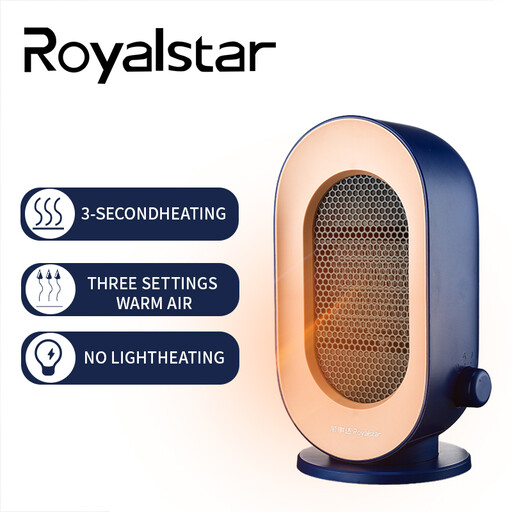
Why it suits this profile: Its low power and compact design make it a good fit for students, people working from home and anyone who mainly wants to heat a small area.
It isn’t an oversized model for a small room, and it features three heat settings, tip-over protection and overheat protection.
600 watts, three settings, compact size and portable for use at home or in the office.

Why it suits this profile: This model is designed for people who value temperature control, quiet operation and remote control.
The product description lists a thermostat adjustable from 5–35 °C, a timer of up to 12 hours, oscillation and several layers of protection.
2000 watts, remote control, 70° oscillation and a stated noise level of 25–42 dB.
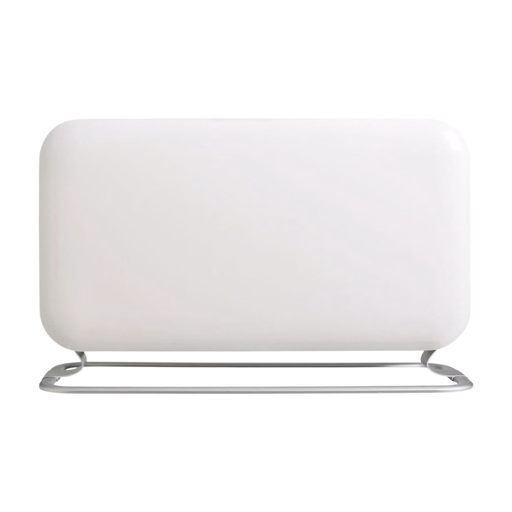
Why it suits this profile: This fixed convector heater is a good choice for a living room, office or other space where you want steady heat over a longer period.
The specifications list an electronic thermostat, three settings and quiet operation. The warning not to cover the heater still applies.
2000 watts, electronic thermostat, LED display and a stated coverage area of up to 20 m².

Why it suits this profile: Its lightweight, compact design and stated noise level of 24 dB(A) make it a good fit for a bedroom, study area or home office.
The model features both tip-over and overheat protection, with two power settings of 600 and 1500 watts.
24 dB(A) according to the product information, weighs 1.51 kg, has a carry handle and is stated to be suitable for rooms up to 15 m².
We’ve put together a complete, up-to-date list of products that meet these strict selection criteria and the applicable European safety requirements.
That depends on the power, how long you use it and your electricity tariff. A 2000 watt heater uses 2 kWh per hour at full power. A thermostat, timer and lower power setting can help limit the time in use or the average power consumption. They don’t automatically make electricity cheaper.
Yes, as long as the model is suitable for indoor use and is positioned securely. If possible, choose a quiet electric heater with a timer, thermostat, tip-over protection and overheat protection. Keep at least the clearance specified in the manual, and don’t place the heater next to bedding, curtains or other flammable materials. Switch it off when you leave the room.
Lifespan varies by model and how often it’s used. Check the warranty, the quality of the cable, the stability of the casing and whether a manual is available. Only clean the heater when it’s switched off and unplugged. Stop using it if it’s damaged, has a damaged cable, gives off an unusual smell or switches off unexpectedly again and again.
