
Vandaag of morgen in huis

Kwaliteit gegarandeerd

Welkomstaanbiedingen ontgrendelen: GRATIS bezorging | Tot 80% korting | Gratis 30 dagen JoyPlus-proefperiode
Download de app
An electric heater may seem simple: plug it in, set the temperature and you’re done. Yet many households buy a model that isn’t suitable for the room, makes too much noise or ends up expensive because it is used unnecessarily for too long. By checking the power, controls and safety features carefully, you can avoid making the wrong purchase.
A higher wattage does not automatically mean that a heater is suitable for your living room. A 2,000-watt appliance can heat a small room quickly, but it also uses more electricity when running at full power for long periods. Insulation, ceiling height, draughts and the desired temperature also have an impact.
Therefore, look at both the power in watts and the stated room capacity. Treat the stated area as an indication from the product information, not as a guarantee for every home.
With direct electric heating, electricity consumption is mainly determined by the power and the length of use. A 2,000-watt heater theoretically uses 2 kWh when running at full power for one hour. A thermostat, timer or weekly schedule can help prevent the appliance from continuing to heat when nobody is at home, but it does not make the heating element itself free to run.
So check whether a heater with a thermostat, timer or app control fits your daily routine.
A smart heater with Wi-Fi can be useful for remote control, but full functionality may require an app, an account and a stable Wi-Fi connection. Check in advance whether the app is available for your phone and whether the model connects to your home network.
A quiet model is not necessarily quiet in every setting. A fan heater uses a fan, while a convection heater without an active fan generally operates more quietly.
A 600-watt model is mainly suitable for a desk or very small room. For a living room or larger space, you will more often need between 1,200 and 2,200 watts. Alongside the wattage, check the stated area:
These are practical starting points. Measure the room and take draughts, windows and insulation into account before making a purchase.
A heater with a timer is useful for limiting how long the appliance runs. An electronic thermostat can track the set temperature more accurately than a simple dial. A weekly schedule can be handy for a home office, while occasional supplementary heating may only require mechanical controls.
At a minimum, check for:
Plug an electric heater directly into a suitable socket when the manual requires this. Never cover the appliance, and keep curtains, bedding, paper and other flammable materials at a safe distance. A model is not automatically suitable for use in the bathroom. Check the IP rating and the specific usage instructions first.
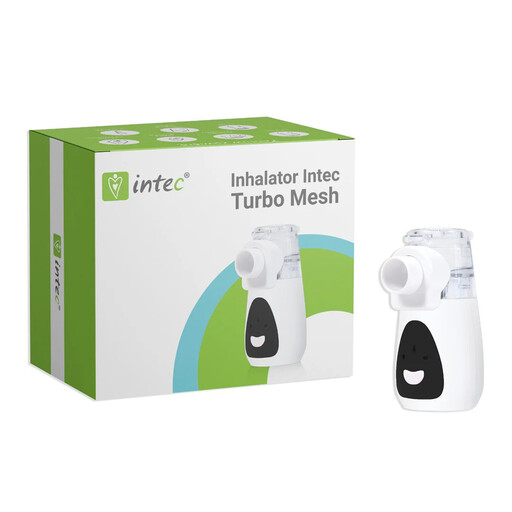
Why it suits this profile: A straightforward choice for anyone looking for an electric heater for everyday use without needing an app or advanced programming. Check the exact specifications on the packaging or in the manual before buying.
The product information positions this model as a straightforward room heater. This means you are not automatically paying for features you do not use, while still checking the power and safety details first.
White finish and simple controls. The product description mentions protective features and instructions for safe household use.
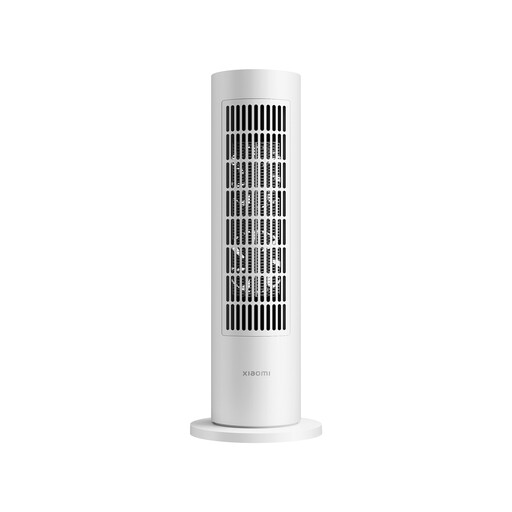
Why it suits this profile: Ideal for users who want to combine thermostat control, a tower heater and app or voice control. The product information lists four settings, 70° oscillation and a timer.
According to the product information, the app is required for full functionality. This makes it clear that you need to check the Wi-Fi and app requirements in advance, rather than discovering a hidden limitation after purchase.
2000 watts, automatic shut-off and tip-over protection. The tower design is 50 cm high and takes up relatively little floor space.
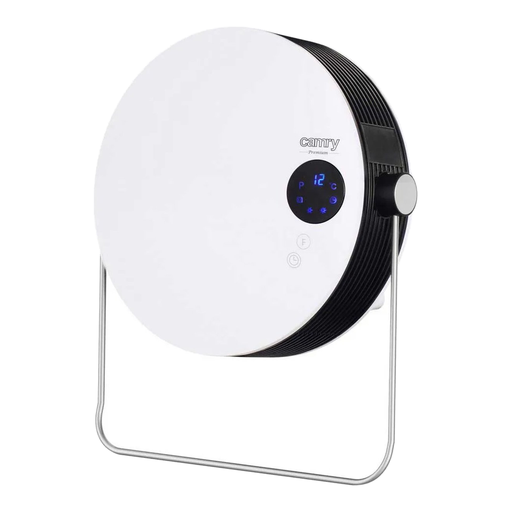
Why it suits this profile: Designed for anyone looking for a wall-mounted model for the bathroom. According to the product details, this model has IPX2 protection, a weekly timer, two heat settings and a thermostat ranging from 10 to 49 °C.
The IP rating is stated clearly, so you do not have to rely solely on the term “bathroom heater”. Always check that installation is carried out in accordance with the manual and local regulations.
Selectable power levels of 1400 and 2000 watts, an LCD display and a programmable weekly timer. Wall mounting and a towel rail are included in the product description.
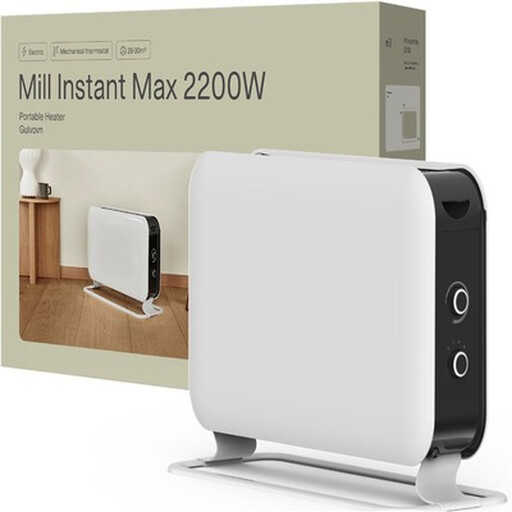
Why it suits this profile: A convection heater for anyone who values quiet operation and higher power in a living room or workspace. The stated capacity is up to 30 m².
The product specifications do not mention fan noise and specify a mechanical thermostat. This gives you straightforward controls without relying on an app.
2200 watts, three power settings and a mechanical thermostat. The product information also mentions a tip-over switch and a 160 cm cable.
We have put together a complete, up-to-date list of products that fully meet these strict selection criteria and the applicable European safety regulations.
Place a portable heater on a flat, stable surface with plenty of clear space around it. Do not use the appliance beneath curtains, next to bedding or anywhere clothing could fall onto the grille. Only move the heater once it has been switched off and has cooled down.
Take extra care in the bathroom. An IP rating indicates protection against certain forms of moisture, but it does not make every use near water safe. Follow the manual and ensure that fixed electrical connections are installed in accordance with the applicable regulations.
This depends on the power and your electricity tariff. A 2,000-watt heater theoretically uses 2 kWh per hour when running at full power. With a thermostat, actual consumption may be lower because the heating element does not remain switched on continuously. Calculate your costs using: power in kW × hours of use × your kWh tariff.
Check the model’s stated coverage and compare it with the size and insulation of your living room. For small, well-insulated spaces, 1,000 to 1,200 watts may be sufficient. For larger or draughtier rooms, models rated at 1,800 to 2,200 watts are often available. Heating one seating area requires less power than heating the entire room.
Lifespan varies depending on the type, frequency of use and maintenance. Keep ventilation openings free from dust, do not pull on the cable and use the appliance according to the manual. Stop using it immediately if you notice a damaged cable, a burning smell, unusual noise or visible damage. Statutory warranty protection in the EU is generally at least two years; check the terms for the product.
