
Vandaag of morgen in huis

Kwaliteit gegarandeerd

Welkomstaanbiedingen ontgrendelen: GRATIS bezorging | Tot 80% korting | Gratis 30 dagen JoyPlus-proefperiode
Download de app
An electric heater seems simple: plug it in and the room gets warmer. But models can vary considerably in power, controls, noise levels and safety features. Choosing the wrong one could lead to unnecessarily high electricity use, distracting fan noise or a heater that isn’t suitable for the room.
A 2,000-watt model can heat a room quickly, but at full power it uses around 2 kWh per hour. The actual cost depends on your electricity tariff and how long the heater is actively heating.
A thermostat, several heat settings and a timer can help prevent unnecessary use. However, a feature such as “ECO” doesn’t automatically mean the appliance always uses less electricity. According to information provided by brands such as PELONIS and DREO, ECO or energy-saving mode adjusts the power based on the ambient temperature. Also check which settings, temperature controls and power levels are actually available.
Product pages sometimes list room sizes such as 10, 15 or 20 m². This isn’t a guarantee that applies to every home. Insulation, ceiling height, draughts, outdoor temperature and the temperature you want all have a significant effect.
A compact ceramic heater may be enough for a well-insulated bedroom or home office. In a draughty garage or workshop, wattage isn’t the only thing that matters: air circulation, placement and suitability for the surroundings are important too.
An inexpensive space heater without tip-over protection or overheat protection could pose an unnecessary risk. Also check whether the model is intended for indoor use only and whether it needs to be kept a safe distance from curtains, furniture, clothing and bedding.
Place an electric fan heater on a stable, dry surface. Never cover the air inlet or outlet, and keep many models at least one metre away from flammable materials. Don’t use the heater with wet hands or close to water.
Many portable models have a maximum power output of between 1,500 and 2,000 watts. A lower power setting is useful if you only want to warm a desk area or small room. Several settings, such as low, medium and high, make it easier to adjust energy use.
A ceramic heater with a PTC element can produce warm air quickly. However, terms such as “fast” and “instant” come from product marketing. According to the product specifications, PELONIS and DREO models start producing warm air within seconds; how quickly the whole room reaches the desired temperature depends on the conditions.
A heater with a thermostat switches the heating element on or off according to the temperature you set. This is more practical than running the heater continuously on its highest setting. A heater with a timer can be useful if you want the heating to switch off automatically after a set period.
Look out for the difference between a basic mechanical thermostat and a digital temperature setting. Some models offer a range of 5 to 35 °C, while others have just a few settings. Also consider whether a remote control, child lock or display would genuinely be useful for you.
A fan heater moves air and is therefore generally noisier than a quiet convection heater. According to their own product specifications, DREO lists a noise level of 25–42 dB for certain models, while PELONIS gives a figure of 50 dB for another model. These are claims made by the brands and may vary depending on the setting.
At a minimum, check for:
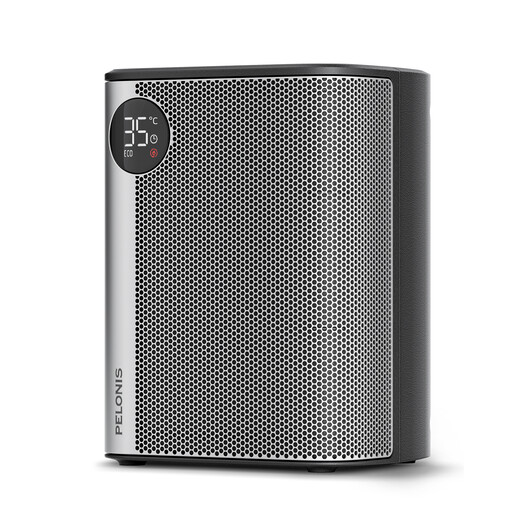
Why it suits this type of user: This model combines 2,000 watts, five heat settings, a thermostat and a timer, making it suitable for everyday use in a bedroom, student room or home office, for example.
The adjustable thermostat and 24-hour timer give you more control than a simple on/off switch. According to the product specifications, the model also has overheat and tip-over protection.
PTC ceramic element, ECO mode, digital temperature display and concealed carry handle.

Why it suits this type of user: The combination of 1,500 watts, remote control, timer and low stated noise level makes it a good fit for bedrooms, offices and study spaces where convenient controls and quiet operation matter.
The model has several power settings and a thermostat, so you don’t have to keep heating at full power. According to DREO, its stated noise level is between 25 and 42 dB.
Temperature setting from 5 to 35 °C, 12-hour timer, portable size and a stated 8-layer safety system.
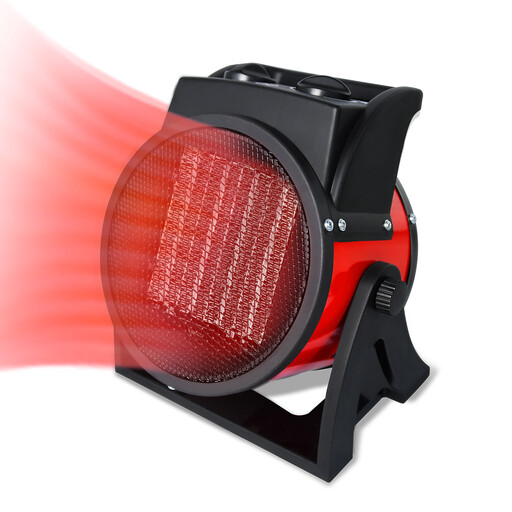
Why it suits this type of user: The listed 2 kW output, PTC heating, thermostat and three heat settings make it suitable for use in a workshop, garage, building site or apartment.
Three heat settings give you more choice than a single fixed setting. Before buying, be sure to check the full instructions, protection rating and permitted operating environment.
2 kW output, PTC element, thermostat and three settings, according to the product name.

Why it suits this type of user: The combination of a remote control, oscillation, ECO mode, timer and several noise settings is practical for a home office or bedroom.
You can set the temperature, timer and power independently. According to the product specifications, there are three noise levels, with the lowest stated at 38 dB.
1,800 watts, thermostat adjustable from 5 to 35 °C, 24-hour timer, and tip-over and overheat protection, according to the product information.
We’ve put together a complete, up-to-date list of products that meet these strict selection criteria and the applicable European safety regulations.
A 2,000-watt model uses around 2 kWh per hour when running continuously at full power. Multiply this by your electricity tariff and the time you use it. A thermostat or lower setting can reduce actual consumption, but this depends on the insulation and room temperature.
A ceramic heater converts electricity into heat, just like other electric heaters. The PTC element can respond quickly, and a thermostat or ECO mode can help limit how much it runs. So “energy-efficient” depends mainly on the power, settings, duration of use and the room you’re heating.
Its lifespan depends on how it’s used, dust build-up, storage, and the quality of the cable and casing. Clean the ventilation openings according to the instructions, move the appliance using its handle, and don’t use it if you notice damage, an unusual smell or abnormal noise.
