
Vandaag of morgen in huis

Kwaliteit gegarandeerd

Welkomstaanbiedingen ontgrendelen: GRATIS bezorging | Tot 80% korting | Gratis 30 dagen JoyPlus-proefperiode
Download de app
An electric heater can quickly provide extra warmth in a bedroom, home office, living room or office. However, it is not sensible to look only at wattage or an attention-grabbing phrase such as “rapid heating”. A compact model may not cover your space sufficiently, while a more powerful heater can use unnecessarily large amounts of electricity if it does not have a thermostat.
The most common purchasing pitfalls are:
Power is measured in watts. A 600-watt model is suitable for focused warmth at a desk or in a small room, but not necessarily for an entire living room. Heaters rated at 1,500 to 2,000 watts are more versatile for bedrooms, living rooms and home offices. According to Mill’s product information, a 2,200-watt convection heater can heat rooms of up to 30 m².
Always check the combination of:
A ceramic PTC heater uses a ceramic heating element with a positive temperature coefficient. In many models, a fan distributes the heat. This makes a ceramic heater suitable if you want to feel warmth quickly, for example in a home office or bedroom.
An electric fan heater heats up quickly, but can produce noise and move dust around. Therefore, check the stated noise level. The DREO Atom 416 lists 25–42 dB; the manufacturer states operation at up to 34 dB for this model. The OmniHeat lists three noise levels of 38, 45 and 50 dB.
A convection heater works without a fan and can therefore be quiet. The Mill CO2200MECMAX lists 100% silent operation and has three wattage settings. The build-up of heat may feel different from that of a fan heater, as the air is moved around less actively.
An electric heater with a thermostat switches the heating element off or reduces its output once the set temperature has been reached. This is more practical than running the heater continuously at full power. A heater with a timer helps limit how long it runs; the models in this selection offer 12- or 24-hour timers.
At a minimum, look for:
For a bathroom heater, explicitly check whether the model is intended for that environment and which IP rating is specified. According to the product information, the Camry CR 7747 has an IPX2 rating and is designed for wall mounting in the bathroom. Do not use a portable heater that is not intended for this purpose near a bath, shower, washbasin or wet floor.
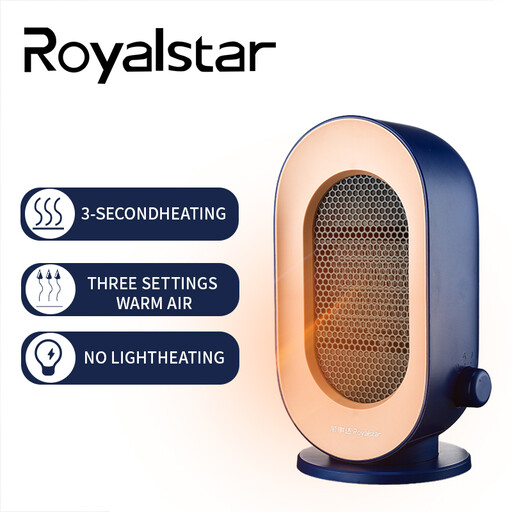
Why it suits this profile: The low power rating and compact size make it suitable for focused warmth at a desk, in a small home office or in a home-working space.
The specifications clearly state 600 watts and three heat settings. Therefore, do not expect it to heat an entire large living room.
600 watts, three settings, compact design, plus tip-over and overheat protection according to the product information.

Why it suits this profile: This model combines a high power rating with thermostat control, remote control, oscillation and a timer for everyday use in medium-sized rooms.
The stated coverage of 15–25 m² makes the choice more specific than simply relying on “powerful heat”. According to DREO’s own research, the noise level is between 25 and 42 dB and energy consumption may be up to 40% lower.
2000 watts, temperature setting from 5–35°C, 70° oscillation, 12-hour timer and several safety features according to the product specification.

Why it suits this profile: The wall mounting, towel rail and programmable weekly timer are designed for permanent use in the bathroom.
The IPX2 rating and reference to bathroom use make the intended application clear. Installation and electrical connection must follow the manual and locally applicable regulations.
1400/2000 watts, temperature control from 10–49°C, weekly scheduling with up to six periods per day and overheat protection.
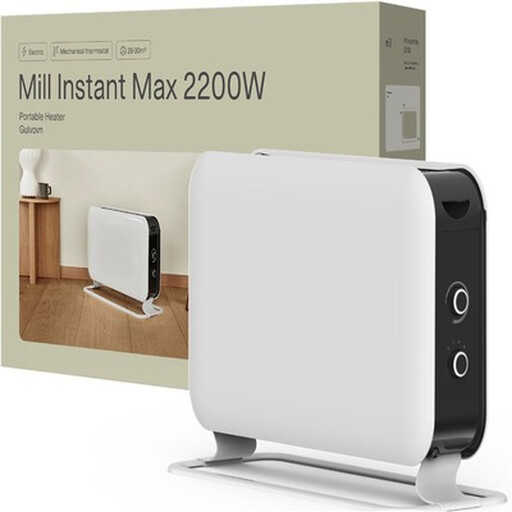
Why it suits this profile: If you do not want fan noise in a bedroom, living room or office, this convection heater with a mechanical thermostat is a suitable choice.
The stated fan-free operation means you do not have to rely solely on a noise claim. Bear in mind, however, that it is larger and weighs 4.7 kg.
2200 watts, rated for rooms of up to 30 m², three settings, mechanical thermostat and tip-over switch.
We have put together a complete, up-to-date list of products that fully meet these strict selection criteria and the applicable European safety regulations.
Place a portable heater on a flat, stable and heat-resistant surface. Preferably use a wall socket and avoid using an extension lead or power strip when the power rating is high. Never cover the heater or place clothing on top of it. Keep ventilation openings clear and leave sufficient space around the air outlet.
An electric heater is intended as supplementary heating. Do not leave an appliance running unattended, and check the cable, plug and casing before use. Stop using it immediately if you notice smoke, sparks, a persistent burning smell or unusual operation. Have repairs carried out by an authorised repairer.
This depends on the power rating and how long it is used. A 2,000-watt heater uses 2 kWh per hour when running at full power. Multiply this by your current electricity tariff to get an indication of the cost. A thermostat, lower setting and timer can limit the number of hours the heater runs, but they do not guarantee savings.
For a small workspace, 600 watts may be sufficient for focused warmth. For bedrooms and living rooms, a model rated at 1,500 to 2,000 watts is often more suitable. Always consider the stated room size, ceiling height, draughts and insulation. A more powerful heater does not automatically heat more efficiently.
Only if the product information states that the model is suitable for this purpose and the IP rating is appropriate for its position. A bathroom heater must be installed correctly and kept away from direct contact with water. A standard electric fan heater is not automatically suitable for a humid room.
