
Vandaag of morgen in huis

Kwaliteit gegarandeerd

Welkomstaanbiedingen ontgrendelen: GRATIS bezorging | Tot 80% korting | Gratis 30 dagen JoyPlus-proefperiode
Download de app
A cold home office, bedroom or student room doesn’t always call for the same solution. An electric heater warms the air in a room, whereas an electric blanket, electric underblanket or heat pad mainly warms a specific spot. The right choice therefore depends on the room, how long you’ll use it and the type of control you prefer.
Also watch out for common marketing claims. A device that the product description says “heats up in seconds” won’t automatically warm an entire room that quickly. And an energy-efficient heater doesn’t exist independently of electricity consumption: the power rating, usage time and set temperature together determine the running costs.
A power output of 2,000 W sounds appealing, but on its own it doesn’t tell you whether a heater is suitable for your room. A small room can feel comfortable quickly, while a large living room needs more time or a different heating solution. A fan heater distributes warm air rapidly, but mainly heats locally while the airflow is active.
A lower power output, such as 600 W, can be handy for a desk, student room or short bursts of use. The appliance then uses less electricity per hour, but also delivers less heat.
A ceramic heater or fan heater can, according to the product information, give off warm air quickly. That’s practical when you want to warm up straight away at a desk or sofa. For even heat in a room, a convector heater may be more suitable. It works with natural air circulation and is often quieter, but the heat build-up can feel less immediate.
A heater with tip-over protection switches off, according to the specifications, when the appliance tilts. A heater with overheat protection can cut the power under certain conditions. These are useful features, but always place the heater on a stable surface, keep textiles and curtains at a distance, and never cover the appliance.
The same applies to heating products. An underblanket must not be folded or covered with heavy objects during use. Regularly check the cable, controls and material for damage.
Use the power rating as an initial guide, not as your only purchase criterion.
An electric heater of 2,000 W theoretically uses 2 kWh when running continuously at maximum power for one hour. The actual cost depends on your energy supplier, the electricity tariff and whether you use the thermostat or ECO mode.
A heater with a timer prevents the appliance from running unnecessarily long. Models with a thermostat can monitor the set temperature, while a heater with a remote control is handy when you don’t want to get up. Check whether the timer offers a switch-off time or a programme for several hours.
For a bedroom or home office, noise level, display brightness and oscillation may be more important than an extra heat setting.
Measure the available space before you order. Pay attention to the cable length, the stability of the base and the distance to flammable materials. For an electric blanket or heat pad, dimensions, washability and a detachable control are practical.
With the Medisana HP 405, the fleece cover is, according to the product information, removable and washable. The mat measures 40 x 30 cm, has 100 W power, three heat settings and automatic switch-off after 90 minutes. This makes this type mainly suitable for local warmth, not for heating an entire room.
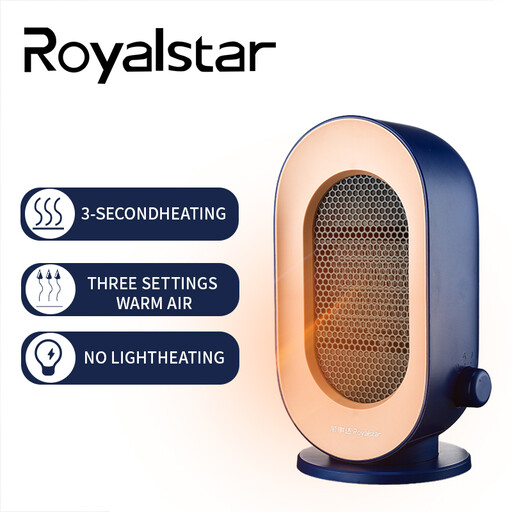
Why this fits the profile: The compact size and 600 W power output suit temporary use at a desk, in a small room or in an office.
The stated power is clearly lower than that of large room heaters. Therefore expect targeted warmth and not even heating of a large living room.
According to the product data: three heat settings, a stated warm-up time of three seconds, tip-over protection and overheat protection.
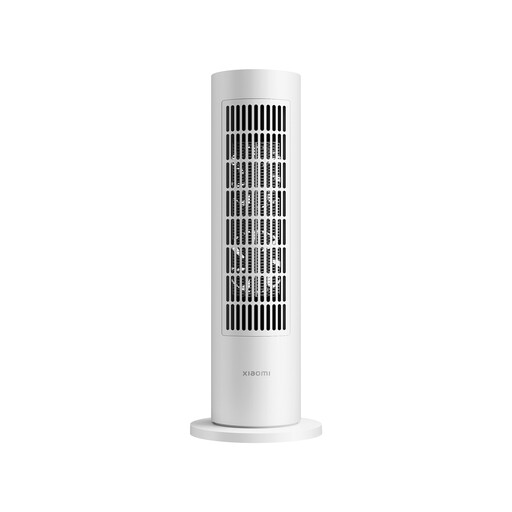
Why this fits the profile: Suitable for users who want to combine app control and temperature regulation with a tower model for the bedroom, living room or home office.
The specifications mention both tip-over and overheat protection. Placing it on a stable surface and keeping air vents clear remains essential.
2000 W, PTC ceramic heating element, automatic switch-off, control via the Mi Home app and a height of 50 cm.
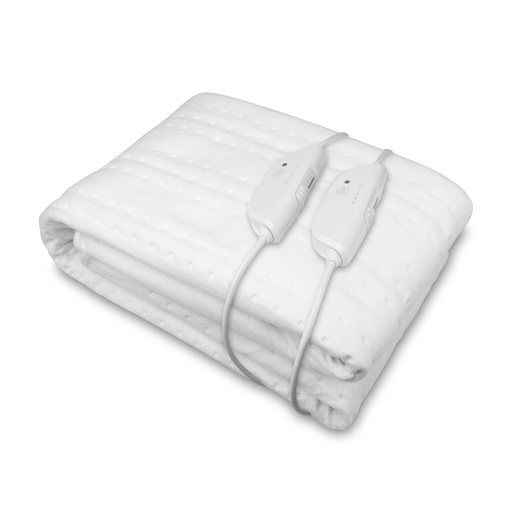
Why this fits the profile: This electric underblanket is designed for broad bed warmth and measures, according to the product information, 150 x 160 cm.
The generous dimensions make it clear that this product is intended for a bed, not for a desk or a specific body area. Follow the usage and washing instructions and do not fold the blanket during use.
Soft polyester finish, multiple temperature settings, remote control and washability according to the product description.
We’ve put together a full, up-to-date list of products that fully meet these strict selection criteria and comply with current European safety regulations.
Follow the basic rules for every type:
A heat pad or heating mat is intended for targeted use. In the case of a specific medical condition, reduced sensitivity to heat or any doubt about use, it is wise to first consult the patient information leaflet and manual and, if necessary, speak to a healthcare professional. Do not make medical assumptions based on a brand’s advertising claims.
That depends on the electricity and gas tariff, the insulation and the room you are heating. An electric heater can be practical for heating just a home office or desk area. Calculate the consumption using: power in kW × usage time in hours × electricity tariff. A thermostat or timer can prevent unnecessary long heating.
The lifespan varies by type, frequency of use and maintenance. Keep ventilation openings dust-free, do not move a hot heater immediately and store textile products dry and unfolded. Check the cable, plug, controls and casing before each season.
This is generally not recommended, unless the manual expressly permits it. Preferably choose a timer or automatic switch-off, keep the surroundings clear and do not place the appliance next to bedding or curtains. An automatic safety feature is an extra safeguard, not a substitute for supervision and correct placement.
