
Vandaag of morgen in huis

Kwaliteit gegarandeerd

Welkomstaanbiedingen ontgrendelen: GRATIS bezorging | Tot 80% korting | Gratis 30 dagen JoyPlus-proefperiode
Download de app
An electric heater seems simple enough: plug it in and the room warms up. Yet models vary greatly in power, noise, controls and safety features. Choosing the wrong one can lead to a heater that uses too much electricity, doesn’t spread heat effectively, or proves awkward in the bedroom.
A 2000W heater can deliver heat quickly, but at full power it also uses 2 kWh per hour. A 1500W heater consumes less per hour, but may not be suitable for a large or poorly insulated room. What’s more, the maximum wattage doesn’t tell you everything about heat distribution.
So pay attention to:
An electric heater converts electricity into heat. The difference in consumption lies mainly in the power, usage time and temperature control. An ECO mode may, according to the product description, switch automatically between settings, but it only saves energy if it means the heater runs for less time or at a lower power.
A simple calculation helps:
Consumption per hour = power in kW × usage time in hours
A 2000W heater running at full power for one hour therefore uses 2 kWh. Before you buy, check the current electricity price on your energy bill and use a thermostat or timer where possible.
A heater with a remote control, timer and oscillation is convenient for a bedroom or home office. However, these features don’t replace safe placement. A timer, for example, won’t stop the appliance from being covered or placed too close to curtains.
At a minimum, choose:
For a small workspace, study or personal use, a compact 1500W heater may be suitable. For a living room or space up to around 20 m², 2000W models are often recommended. The capacity you need also depends on insulation, ceiling height, windows and the desired temperature.
A ceramic heater or PTC heater uses a ceramic heating element. According to manufacturers’ product descriptions, PTC technology can heat up quickly and regulate power steadily. Treat this as a product specification, not a guarantee of lower energy costs in every situation.
A fan heater blows warm air into the room and therefore often feels warm quickly. The downside is that the fan makes noise. For a bedroom or office, the stated noise level is therefore relevant. Philips, for example, quotes 24 dB(A) for the model below; other manufacturers give values around 38 to 50 dB.
A heater with oscillation rotates the air outlet from side to side. This can help distribute heat more widely, especially when several people are in the room. For one person at a desk, oscillation is less necessary.
A heater with a thermostat can maintain the set temperature instead of running at full power constantly. A 12 or 24-hour timer is practical for regular usage times, but switch the appliance off and unplug it when not in use. Do not use an electric heater in a bathroom unless the model is specifically designed for it and the manual allows it.
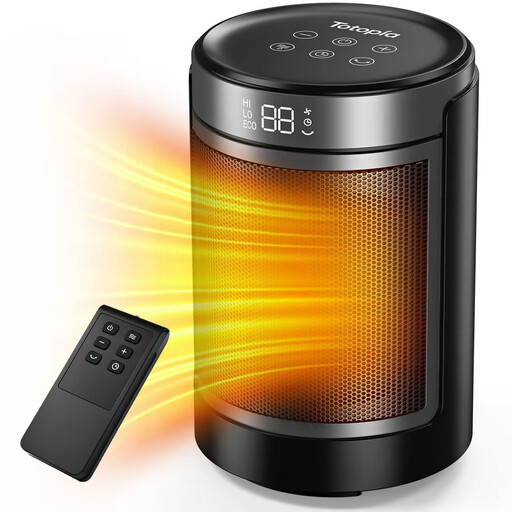
Why this fits the profile: A compact portable heater with four settings for a bedroom, study or small home office.
The fan, 750W, 1500W and ECO settings mean you don’t always have to heat at maximum power. The timer runs from 1 to 12 hours.
PTC ceramic element, LED display, remote control, wide oscillation and overheat and tip-over protection.

Why this fits the profile: Designed for those looking for a compact model for up to around 15 m² and who value a low stated noise level.
The controls offer 600W and 1500W plus three temperature levels. This means the maximum setting isn’t your only option.
According to the product description, 24 dB(A), a carry handle, ceramic heating and tip-over and overheat protection.
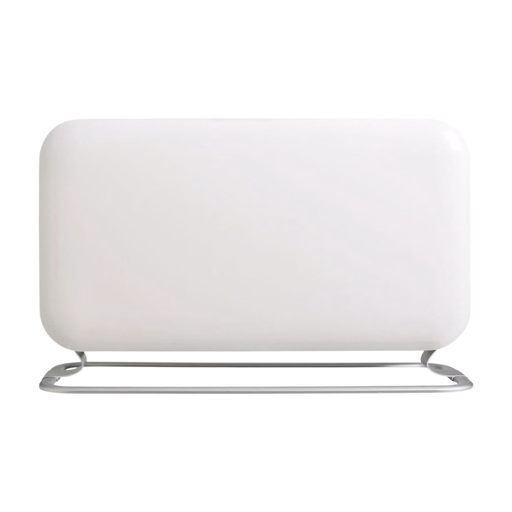
Why this fits the profile: A fixed convector heater for a larger living space, office or other indoor area where quiet operation matters.
The electronic thermostat helps regulate the set temperature. The casing is designed for freestanding placement; keep at least 1 metre away from flammable materials.
2000W power, LED display, three settings, fan for extra air distribution and, according to the product description, quiet operation.
Place an electric heater on a hard, flat and stable surface. Do not put the appliance on bedding, a soft rug or any other surface that could block air vents. Keep curtains, paper, clothing and furniture at a distance and never cover the heater.
Where possible, use a direct wall socket. Do not plug other high-power appliances into the same extension lead. Unplug the heater before cleaning, moving or storing it. Also check the cable, plug and casing regularly for damage.
We’ve put together a full, up-to-date list of products that fully meet these strict selection criteria and current European safety regulations.
Yes, as long as the model is suitable for indoor use and has a thermostat, timer and tip-over and overheat protection. Choose a low noise level and place the appliance away from bedding and curtains. Do not leave the heater covered or unattended while running.
That depends on the power and the electricity price. A 1500W model uses 1.5 kWh per hour at full power; a 2000W heater uses 2 kWh. A thermostat, lower setting and timer can reduce the actual consumption.
The lifespan depends on use, storage and maintenance. Keep ventilation openings free of dust, only move the appliance after it has cooled down, and do not use it if the cable or casing is damaged. Also check the warranty and your statutory consumer rights before you buy.
