
Vandaag of morgen in huis

Kwaliteit gegarandeerd

Welkomstaanbiedingen ontgrendelen: GRATIS bezorging | Tot 80% korting | Gratis 30 dagen JoyPlus-proefperiode
Download de app
An electric heater can quickly provide extra warmth in a home office, bedroom or student room. However, there can be significant differences between models. A low purchase price says little about noise levels, controls or safety. Terms such as “instant heat” and “energy-efficient” also deserve a critical look.
The stated coverage depends on factors including insulation, ceiling height, outside temperature and the temperature you want to achieve. A model designed for 20 m² will not automatically heat every 20 m² living room comfortably. So look at the power in watts as well as the room in which you will actually use the heater.
An electric heater converts electricity into heat. A 2,000-watt model uses approximately 2 kWh per hour at maximum power. The actual cost depends on the electricity tariff and how often the thermostat switches the heating element on.
Lower power, a timer and a thermostat can help limit usage. A manufacturer’s claim of, for example, 40% savings is not a guaranteed result in every home. According to DREO’s own research, a particular energy-saving mode can reduce consumption by up to 40%; treat this as a product specification under certain conditions, not as a fixed saving on your energy bill.
A ceramic fan heater uses a fan to distribute heat. This usually warms a room quickly, but it can produce noise. Look for a stated dB rating and check whether it applies to a particular setting. A convector without a fan may operate more quietly, but it generally distributes heat less directly.
For small spaces such as a bedroom, home office or student room, models of around 1,000 to 1,500 watts are often more practical. A larger or less well-insulated room may require 2,000 watts. Do not automatically use the maximum power all day: choose a thermostat or several heat settings to adjust the warmth more effectively.
A portable heater with a handle is useful when moving the heating between rooms. When choosing one, check its weight, dimensions and cable length.
A ceramic heater or PTC heater uses a ceramic heating element. A fan quickly distributes the warm air around the room. This type suits anyone who wants rapid warmth by a desk or bed.
A convector heats the air without necessarily using a fan. According to the product specification, the Mill SG2000LED has a power output of 2,000 watts, three settings, an electronic thermostat and a fan for additional air distribution. The product information also states that it operates quietly; check the manual to see which setting this refers to.
A heater with a thermostat switches the heating element on and off around the set temperature. This is more convenient than continually adjusting it manually. A timer prevents the heater from continuing to run unnecessarily when you leave the room.
A heater with a remote control is particularly useful beside the bed or when you are sitting at your desk. Also look for a clear control panel, an ECO mode and, where applicable, a child lock. These features make the heater easier to operate, but they do not replace safe use.
Ideally, choose a model with:
Place the heater on a hard, stable and dry surface. Never cover the appliance and keep curtains, bedding, paper and furniture at least one metre away from the air outlet. Do not use an electric heater close to a bath, shower or swimming pool.
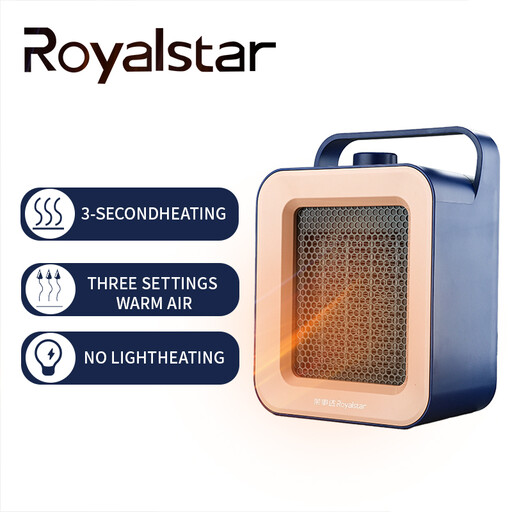
Why it suits this profile: A simple portable heater for anyone looking for extra warmth quickly without complicated controls. The product specification states 1,500 watts and three heat settings.
The information specifies concrete heat settings and safety instructions, rather than making only a general comfort claim. The stated power helps you estimate energy usage in advance.
1,500 watts, three settings and, according to the product information, rapid heat output. The manual highlights measures to reduce the risk of tipping and fire.

Why it suits this profile: Ideal for a bedroom, office or study where low noise levels, precise temperature control and a remote control are important.
The product specification states a range of 25–42 dB, a thermostat covering 5–35 °C and several layers of protection. This lets you compare important features in concrete terms.
1,500 watts, remote control, 12-hour timer, PTC heating and, according to the product information, eight layers of protection.
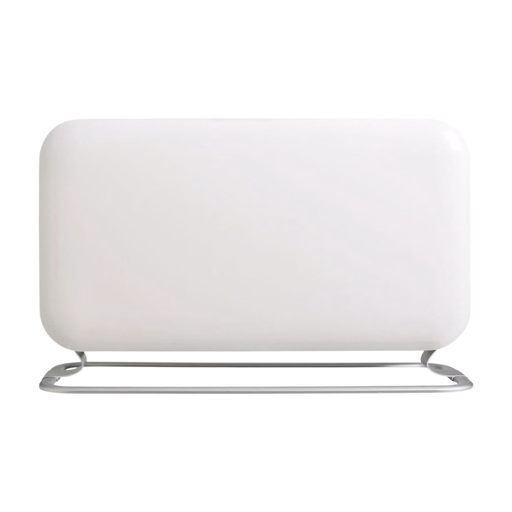
Why it suits this profile: A suitable choice for anyone looking for a freestanding convector for a medium-sized room, with electronic controls and a sleek floor-standing design.
The product specification states 2,000 watts, three settings, an electronic thermostat and dimensions of 62 × 38,5 × 21 cm. This allows you to assess the available space and positioning in advance.
2,000 watts, LED display, electronic thermostat and a fan for additional heat distribution. Check the stated warranty when purchasing.
We have compiled a complete, up-to-date list of products that fully meet these strict selection criteria and the applicable European safety regulations.
A 1,500-watt heater uses approximately 1.5 kWh per hour at maximum power. A 2,000-watt model uses approximately 2 kWh per hour. Multiply this by your current electricity tariff. With a thermostat, average consumption may be lower because the element does not need to heat continuously.
It can be, particularly if the model has a low-noise setting, thermostat and timer. Check the stated dB rating and position the heater away from bedding and curtains. A quiet heater is not automatically suitable for being left running unattended all night; always follow the manual.
Its lifespan depends on how frequently it is used, dust build-up, storage, and the quality of the cable and casing. Clean it only in accordance with the instructions, allow the appliance to cool before moving it, and stop using it if you notice damage, sparks, a burning smell or unusual noise.
