
Vandaag of morgen in huis

Kwaliteit gegarandeerd

Welkomstaanbiedingen ontgrendelen: GRATIS bezorging | Tot 80% korting | Gratis 30 dagen JoyPlus-proefperiode
Download de app
An electric heater can quickly provide extra warmth in a bedroom, home office or living room. However, it is not sensible to look only at wattage or an eye-catching offer. A 2,000-watt model is not automatically suitable for every room, and features such as a timer or thermostat are only useful if they suit the way you use the heater.
The main pitfalls:
Power is measured in watts. Many portable models offer settings ranging from 600 to 2,000 watts. A simple calculation for electricity consumption is:
power in kW × usage time in hours = consumption in kWh
A 1,000-watt heater running at full power for three hours therefore uses around 3 kWh. A thermostat can reduce consumption by temporarily switching off the heating element, but the appliance remains an electrical consumer.
Do not just look at the maximum wattage. A model with several settings, such as 400/600/1,000 watts or 750/1,500 watts, gives you more control in a small room.
Choosing between a ceramic heater, convection heater, fan heater and oil-filled radiator depends on the type of warmth you want.
A manufacturer's claim about energy saving or special heat distribution should be treated as information from the product description. According to Mill's own information, the day-and-night function of the AB-H1000DN can reduce energy consumption by up to 25%; actual savings depend on the settings, room and usage.
At a minimum, check for:
Never cover an electric heater and do not place it close to curtains, bedding, paper or furniture. Ideally, connect a powerful model directly to a suitable wall socket. Only use a bathroom heater when the product information permits it. IPX2 provides protection against limited dripping water, but does not mean that the appliance can be placed directly next to a shower or bath.
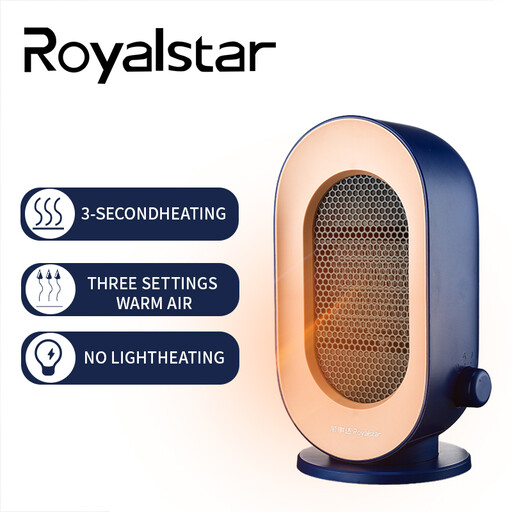
Why it suits this profile: This compact heater is designed for a desk, small workspace or personal area. With 600 watts, its maximum output is lower than that of many models intended for larger rooms.
The three heat settings let you avoid running the heater at maximum power all the time. The product information also states that it has tip-over and overheating protection.
600W power, three settings and a compact design for home or office use.
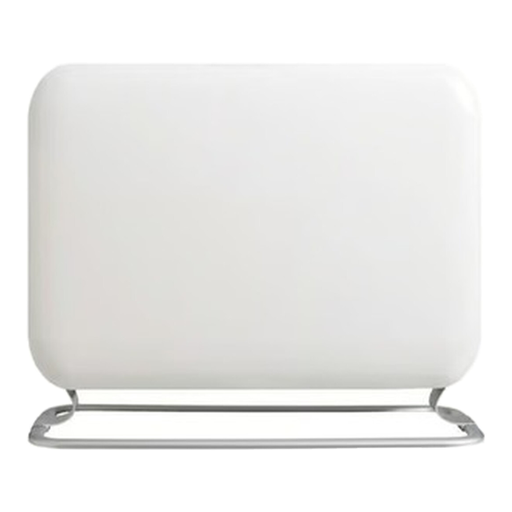
Why it suits this profile: Ideal for anyone looking for permanent electric heating at home, with Wi-Fi control, weekly programmes and a stated coverage of up to 18 m².
The app and weekly schedule help you set heating times in advance, rather than leaving the heater running unnecessarily all the time.
1200W power, Wi-Fi control, weekly programmes and overheating protection.

Why it suits this profile: This wall-mounted model is designed for bathrooms and, according to the product details, has an IPX2 rating, a towel rail and a programmable weekly timer.
Fixed wall mounting reduces the risk of the heater tipping over. However, use remains subject to the IPX2 specification and the clearance requirements in the manual.
1400W and 2000W settings, temperature adjustment from 10°C to 49°C, LCD display and weekly timer.
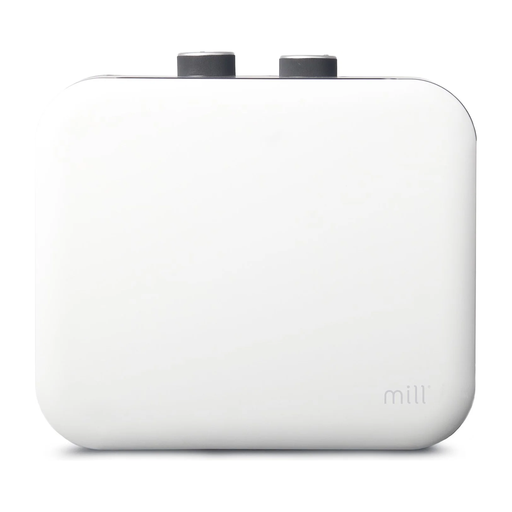
Why it suits this profile: A practical choice for anyone looking for a portable heater that quickly distributes warmth in a room of up to 30 m², according to the product information.
The mechanical thermostat and two settings help you avoid using maximum power continuously. The product details state that it has tip-over and overheating protection.
1200W and 1800W settings, PTC ceramic element, 2.2 kg weight and stated coverage of up to 30 m².
We have put together a complete, up-to-date list of products that fully meet these strict selection criteria and the applicable European safety regulations.
That depends on the room and its insulation. For a small workspace, 600 watts may be sufficient as personal supplementary heating. For a larger living room, models from 1,200 to 2,000 watts are common. Always treat the stated square-metre coverage as a guide, not a guarantee for every home.
Consumption is determined by the power rating and how long the heater is used. A 2,000-watt model theoretically uses 2 kWh per hour at full power. Multiply this by your current electricity tariff. A thermostat, timer or weekly programme can help ensure that the heater only runs when you want it to.
Only when the manufacturer explicitly permits it and the IP rating is suitable for the intended position. According to the product information, a bathroom heater such as the Camry CR 7747 has IPX2, but it must not be placed in the direct spray of water. Position the appliance according to the manual and, if in doubt, have it installed by a qualified professional.
