
Vandaag of morgen in huis

Kwaliteit gegarandeerd

Welkomstaanbiedingen ontgrendelen: GRATIS bezorging | Tot 80% korting | Gratis 30 dagen JoyPlus-proefperiode
Download de app
An electric heater may seem simple to choose: compare the wattage, check the price and plug the appliance in. In practice, the heating output, room size and safety features make the biggest difference. For example, a fan heater suitable for a small home office may be impractical in a quiet bedroom. An infrared heater works differently from a convector heater or oil-filled radiator.
A higher wattage does not automatically mean that a heater is suitable for every room. A 2,000-watt model can deliver heat quickly, but at maximum power it also uses around 2 kWh per hour. The actual cost depends on your electricity tariff, the temperature setting, insulation and how long the heater is switched on.
Pay attention to:
Electric heating converts electricity directly into heat. An electric heater rated at 1,500 watts therefore uses around 1.5 kWh per hour at full power, regardless of whether it is a ceramic heater, convector heater or fan heater. Features such as an eco mode, thermostat and timer can help reduce the amount of time spent heating at full power.
According to information provided by some brands, certain programmes can reduce energy consumption. Treat such percentages as brand claims and check which settings, measurement period and conditions they are based on.
Overheat protection and tip-over protection are useful extras, but they do not make misuse safe. An electric heater must not be covered and should be positioned with plenty of clearance from curtains, paper, bedding and furniture. Plug the appliance directly into a suitable wall socket, and keep it away from water unless the model is specifically designed for use in a damp environment.
As a practical guide, you can refer to the product specifications:
These areas do not guarantee a particular temperature. Ceiling height, draughts, windows and insulation all have a significant impact. Also check whether the manufacturer specifies square metres or cubic metres.
Fan heater: distributes warm air quickly and is easy to move around. The fan noise may make it less suitable for a bedroom.
Ceramic heater: uses a PTC ceramic element. This type is often compact and combines rapid heating with features such as oscillation, a timer and remote control.
Convector heater: heats air that rises through natural convection. Some models have a fan for additional air circulation. A convector heater is often suitable as a fixed or semi-permanent supplementary heater.
Oil-filled radiator: generally heats up more gradually and continues to give off heat for some time after being switched off. Its greater weight makes an oil-filled radiator less mobile.
Infrared heater: directs heat towards people and surfaces rather than heating the entire surrounding air first. This can be useful on a sheltered patio or for warming a specific seating area. For outdoor use, always check the IP rating.
A heater with a thermostat prevents the appliance from continuing to heat unnecessarily once the set temperature has been reached. A heater with a timer is practical for working from home, sleeping or short heating periods. Wi-Fi and an app are particularly useful if you want to adjust heating schedules remotely.
Also check for:
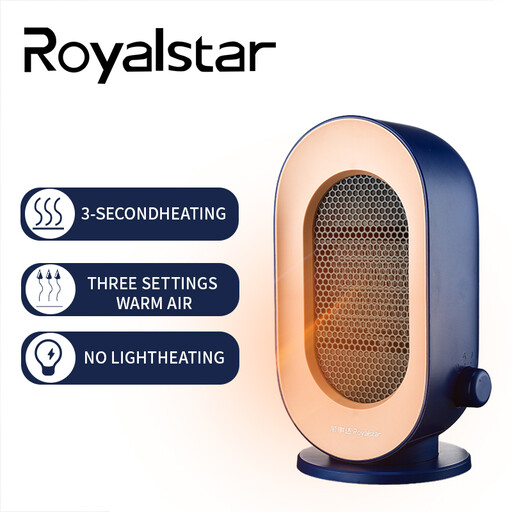
Why it suits this profile: This compact model is designed for a desk, small workspace or personal heating zone. At 600 watts, its maximum consumption is lower than that of 1,500- or 2,000-watt models.
The product makes it clear that it has a low power output. So do not expect it to heat an entire living room; it is designed to provide targeted warmth in a small area.
Three heat settings, tip-over protection and overheat protection; easy to move between your workspace and bedroom.

Why it suits this profile: This compact ceramic heater combines 600 and 1,500 watts with temperature settings and a carry handle. It is a good choice if control and portability are important to you.
The model offers not only a high maximum output, but also a lower setting. This allows you to adjust the power to suit a smaller room.
Stated noise level of 24 dB(A), tip-over protection, overheat protection and automatic switch-off.
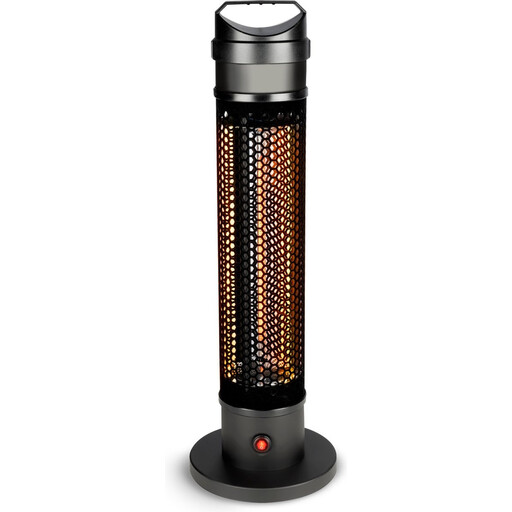
Why it suits this profile: This infrared heater is designed to provide targeted warmth, for example on a sheltered patio, in a study or around a seating area.
The stated heating zone is limited. This prevents the mistaken expectation that 800 watts will heat a large living room completely.
IP44 rating, tip-over protection, integrated handle and 360° heat distribution according to the product description.
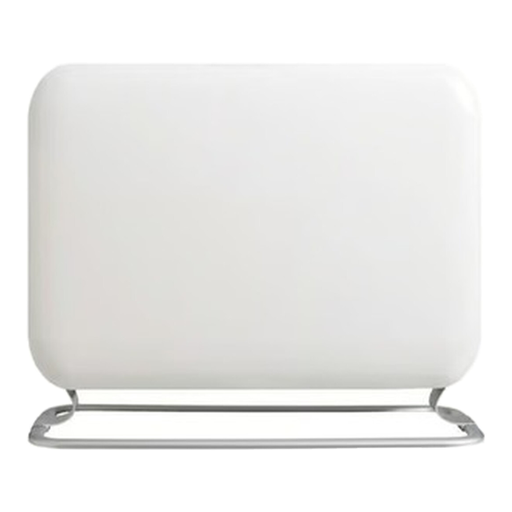
Why it suits this profile: Built-in Wi-Fi and app control are useful in a dedicated home office where you want to manage schedules and temperature remotely.
The lower 1,200-watt output is suited to targeted supplementary heating. The app supports schedules, so the appliance does not need to remain active all day unnecessarily.
Stated suitable area of 18 m², Wi-Fi control, weekly programmes and child and business lock.
We have put together a complete, up-to-date list of products that fully meet these strict selection criteria and the applicable European safety regulations.
Place the heater on a level, stable surface and maintain at least the clearance specified in the instructions. Never cover the appliance with clothes, towels or blankets. Allow a hot heater to cool down before moving or cleaning it. Do not use a model without a suitable IP rating in a bathroom or any other wet area.
For a bedroom, a quiet electric heater with a thermostat and timer is a practical choice. In a living room, a convector heater with a higher output and wider air distribution may be more suitable. An oil-filled radiator is a good option when even, long-lasting heat is more important than rapid warm-up.
This depends on the power rating and your electricity tariff. A 2,000-watt heater uses around 2 kWh per hour at full power. A 1,000-watt model uses around 1 kWh per hour. A thermostat, timer or lower heat setting can reduce the average consumption.
Look for a low noise level, thermostat, timer and tip-over protection. A ceramic heater can warm up quickly; an oil-filled radiator generally operates more quietly, but is heavier and harder to move. Always check the stated coverage area and keep the heater clear of bedding and curtains.
Its service life depends on usage, storage and maintenance. Keep the ventilation openings free from dust as instructed, check the cable and plug regularly, and do not use the appliance if it is damaged or gives off an unusual smell. Statutory guarantees in the European Union generally last for a minimum of two years, while any additional manufacturer's warranty may vary by product.
