
Vandaag of morgen in huis

Kwaliteit gegarandeerd

Welkomstaanbiedingen ontgrendelen: GRATIS bezorging | Tot 80% korting | Gratis 30 dagen JoyPlus-proefperiode
Download de app
An electric heater can quickly make a cold home office, bedroom or student room more comfortable. However, it is not wise to focus only on wattage or phrases such as “heats up quickly”. A compact heater that looks powerful on paper may be too noisy in practice, awkward to operate or unsuitable for the room.
Pay particular attention to these three common pitfalls:
A ceramic fan heater uses a PTC ceramic heating element and a fan to distribute warm air. This type is suitable when you want quick heat by a desk, seating area or bed. A heater with oscillation also distributes the air across a wider angle.
Do check the stated heating range. Manufacturers may use different measurement methods. Treat a statement such as “suitable for 20 m²” as a guideline, not a guarantee for every home.
A convector heater warms the air flowing through the appliance. This model is suitable for anyone looking for even heating and quiet operation. An oil-filled radiator generally heats up more gradually, but retains heat for some time after being switched off. It is usually heavier and larger than a mobile fan heater.
For a bedroom or home office, a quiet heater may be more important than maximum air circulation. Look for a stated noise level in dB. Product descriptions from DREO, for example, mention 25–42 dB for certain models; this is a product specification from the brand and no guarantee that every user will consider it quiet.
If you mainly want to warm a bed rather than the whole room, an electric underblanket can be a targeted solution. According to the product information, the Medisana HU 666 has a power rating of 60W, three temperature settings, overheat protection and automatic switch-off after 180 minutes. Use an underblanket flat and unfolded, and always follow the instructions.
A 2000W heater produces plenty of heat, but when running continuously at full power it uses approximately 2 kWh per hour. A 1500W model uses approximately 1.5 kWh per hour under the same conditions. Calculate the actual cost using:
power in kW × usage time in hours × your electricity tariff
A thermostat can help prevent the heater from running continuously at full power. A heater with a thermostat switches the heating element on and off according to the set temperature. ECO mode can regulate this automatically, but always check which settings are actually available.
These features are practical for everyday use:
A timer does not automatically prevent every risk. Switch the heater off and unplug it when you will not be using it for an extended period.
At a minimum, look for tip-over protection and overheat protection. Some models also list flame-retardant materials, a child lock or an automatic power cut-off. Check the specific product details, as not every model has the same features.
Position the heater:
Do not use an extension lead or multi-socket adaptor for a powerful heating appliance if the instructions advise against it. Only move a hot heater after it has been switched off and has cooled down sufficiently.
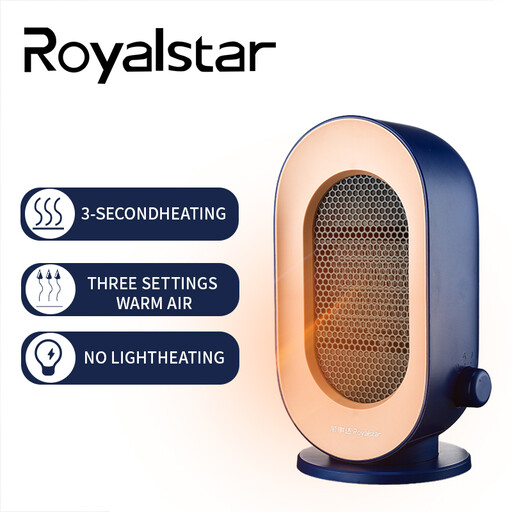
Why it suits this profile: The low power rating is suitable for a desk, small room or personal seating area where targeted warmth is needed.
The specification states 600W and three settings, so you do not automatically choose a high power rating for a small space.
Compact design, three heat settings, plus stated tip-over and overheat protection.

Why it suits this profile: Ideal for a bedroom or home office where a compact size, low noise level and easy operation matter.
The product information lists 24 dB(A), adjustable power of 600W or 1500W, and several safety features.
Ceramic element, built-in handle, three temperature levels and automatic switch-off in the event of tipping or overheating.
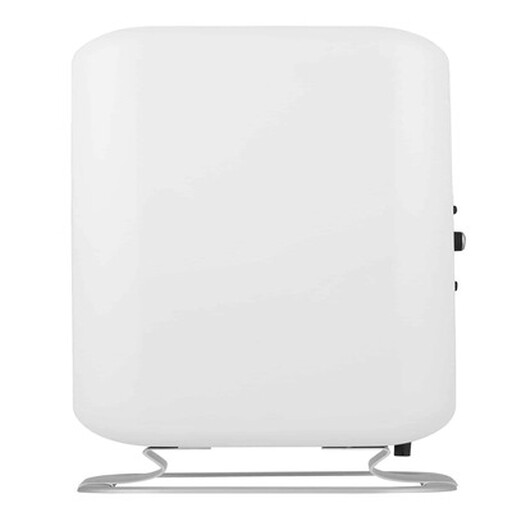
Why it suits this profile: An option for anyone looking for longer-lasting and more even heating in a room of up to the stated 16 m².
With three settings of 400W, 600W and 1000W, you can adjust the power to suit the situation instead of heating continuously at maximum output.
Day and night thermostat, LED display, tip-over protection and overheat protection.
We have put together a complete, up-to-date list of products that fully meet these strict selection criteria and the applicable European safety regulations.
This depends on the floor area, ceiling height, insulation and desired temperature. For a small workspace, 600W may be sufficient as supplementary heat. For a larger or less well-insulated room, people often consider 1500W or 2000W. Use the manufacturer’s stated room-size guidance as a reference and avoid choosing an appliance that is consistently too small for the space.
This depends on the efficiency of your heating system, electricity and gas prices, insulation and the area you are heating. A portable heater can be practical when you only want to heat one room temporarily. Calculate consumption using the power rating in kW and the number of hours of use. A thermostat and timer can help limit unnecessary heating.
Lifespan varies by model, frequency of use and maintenance. Keep the air vents free from dust according to the instructions, do not use the appliance if the cable or casing is damaged, and only store it once it has cooled down completely. Safety features such as tip-over and overheat protection are important, but careful positioning and correct use remain essential.
