
Vandaag of morgen in huis

Kwaliteit gegarandeerd

Welkomstaanbiedingen ontgrendelen: GRATIS bezorging | Tot 80% korting | Gratis 30 dagen JoyPlus-proefperiode
Download de app
An electric heater seems simple: plug it in and switch on the heat. Yet many households buy a model that’s too noisy, doesn’t heat the room sufficiently or uses more electricity than necessary. Marketing terms such as “fast”, “energy-efficient” and “quiet” only mean something when you can match them to verifiable specifications.
Pay particular attention to these three common pitfalls:
A ceramic heater often uses a PTC heating element. PTC stands for Positive Temperature Coefficient. Some models use a fan to circulate the heat. This type of heater is compact and, according to the product description, can produce warm air quickly. However, a fan makes noise and can move dust around.
A standard fan heater is useful for quick, localised heating, for example beside a desk or in a small home office. Always check that it has tip-over and overheat protection. A low price is no reason to overlook safety features.
A convector heater warms the air, which then rises through natural air circulation. It usually works without a fan, making it a possible choice as a quiet electric heater for a bedroom or office. A convector model is often larger than a compact ceramic heater, but can heat a room more evenly.
Check the stated coverage area. For example, the Mill SG2000LED has a power output of 2000 W and is recommended for rooms of up to 20 m², according to its product description. The Mill CO1200WIFI3 has a power output of 1200 W and is listed for rooms of up to 18 m². These figures are guidelines; ceiling height, insulation, outdoor temperature and draughts also have an impact.
Power is measured in watts. A 2000 W heater uses a theoretical 2 kWh per hour at full power. A 600 W model uses 0.6 kWh over the same period. The actual cost depends on your electricity tariff and how often the thermostat switches on the heating element.
An energy-efficient heater doesn’t necessarily have the lowest wattage. A lower-powered model may need to run for longer. Check for:
According to the PELONIS product description, ECO mode can adjust operation to the ambient temperature. Treat this as a control feature, not a guaranteed saving. The final cost still depends on how you use the heater and the conditions in your home.
An electric heater with a thermostat doesn’t simply run continuously at full power. You set your preferred temperature, then the appliance switches on and off according to its settings. A precise temperature display makes it easier to set the heater, but the reading may differ from the temperature elsewhere in the room.
An electric heater with a timer is useful when you want to set a time for it to switch off in advance. An electric heater with a remote control is handy in a bedroom or living room, as long as you don’t treat the remote as a substitute for safe supervision. Also check whether the timer has an automatic shut-off and how far in advance you can set it.
Look for at least:
Don’t use an electric heater under curtains, blankets or clothing. Keep flammable materials well away and don’t use the appliance in a damp room unless the model is specifically designed for it. Where possible, plug a high-powered heater directly into a mains socket and always follow the instructions.
When choosing a quiet electric heater, distinguish between a convector model without a fan and a ceramic heater whose manufacturer describes it as “quiet”. If no official noise level is provided, you can’t assume a specific number of decibels.
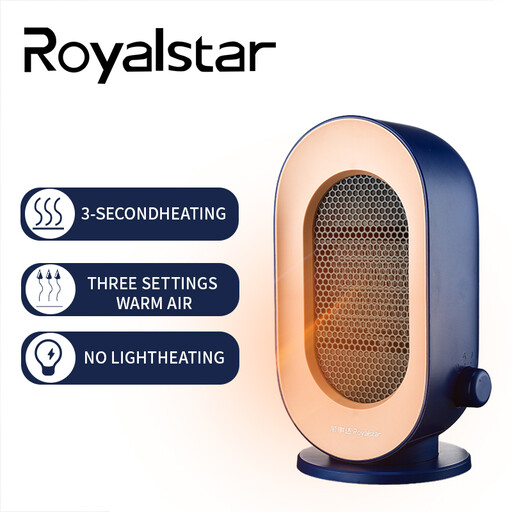
Why it suits this user: Its low 600 W power output and compact design make it a good choice for personal heating at a desk or in a small room.
The stated power output makes it clear that this model isn’t designed to heat a large living room in its entirety.
600 W, three heat settings, tip-over protection and overheat protection.
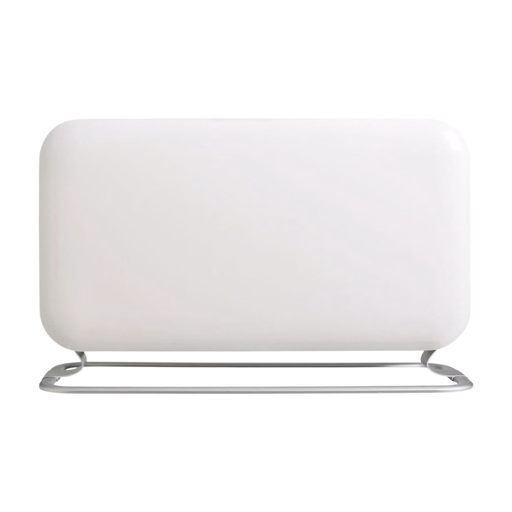
Why it suits this user: This convector model is designed for anyone looking for a powerful, fixed heating solution for an indoor space and who values electronic controls.
The product description lists the power output, recommended room size, three settings and an electronic thermostat.
2000 W, LED display, electronic thermostat, three settings and a stated coverage area of up to 20 m².

Why it suits this user: The combination of ceramic heating, a thermostat, ECO mode and a 24-hour timer makes it suitable for regular use in a bedroom, office or living room, for example.
The settings and timer give you more control than a simple on/off switch. How well ECO mode works, as stated, still depends on the conditions in which you use it.
PTC ceramic element, up to 2000 W, thermostat, ECO mode, 24-hour timer, and tip-over and overheat protection.
We’ve put together a complete, up-to-date list of products that meet these strict selection criteria and comply with current European safety regulations.
It can be, provided the model is suitable for indoor use and has appropriate safety features. For a bedroom heater, choose a model with a thermostat and timer if possible. With fan heaters, check the noise level; if it isn’t specified, it’s difficult to judge how noisy the heater will be in advance. Always keep bedding, curtains and clothing well away, and never cover the heater.
A 2000 W model uses up to around 2 kWh per hour when it runs continuously at full power. A 1500 W model uses up to around 1.5 kWh per hour. A thermostat can limit how long the heater is on, but consumption depends on insulation, room temperature, the temperature setting and how long you use it.
Lifespan varies depending on the model and how intensively you use it. Storing the appliance in a dry, dust-free place, positioning it correctly and cleaning it regularly as instructed can help keep it in good working order. Stop using it immediately if the cable is damaged, it gives off an unusual smell, makes an unusual noise or repeatedly switches off because of overheating.
