Who is this relevant to?

Supplementary heating for one spot

If you spend most of your time at a desk or on the sofa and want short bursts of targeted warmth rather than heating the whole room. Milieu Centraal describes infrared panels as supplementary heating for a particular spot and shorter periods.

Heating the air in the room

If you spend time in different parts of a small room and want to warm the air while the heater is on. Compare heaters based on the space they take up, how they’re controlled and how long you expect to use them.

A damp, cold wall

If you notice condensation or mould, it’s important to distinguish between thermal comfort and the cause of the damp. Milieu Centraal and the Dutch government highlight the importance of ventilation and possible underlying damp problems.

What should you consider when choosing?

Infrared panel for one spot

Choose this if: you want to feel warm in one place where you sit or work for short periods, and the panel can be installed there in accordance with the fitting instructions.

Bear in mind: targeted warmth is not automatically a substitute for heating the whole room. Milieu Centraal says infrared is mainly suitable as localised supplementary heating.

Heater for the room air

Choose this if: you want warmer air in different parts of the room while the heater is on.

Bear in mind: convector heaters, oil-filled radiators and fan heaters differ in how they’re controlled, how much space they take up and how noisy they are; compare the specific appliance and how long you expect to use it.

Buying concern What should you check? Who is this important to?
Targeted warmth Check whether the panel can direct heat towards the spot where you plan to sit, and whether it can be safely installed on the wall or ceiling there. If I usually sit at my desk or on the sofa, I want warmth in that spot without automatically heating the whole room. Around 31% of consumers put targeted warmth first.
Heating the whole room Compare the thermostat, dimensions and noise level. Don’t assess a stated room volume without considering your home’s insulation. When I move around the room, one warm spot isn’t enough and I want to heat the air in the room. Around 25% of consumers prioritise heating the whole room.
Condensation or mould Check for damp, leaks or recurring mould; investigate the cause as well as considering any temporary supplementary heating. If a cold wall is damp or mould keeps returning, I don’t want to assume a heater will solve the problem with my home. For around 25% of consumers, assessing the damp wall is their main concern.
Electricity use Compare the power rating and expected running hours on the same basis. kWh = power in kW × hours of use; use your own electricity tariff to estimate your costs. If I use the heater regularly or for long periods, I want to be able to estimate the likely running costs. Around 19% of consumers weigh up these costs first.

Common buying mistakes

  • Buying a heater to solve a mould problem

    More warmth may improve comfort, but it won’t fix a leak or ventilation problem. According to Milieu Centraal, recurring mould may be linked to an underlying structural issue or insufficient ventilation.

    Investigate the cause and continue to ventilate appropriately. If you’re a tenant, report issues such as damp, leaks or mould to your landlord.

  • Confusing infrared heating with heating the whole room

    Infrared panels are described as being mainly for targeted supplementary heating. Heating a whole room for long periods is a different use case.

    First decide whether you want to heat one particular spot or the air in the room, then compare the expected hours of use.

  • Plugging a heater into an extension lead or covering it

    Connecting an electric heater incorrectly or blocking its heat outlet can create a fire risk.

    Brandweer Nederland advises plugging high-power appliances directly into a socket. Keep the area around the heater clear and don’t hang anything over it to dry; also follow the appliance’s instructions.

  • Treating the stated room volume as a guarantee

    A product specification doesn’t tell you how much heat your room loses through cold walls. How suitable a heater is in practice also depends on the insulation and how you use it.

    Check the insulation and expected usage time before choosing based only on the stated power rating or room volume.

Brands to consider

Eurom

The Safe-T-Convect 2400 is a freestanding convector heater for warming the air in a room as supplementary heating.

  • Eurom specifies 2400 W for this model, along with a thermostat, timer, tip-over protection and overheat protection.
  • Eurom states a coverage of 90 m³, but this isn’t a guarantee for a room with cold walls. The manual limits use to well-insulated rooms or occasional use.

De'Longhi

The Radia S TRRS0920 is a portable oil-filled radiator for anyone comparing room-heating options.

  • The Dutch product information lists 900–2000 W, three heat settings, a room thermostat and wheels.
  • According to De'Longhi, the oil continues to give off heat for a while after the radiator is switched off. This doesn’t prove that the appliance uses less electricity to meet the same heating demand.

Philips

The CX3120/01 is a compact ceramic fan heater for anyone looking for warm air.

  • Philips lists settings of 900, 1200 and 2000 W, an adjustable target temperature, tip-over protection and overheat protection.
  • Don’t treat Philips’ claims about rapid heating and energy savings as independently measured results or as general properties of ceramic heaters.

Heat4All

The ICONIC Classic range includes infrared panels for wall or ceiling mounting. This may be an option when floor space is limited and you want localised warmth.

  • Heat4All lists ceiling mounting as an option for this product range.
  • The claim that panels prevent mould isn’t a reason to leave damp or ventilation problems untreated. Check the exact model and fitting instructions before choosing a size or power rating.

Electric heaters at Joybuy

This selection consists of electric ceramic heaters. Compare the listed settings and controls with the room, usage time and noise levels that matter to you.
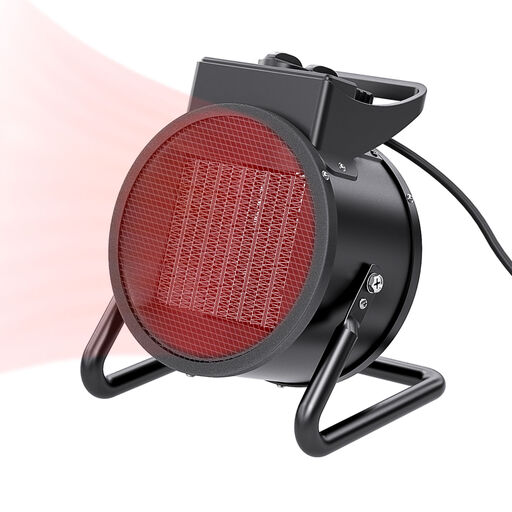
LZQ ceramic fan heater with thermostat and three settings

LZQ ceramic fan heater, 2 kW, 3 settings

Could suit you if you’re looking for a ceramic heater with a thermostat for your home or office; check that the fan noise is right for how you plan to use it.

According to the product name: 2 kW, thermostat and three heat settings.

View at Joybuy
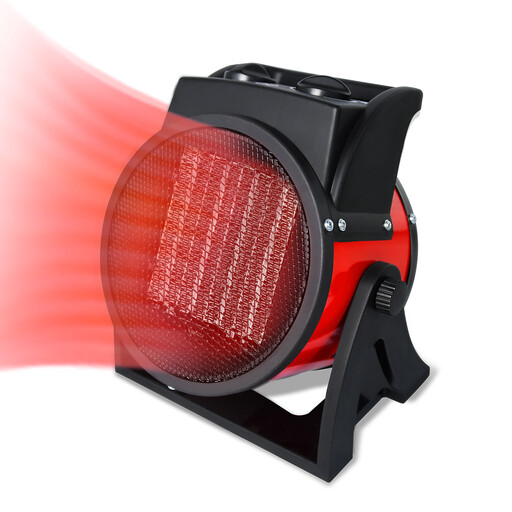
LZQ ceramic PTC heater with thermostat and three settings

LZQ ceramic PTC heater, 2 kW, 3 settings

Could suit you if you’re looking for an electric ceramic heater for a flat; check the available space and the instructions for your particular situation.

According to the product name: 2 kW, PTC heating element, thermostat and three heat settings.

View at Joybuy

OmniHeat ceramic fan heater with remote control and timer

OmniHeat ceramic fan heater, 1800 W

Could suit you if you want to distribute warmth using oscillation; check whether the fan noise is acceptable for the room.

According to the product name: 1800 W, four heat settings, timer, thermostat and oscillation. Keep flammable materials at least 1 m from the air outlet and don’t use the heater directly next to a bath, shower or swimming pool.

View at Joybuy
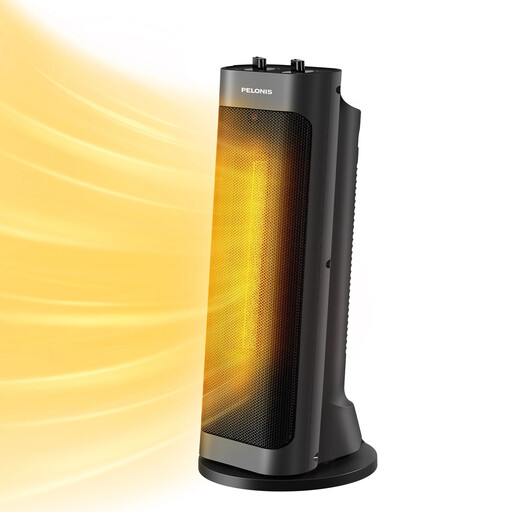
PELONIS 2000 W ceramic fan heater with 70° oscillation

PELONIS PTC ceramic fan heater, 2000 W

Could suit you if you’re looking for a portable heater with oscillation; check the stated room size and follow the safety instructions for positioning it.

According to the product name: 70° oscillation, tip-over protection and overheat protection, with a stated suitability for 15 m². Keep flammable materials at least 1 m from the air outlet and don’t use the heater directly next to a bath, shower or swimming pool.

View at Joybuy
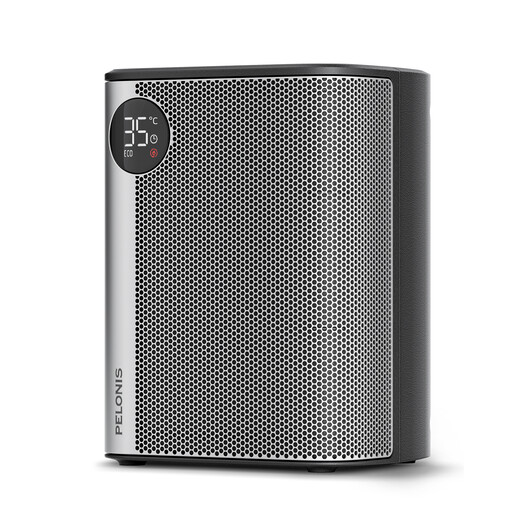
PELONIS 2000 W ceramic heater with ECO mode and timer

PELONIS ceramic heater, 2000 W, ECO mode

Could suit you if you’re looking for a portable ceramic heater with a timer and thermostat; the ECO mode in the product name doesn’t in itself prove lower energy use.

According to the product name: 24-hour timer, five heat settings, tip-over protection and overheat protection. For indoor use only; don’t cover the heater or block the ventilation openings.

View at Joybuy

Frequently asked questions

Can an infrared panel heat a whole room with cold walls?

According to Milieu Centraal, an infrared panel is mainly intended as localised supplementary heating. If you have cold walls, don’t automatically assume it will provide enough warmth throughout the room; whether it’s suitable for long-term main heating depends in part on the insulation.

Can I plug an electric heater into an extension lead or hang washing over it?

Brandweer Nederland advises plugging an electric heater directly into a socket, keeping the area around it clear and not hanging anything over it to dry. Also follow the instructions for the specific appliance.

What should I do if the cold wall is damp or keeps getting mouldy?

Continue to ventilate appropriately and investigate the cause; recurring mould may be linked to a structural issue or insufficient ventilation. If you’re a tenant, report damp, leaks or mould to your landlord.

How can I estimate the running costs of an electric heater?

Multiply the power rating in kW by the number of hours the heating element is actually running to calculate energy use in kWh. Then use the current rate on your own energy contract; a thermostat can affect the actual running time.

Which European rules and warranty rights are relevant when buying?

Electrical equipment within the scope of the EU Low Voltage Directive must meet the applicable safety requirements and CE marking obligations. Local space heaters covered by Regulation (EU) 2024/1103 have been subject to ecodesign requirements since 1 July 2025; whether these apply depends on the specific product. In the Netherlands, statutory guarantees apply alongside any seller’s guarantee; ACM ConsuWijzer explains that statutory guarantees usually last longer.
