
Vandaag of morgen in huis

Kwaliteit gegarandeerd

Welkomstaanbiedingen ontgrendelen: GRATIS bezorging | Tot 80% korting | Gratis 30 dagen JoyPlus-proefperiode
Download de app
An electric heater may seem simple: plug it in and turn on the heat. Yet many UK households buy a model that is unsuitable for the room or the way it will be used. A small fan heater can be too noisy in a bedroom, while a powerful 2000W heater may use more electricity than necessary in a well-insulated home office.
Pay particular attention to these three common pitfalls:
For a small bedroom, student room or desk, a 1500W heater is often practical. Models with a thermostat reduce their output once the set temperature has been reached. For a medium-sized living room or poorly insulated space, 1800W to 2000W may be necessary, but always check the stated room coverage and the room’s insulation.
A ceramic heater or PTC heater uses a ceramic PTC element. PTC stands for Positive Temperature Coefficient: the electrical resistance changes as the element becomes warmer. Product descriptions often associate this with rapid heat and a lower surface temperature. These are product specifications or brand claims, not a guarantee that every room will heat up faster or more cheaply.
A fan heater actively blows warm air into the room. This provides quick, localised comfort, but the fan noise can be distracting. A convector generally distributes heat more quietly and may be suitable for an office where silence is important. When choosing a quiet heater, always check the stated noise level in decibels. “Quiet” without a measured figure tells you very little.
A 1500W heater uses 1.5 kWh per hour when operating at full power. A 2000W model uses 2 kWh per hour under the same conditions. The simple calculation is:
power in kW × usage time in hours × your electricity tariff = cost
A thermostat, lower power setting or ECO mode can limit the amount of time the heater operates at full power. According to some brands’ own research, their control systems can save up to a certain percentage of energy, but such percentages depend on the room, temperature, insulation and usage. Therefore, focus mainly on comparing the adjustable power settings.
A heater with a thermostat is more convenient than a model with only an on/off switch. You set your desired temperature, after which the control system adjusts or interrupts the heating output. A heater with a timer prevents the appliance from running unnecessarily. Check the difference between a simple countdown timer and a programmable weekly schedule.
A remote control is convenient from bed or the sofa. Smart app control is useful if you want to schedule heating times, but check whether an account, Wi-Fi or a specific app is required.
At a minimum, look for:
A CE mark is a declaration by the manufacturer that the product complies with applicable EU requirements; it is not an independent quality ranking. Plug the heater directly into a suitable socket unless the instructions state otherwise. Leave plenty of clear space around it, never cover the air inlet or outlet, and do not use a standard model in a damp bathroom.

Why it suits this profile: Four settings, including 750W, 1500W and ECO, give beginners simple control for a bedroom, study or personal space.
The 1–12-hour timer prevents unnecessarily long use. The product description also mentions overheat and tip-over protection.
PTC element, LED display, remote control and wide oscillation; the stated power is 1500W.

Why it suits this profile: For anyone who values precise temperature control and a specified noise level in a medium-sized room.
The manufacturer states 25–42 dB, a thermostat range of 5–35°C and eight safety layers. These claims come from DREO’s product information.
2000W, 70° oscillation, 12-hour timer and temperature adjustment in 1°C increments; stated coverage 15–25 m².
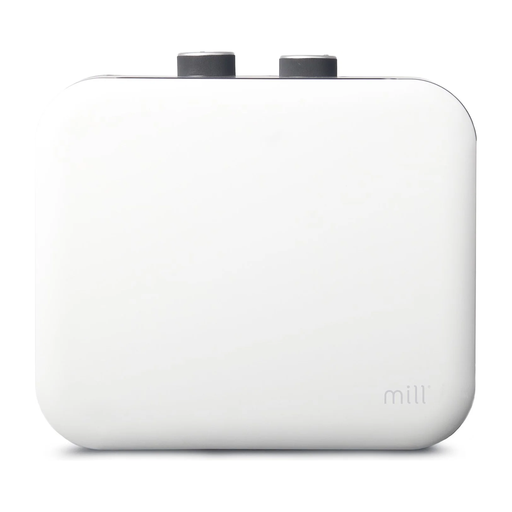
Why it suits this profile: Suits users looking for a portable heater for a larger space who prefer mechanical controls.
The product information mentions tip-over and overheat protection. There are two power settings: 1200W and 1800W.
PTC element, thermostat, compact design and, according to the product specifications, suitability for rooms up to 30 m².

Why it suits this profile: A compact choice for a room of up to 15 m², where low noise, portability and simple settings are priorities.
The stated 24 dB(A) makes the noise level verifiable. Philips also mentions tip-over and overheat protection.
600W and 1500W settings, temperature selection from 20–30°C, carry handle and five listed safety features.
We have put together a complete, up-to-date list of products that fully meet these strict selection criteria and the applicable European safety regulations.
This depends on the floor area, ceiling height, insulation and desired temperature. For a small, reasonably well-insulated bedroom, a 600W or 1500W setting may be sufficient as supplementary heating. A 2000W heater is particularly useful when the room is larger or colder. Use the stated room size as a guide, not a guarantee.
A 1500W heater consumes 1.5 kWh per hour when operating at maximum power. The cost depends on your current electricity tariff. A thermostat and timer can limit the total running time. Therefore, do not automatically set the heater to its highest setting and only heat the room you are actually using.
Always follow the instructions. Choose a model with tip-over protection, overheat protection and a timer, place it on a hard, level surface and keep bedding at a safe distance. Never run a heater while it is covered, and unplug it when the appliance is not in use. A timer reduces the risk of leaving it on unnecessarily long, but it cannot make unsafe positioning safe.
